United Nations Sustainable Development Goals

The 2030 Agenda for Sustainable Development, adopted by all United Nations Member States in 2015, provides a shared blueprint for peace and prosperity for people and the planet, now and into the future. At its heart are the 17 Sustainable Development Goals (SDGs) that build on decades of work, including SDG 14, Life Below Water.
In 2017, the first United Nations Conference to Support the Implementation of SDG 14 (‘United Nations Ocean Conference’) urged Contracting Parties to strengthen and promote effective and transparent multi-stakeholder partnerships by enhancing engagement of governments with regional bodies, such as OSPAR, to support and coordinate countries to achieve the goal. The second United Nations Ocean Conference reiterated the importance of international cooperation and partnerships based in science and in line with the precautionary and ecosystem-based approaches to contribute to developing the solutions necessary to tackle these challenges.
Through its 2030 North-East Atlantic Environment Strategy (NEAES 2030), OSPAR contributes specifically to SDG 13 on Climate Action, SDG 14 on Life Below Water, and SDG 17 on Partnerships for the Goals. OSPAR’s objectives include reducing pollution of all kinds (SDG 14.1), restoring degraded habitats (SDG 14.2), addressing the impacts of ocean acidification (SDG 14.3), and conserving and protecting biodiversity (SDG 14.5). OSPAR has recently published its most ambitious assessments to date on climate change and ocean acidification as part of its Quality Status Report (QSR) 2023. These assessments demonstrate OSPAR’s commitment to highlight and address the significant impact of climate change and ocean acidification on the marine environment of the North-East Atlantic (SDG 13). OSPAR also fosters international cooperation and partnerships among its member countries, the European Union, and global partners (SDG 17). By addressing these goals, OSPAR ensures the sustainable use and conservation of the marine environment in the North-East Atlantic, fostering resilience, protecting biodiversity, and supporting the well-being of coastal communities and ecosystems.
For more information about OSPAR's contribution to the implementation of the UN Sustainable Development Goals, see the report titled ‘OSPAR and the United Nations Sustainable Development Goals’ published in 2023.
At the first UN Ocean Conference in 2017, OSPAR registered 2 voluntary commitments. OSPAR registered 3 further voluntary commitments at the second UN Ocean Conference in 2022, and a further commitment at the UN Ocean Conference in 2025.
OSPAR's Voluntary Commitments
Ocean Action #58859: Collaboration on Area-based Management Tools in ABNJ of the North-East Atlantic
Ocean Action #58859: Collaboration on Area-based Management Tools in ABNJ of the North-East Atlantic
At the 2025 UN Ocean Conference, OSPAR announced this new voluntary commitment.
Ocean Action #47414: North-East Atlantic Environment Strategy 2030
Ocean Action #47414: North-East Atlantic Environment Strategy 2030
The North-East Atlantic Environment Strategy (NEAES) 2030 was adopted on 1 October 2021 in Cascais, Portugal. This was supported by a high-level review of OSPAR's previous strategy for the decade 2010-2030.
Ocean Action #47413: OSPAR’s second Regional Action Programme on Marine Litter
Ocean Action #47413: OSPAR’s second Regional Action Programme on Marine Litter
For more information on OSPAR's second Regional Action Programme on Marine Litter, please visit our dedicated web pages https://www.ospar.org/work-areas/eiha/marine-litter/regional-action-plan
Ocean Action #46914 on Ocean Acidification
Ocean Action #46914 on Ocean Acidification
At its Ministerial meeting in Cascais in 2021, OSPAR Contracting Parties agreed a voluntary commitment on ocean acidification (#OceanAction46914). OSPAR is working through its Working Group on Changing Ocean Climate and Ocean Acidification (WG COCOA) to facilitate the implementation of Strategic Objectives in the North-East Atlantic Environment Strategy (NEAES) 2030 concerning ocean acidification and climate change, and to ensure the integration of climate change and ocean acidification throughout the OSPAR structure.
Ocean Action #17198: The Caribbean Environment Programme
Ocean Action #17198: The Caribbean Environment Programme
For more information on OSPAR's work with the Caribbean Environment Programme, please see the Memorandum of Understanding signed by both organisations in 2021.
Ocean Action #21204: the North East Atlantic Fisheries Commission
Ocean Action #21204: the North East Atlantic Fisheries Commission
For more information on OSPAR's work with NEAFC, please refer to the collective arrangement (Agreement 2014-09).
The regular work of OSPAR in applying an ecosystem-based approach to management of human activities contributes to many of the SDGs. As a Commission for the protection of the North-East Atlantic, OSPAR contributes strongly to the implementation of SDG 14 Life Below Water. This includes ongoing work for marine protection and conservation as well as elimination of polluting hazardous substances from the marine environment. The OSPAR common indicators which are used for producing regionally comparable assessments of the status and pressures affecting the marine environment, are also linked to the goals and indicators of SDG 14 which enables reporting of progress on this goal using regional assessment outcomes. OSPAR implements SDG 17 on Partnerships for the Goals by collaborating with other regional and global organisations and authorities to share lessons learned on best management practices.
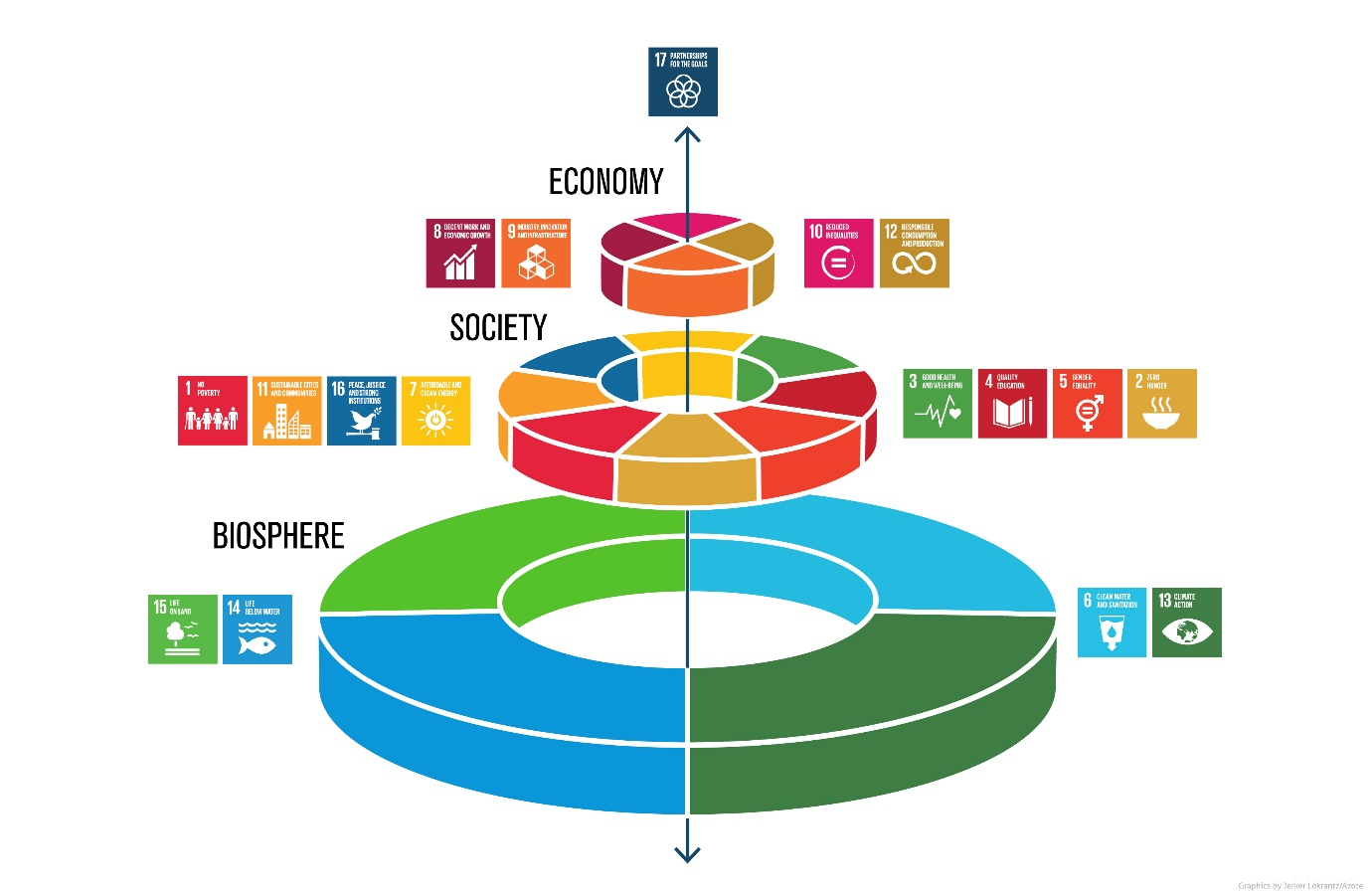 Image credit: Azote Images for Stockholm Resilience Centre