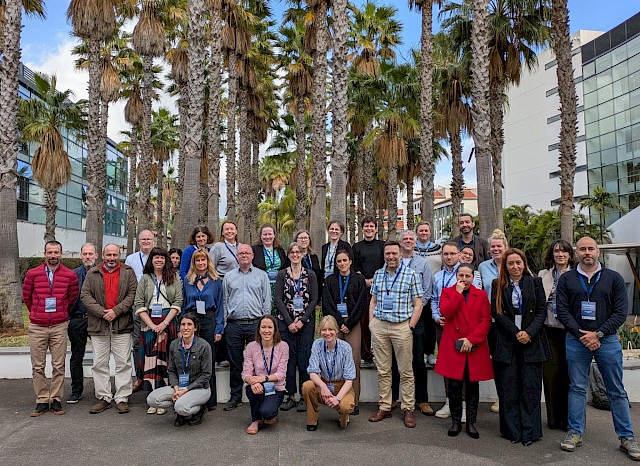
| | The Biodiversity Committee (BDC) gathered in Madeira to take stock of progress under the North-East Atlantic Environment Strategy (NEAES) 2030 and set priorities for the next phase of regional biodiversity protection. The timing was especially significant, coming soon after the extension of the OSPAR maritime area to include Macaronesian waters—an important milestone agreed at the Ministerial Meeting in Vigo in June 2025.
Madeira proved an inspiring backdrop. Renowned for its rich biodiversity and referenced more than 30 times in Charles Darwin’s On the Origin of Species, the island also has a proud conservation legacy, including Portugal’s first nature reserve in the Selvagens Islands. Today, the archipelago remains a vital refuge for globally important seabird populations, such as Zino’s petrel, the Desertas petrel and Cory’s shearwater.
Looking ahead, preparations for the Intermediate Assessment 2029 continued apace. The Committee agreed to extend several common indicators to additional regions and endorsed new pilot assessments designed to close key knowledge gaps. First draft outputs are expected to be ready for review in spring 2027.
Important progress was also made on threatened and declining species and habitats. The Committee approved the publication of new status assessments covering the Azorean limpet, maerl beds and Sabellaria spinulosa reefs. Work on the Regional Action Plan for Benthic Habitats also moved forward, with adoption anticipated at the OSPAR Commission meeting in June 2026, alongside continued implementation of the Marine Birds Action Plan.
In addition, the Committee approved the draft biennial Marine Protected Area (MPA) Status Report and was given a preview of the long-awaited new OSPAR MPA database, expected to launch in June 2026.
A strong emphasis was placed on collaboration, with closer cooperation with partner organisations such as the International Council for the Exploration of the Seas (ICES) and the North-East Atlantic Fisheries Commission (NEAFC) identified as essential for effective, coordinated ecosystem management.
With an ambitious year ahead, the meeting in Madeira served as a powerful reminder of what is at stake—and of the remarkable biodiversity OSPAR’s work is helping to protect across the North-East Atlantic. |
| | |
|