| | 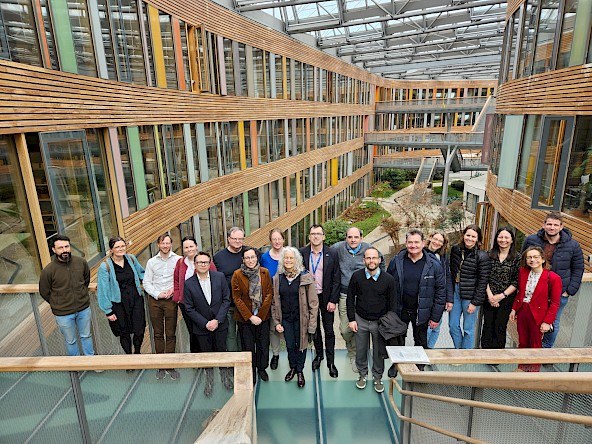
The German Government and German Environment Agency hosted the Hazardous Substances and Eutrophication Committee (HASEC) meeting in Dessau from 23–27 March 2026 at the Umweltbundesamt (UBA). Heike Herata, Head of UBA’s Protection of the Seas and Polar Regions section, welcomed delegates in person and online to what proved a busy and productive week.
Leadership
Philip Axe (Sweden) chaired his final HASEC meeting after seven years at the helm. His tenure since 2019 saw him become equally at home with hazardous substances as with his original expertise in eutrophication, and he was warmly praised for his convivial and inclusive chairing style. HASEC elected Benjamin Ebbers (Netherlands) as second Vice-Chair for 2026–2028, complementing the existing Vice-Chair Wera Leujak (Germany), with Ben’s expertise adding particular strength on the hazardous substances side. HASEC also bid farewell to Lisette Enserink (Netherlands), whose contributions to OSPAR assessments, the Science Agenda, and eutrophication work spanned nearly three decades since the days of ASMO. Warm thanks were also extended to Laura de la Torre from the Secretariat for her years of dedicated support to HASEC.
Priority substances and contaminants of emerging concern
A major milestone was reached with the promotion of Candidate Indicator M7 — Status and Trends of Persistent Chemicals in Marine Mammals — to common indicator status, supported by the majority of Contracting Parties. The accompanying CEMP guidelines, covering PCB monitoring in marine mammals, were approved, and a CEMP appendix documenting existing national monitoring programmes was forwarded to OSPAR 2026 for publication. HASEC also approved revised background concentrations for PAHs and certain trace metals in non-normalised sediments, and agreed to recommend publication of the annual CEMP Assessment Report on contaminant levels and trends (incorporating data up to 2024) to OSPAR. On contaminants of emerging concern, HASEC agreed to formalise the screening and prioritisation of emerging substances as a mandatory once-per-assessment-cycle activity within the CEMP framework, and encouraged Contracting Parties with the resources to participate in a screening campaign in 2026–2027 to support the IA 2029. PFAS continued to feature prominently across several agenda items, including work on updated monitoring guidelines and the ongoing development of a PFAS background document.
ICG-EQS reported on progress incorporating the new EU Environmental Quality Standards arising from the revised Priority Substances Directive, including new EQS for 25 PFAS and the sum of 8 PAHs. HASEC agreed to explore presenting results under both existing and new EQS values in parallel in the HARSAT assessment tool for the IA 2029, to ensure consistency with Contracting Parties’ MSFD reporting.
Review of measures
HASEC agreed to propose to CoG that PARCOM Recommendation 87/2 on discharges from reception facilities and oil terminals be set aside, on the basis that its requirements have been implemented in national legislation. OSPAR Recommendation 2003/04 on mercury dispersal from crematoria will remain in place, with a further reporting round to be conducted in approximately six years.
Eutrophication and riverine inputs
Significant progress was reported by ICG-EUT and ICG-EMO on preparations for the fifth application of the Common Procedure (COMP5) and the Intermediate Assessment 2029, including work on updated chlorophyll-a monitoring guidelines and modelling of eutrophication in a changing climate under several NEAES tasks.
Offshore renewables, and convention amendments
HASEC welcomed the ongoing work of RoHSFOR — the technical working group on releases of hazardous substances from offshore renewables — which is gathering data on chemical and microplastic emissions during the construction and operation of offshore wind infrastructure, with a report on emissions and sources expected by June 2026.
HASEC also noted the progress of the Ad Hoc Working Group on Amendments to the Convention (WG-AOC), which is considering draft amendments addressing carbon dioxide capture and storage, hydrogen production and storage, space launch vehicle debris, land-based sources, and offshore renewables.
Looking ahead
The meeting week in Dessau offered an opportunity to consolidate HASEC’s preparations for the Intermediate Assessment 2029, advance the review of legacy measures, and strengthen cross-cutting collaboration with OIC, EIHA, WG COCOA, ICES, and HELCOM. The next meeting of HASEC will take place in 2027. |
| | |
|