| | New Status Assessments reveal how some of the North-East Atlantic’s threatened and/or declining species and habitats are doing and a new OSPAR report reviews whether the actions being taken to protect and recover the species and habitats under threat are making a difference – and what more could be done.
These are important questions at the heart of OSPAR’s work to protect, conserve and restore marine biodiversity.
OSPAR has identified 60 species and habitats that are threatened of in decline across the North-East Atlantic — 42 species and 18 habitats — which form the OSPAR List of Threatened and/or Declining Species and Habitats. The List provides a shared strategic focus for conservation and recovery, with OSPAR measures setting out actions for Contracting Parties to address the pressures affecting these features. Sadly, the results of OSPAR’s 2023 Quality Status Report showed that the status of the majority of the OSPAR Listed species and habitats continues to be poor.
Protecting the North-East Atlantic’s marine biodiversity starts with knowing which species and habitats are under pressure — and understanding whether action is making a difference.
However, identifying the species and habitats under threat is only the starting point. Regular status assessments provide the evidence needed to understand how these species and habitats are changing, what pressures they face, and whether existing conservation measures are helping to improve their status. They also help highlight where further action, monitoring or management may be needed.
This summer, OSPAR has published 4 new status assessments on Atlantic cod, Sabellaria spinulosa, Azorean limpet, and Maerl. They provide an updated assessment of the status and trends of the species and habitats concerned, strengthening the evidence base for OSPAR’s work and helping to connect assessment with implementation, and for Contracting Parties to translate commitments on marine biodiversity into targeted and evidence-based conservation measures.
OSPAR has also published a report identifying appropriate actions to enable recovery of marine species and habitats. The report reviews the policy measures in place for 33 OSPAR Listed species and six OSPAR Listed habitats for which Regional Action Plans have not been agreed. The report, and its annexes, identify a series of possible additional actions to guide OSPAR Contracting Parties when considering developing new policy measures to protect the species and habitats under threat in the north-east Atlantic.
This report contributes to the OSPAR Strategy’s Operational Objective S5.O4 “By 2025 at the latest OSPAR will take appropriate actions to prevent or reduce pressures to enable the recovery of marine species and benthic and pelagic habitats in order to reach and maintain good environmental status as reflected in relevant OSPAR status assessments, with action by 2023 to halt the decline of marine birds”. This report was supported by the European Union’s Next Generation EU fund. | 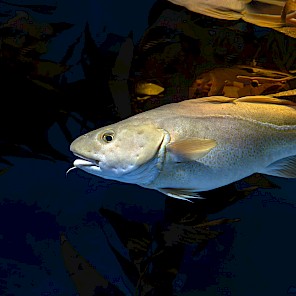 | | Atlantic Cod | Atlantic cod (Gadus morhua) within Arctic Waters (OSPAR Region I), Greater North Sea (OSPAR Region II) and Celtic Seas (OSPAR Region III) span many stock units covering a range of stock status classifications. In general, northern stocks are in a more favourable biomass status than those at the southern end of the distribution, where stocks tend to have reduced reproductive capacity and experience high exploitation rates. Image: Shutterstock |  READ MORE
 |
| | 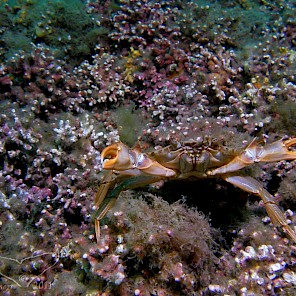 | | Maerl Beds | The status of maerl beds regarding distribution, extent and condition is generally unknown throughout the OSPAR Maritime Area. In the Wider Atlantic (OSPAR Region V), maerl beds are currently being mapped meaning that trends cannot yet be deduced, and the overall assessment is Unknown. For Arctic Waters (Region I), Great North Sea (Region II), Celtic Seas (Region III), and Bay of Biscay and Iberian Coast (Region IV) overall status is based on the 2019 status assessment, as the status of maerl beds is unlikely to have changed since the previous assessment. Image: Ross Bulimore | |
READ MORE |
|
| 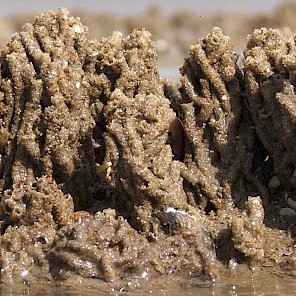 | | Sabellaria spinulosa Reefs | The status of the Sabellaria spinulosa reefs is poor in the Greater North Sea (OSPAR Region II), poor in Celtic Seas (Region III) and unknown in the Bay of Biscay and Iberian Coast (Region IV). The species does not occur in Arctic Waters (Region I) and the Wider Atlantic (Region V). The potential for the occurrence of reefs is thought to be larger than the current distribution. Key pressures like fisheries and habitat damage still pose a significant threat to the Sabellaria spinulosa reefs and have resulted in a declined range. Protected areas against bottom disturbing fisheries will help the recovery of the species. Image: Eastern IFCA | |
READ MORE |
| | 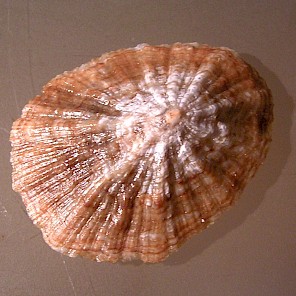 | | Azorean Limpet | Azorean limpet (P. aspera) showed signs of recovery in the Wider Atlantic (OSPAR Region V) since the last assessment carried out in the early 2000s, following a severe population collapse in the 1990s that affected several islands. However, significant differences still exist among the nine islands, with some showing higher biomass and larger average shell sizes, while others - particularly the more populated islands - exhibit significantly smaller size and lower biomass. Illegal, unreported and unregulated (IUU) fishing, contamination by heavy metals and climate changes are the key pressures for the assessed resource. Law enforcement, public awareness and long-term monitoring play a crucial role in sustainable resource exploitation. Image: Jan Delsing | |
READ MORE |
|
| 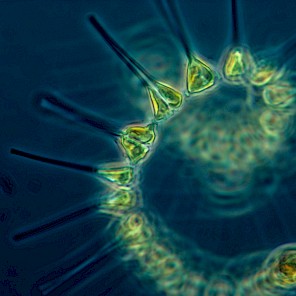 | | The identification of appropriate actions to enable recovery of marine species and habitats | | |
READ MORE |
| | |
|
| | |
|