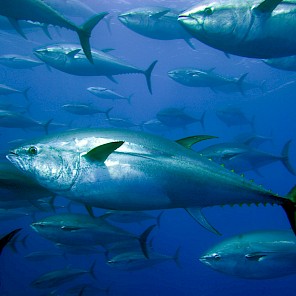
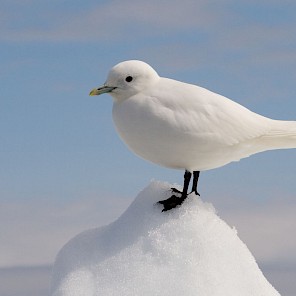
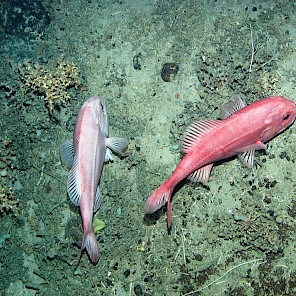
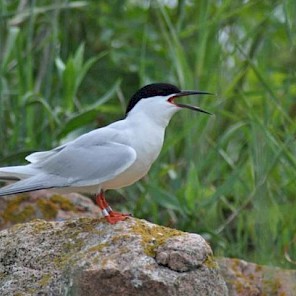
| | We are pleased to announce the publication of our latest status assessments under our Biodiversity Committee (BDC). The assessments look at Ivory Gull, Macaronesian Shearwater, Steller's Eider, Roseate Tern, Orange Roughy, Atlantic Bluefin Tuna and Modiolus modiolus beds.
These updates extend our understanding of how these listed species and habitats are faring — and whether OSPAR’s conservation measures are making a difference. In short: assessments are the scientific backbone for evidence-based conservation allowing us to measure progress and identify emerging threats.
Such status assessments allow us to:
- Track changes in distribution, population size, and condition of species/habitats.
- Identify and evaluate key pressures and human impacts — such as fishing, habitat disturbance, pollution, climate change — to inform where action is most needed.
- Guide OSPAR’s collective and national conservation efforts, including potential designation of Marine Protected Areas or other protective measures, and to adjust priorities under the North‑East Atlantic Environment Strategy 2030.
| | 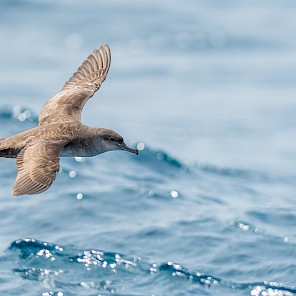 | | Macaronesian shearwater | Since the first status assessment, there have been considerable improvements in the monitoring of Macaronesian shearwater in the Wider Atlantic (Region V), despite population size being assumed to be far below the numbers found in the past. In the Azores, the situation has been apparently stable since the last assessment. In the neighbouring archipelagos, outside of the OSPAR maritime area, however, the species is likely not doing so well. No information is available regarding the non-breeding population. |  READ MORE
 |
| | 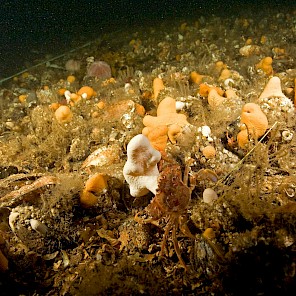 | | Modiolus modiolus beds | The status of M. modiolus beds with regard to distribution, extent and condition is generally poor throughout the OSPAR Maritime Area. In the Greater North Sea (Region II), there is evidence of clear decreases in distribution and extent. In the Celtic Seas (Region III), distribution appears stable, but the extent has declined. Condition is poor in both regions, however, the trend in condition is mixed, with condition improving in certain beds. No assessments were available for the other OSPAR Regions. | |
READ MORE |
|
| |  | | Steller’s eider | The global Steller’s eider Polysticta stelleri population is considered vulnerable (VU; IUCN Redlist - Assessed BirdLife International, 2018). There is a long-term negative trend for the wintering population within Arctic Waters (OSPAR Region I). The main causes for a declining wintering population may be a combination of general population decline, and a potential shift in wintering areas further north and east, that formerly were covered in ice during winter (Aarvak et al., 2012). | |
READ MORE |
| | |
|
| | |
|