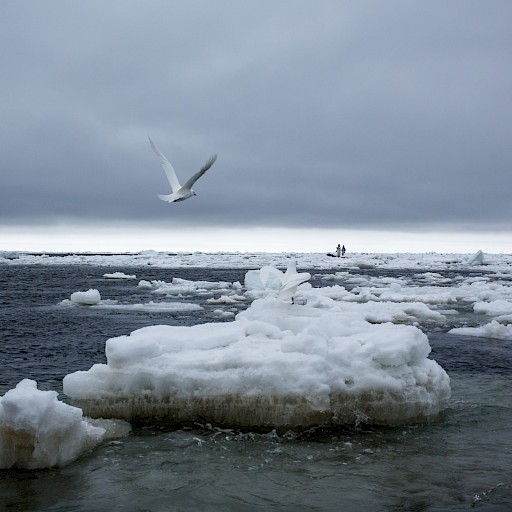
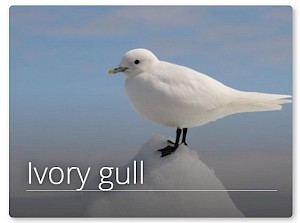
Ivory gull
Common Name: Ivory gull
Scientific Name: Pagophila eburnea
OSPAR Regions where it occurs: I
OSPAR Regions where under threat and/or in decline: I
Description: The ivory gull breeds mainly on inaccessible cliffs, and low rocks or flat shorelines, foraging on broken ice fields.Outside the breeding season, it normally avoids ice-free waters, being closely associated with pack-ice, and favouring areas with 70 – 90% ice cover near the ice edge. It feeds mainly on fish, shrimps, shellfish, algae, carrion, offal and animal faeces.
What is the latest status?
 The status assessment describes the latest changes in distribution, abundance and range of the feature, as well as any changes in the threats and pressures impacting the feature. The status assessments are updated regularly and inform OSPAR’s consideration of the effectiveness of the measures and actions that have been adopted and implemented by Contracting Parties.
Why is this feature included on the OSPAR List? |  | |
What protective measures and actions has OSPAR committed to taking? |  |  |
What actions have been implemented by OSPAR? | Overview assessment of implementation of OSPAR Recommendations | |