
OSPAR Science Agenda Knowledge Gap Portal
Welcome to the OSPAR Science Agenda knowledge gap portal. The page showcases important scientific questions and evidence needs identified by OSPAR to help protect and sustainably manage the North-East Atlantic. Use the filters and search options below to explore knowledge gaps by topic, category, region, and status, or browse visually to discover areas where new research, data, or collaborations are needed. The aim is to make it easy for anyone - scientists, funders, and policy makers to understand the current priorities, access key details, and get involved in helping to close these important gaps for a healthier ocean future.
Showing 501 - 525 of 539 items
Improving the knowledge base for PAH assessment criteria
ID Number: H03.06
Knowledge gap description: The limitations in using Environmental Assessment Criteria (EAC) and Background Assessment Concentrations (BACs) should be addressed with further research.
Topics:
Knowledge Gap Category:
2. thresholds & references
Assessment Category:
Common indicator assessment
Relevant for MSFD Art 8:
D8C1
Implementation Status
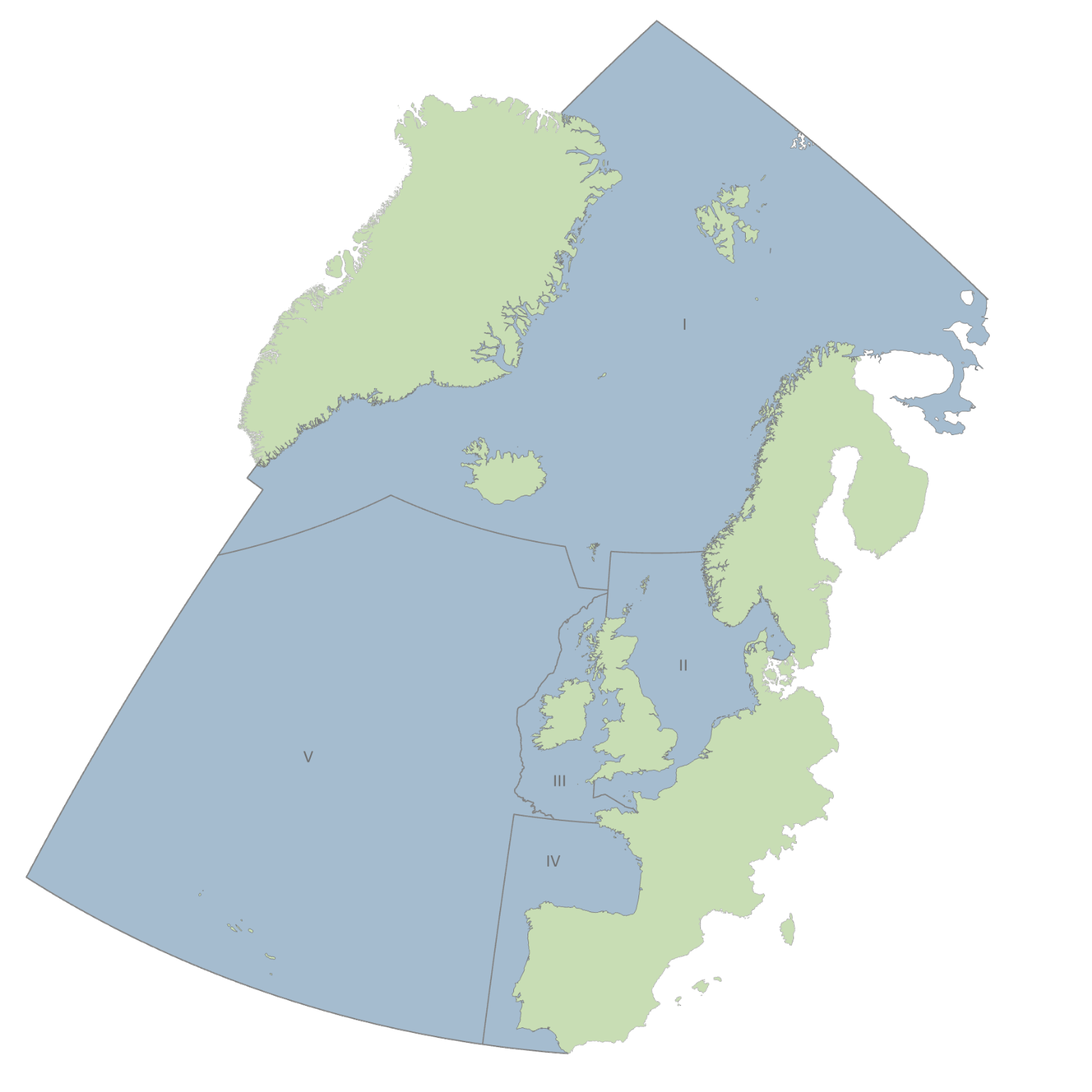
OSPAR Region: All Regions
Source of knowledge gap: QSR2023 - Status and Trends in the Concentrations of Polycyclic Aromatic Hydrocarbons (PAHs) in Shellfish and Sediment
Understanding diffuse terrestrial sources and pathways of PCBs
ID Number: H02.01
Knowledge gap description: Further research and modelling is required to understand, define and quantify diffuse emissions and inputs to air and water from terrestrial sources (secondary sources such as leachate from land fill and waste disposal sites)
Knowledge Gap Category:
4. data coverage
Assessment Category:
Common indicator assessment
Relevant for MSFD Art 8:
D8C1
Implementation Status
OSPAR Region: All Regions
Source of knowledge gap: QSR2023 - Status and Trends of Polychlorinated Biphenyls (PCB) in Fish, Shellfish and Sediment
Developing PCB assessment criteria for secondary poisoning
ID Number: H02.02
Knowledge gap description: OSPAR should consider developing Environmental Assessment Criteria (EAC) for the purpose of protection against secondary poisoning.
Topics:
Knowledge Gap Category:
2. thresholds & references
Assessment Category:
Common indicator assessment
Relevant for MSFD Art 8:
D8C1
Implementation Status
OSPAR Region: All Regions
Source of knowledge gap: QSR2023 - Status and Trends of Polychlorinated Biphenyls (PCB) in Fish, Shellfish and Sediment
Improving PCB data coverage of PAH in sediments
ID Number: H02.03
Knowledge gap description: There is a lack of monitoring data, or insufficient data for a status and trend assessment, particularly for sediment for some parts of the OSPAR Maritime Area, particularly in Arctic Waters, some parts of the Celtic Seas and the Iberian Coast and Bay of Biscay
Topics:
Knowledge Gap Category:
4. data coverage
Assessment Category:
Common indicator assessment
Relevant for MSFD Art 8:
D8C1
Implementation Status
OSPAR Region: All Regions
Source of knowledge gap: QSR2023 - Status and Trends of Polychlorinated Biphenyls (PCB) in Fish, Shellfish and Sediment
Better understanding of pathways of PCBs to areas without former production and use of these substances
ID Number: H02.04
Knowledge gap description: More research is needed to quantify how much of the reduction in Polychlorinated Biphenyl (PCB) concentrations in areas of former use is occurring at the expense of levels in areas where Polychlorinated Biphenyl (PCB)s have not been commercially produced and used (e.g., Africa, which receives Polychlorinated Biphenyl (PCB)s from obsolete products and wastes).
Topics:
Knowledge Gap Category:
4. data coverage
Assessment Category:
Common indicator assessment
Relevant for MSFD Art 8:
D8C1
Implementation Status
OSPAR Region: All Regions
Source of knowledge gap: QSR2023 - Status and Trends of Polychlorinated Biphenyls (PCB) in Fish, Shellfish and Sediment
Improving PBDEs data coverage in sediments
ID Number: H05.01
Knowledge gap description: Lack of monitoring data for sediments (apart from Regions II and III), particularly in Arctic Waters.
Topics:
Knowledge Gap Category:
4. data coverage
Assessment Category:
Common indicator assessment
Relevant for MSFD Art 8:
D8C1
Implementation Status
OSPAR Region: All Regions
Source of knowledge gap: QSR2023 - Status and Trends of Polybrominated Diphenyl Ethers (PBDEs) in Biota and Sediment
Improving comparability of PBDEs data in various biota
ID Number: H05.02
Knowledge gap description: A strategy is needed for making data from monitoring of different species (shellfish and fish) comparable.
Knowledge Gap Category:
5. cumulative effects & integration
Assessment Category:
Common indicator assessment
Relevant for MSFD Art 8:
D8C1
Implementation Status
OSPAR Region: All Regions
Source of knowledge gap: QSR2023 - Status and Trends of Polybrominated Diphenyl Ethers (PBDEs) in Biota and Sediment
Improving PBDE assessment criteria for marine waters
ID Number: H05.04
Knowledge gap description: The Environmental Quality Standard (EQS) derived within the EU for protection of marine and freshwater ecosystems as well as humans from adverse effects of chemicals in the aquatic environments requires further development for use in the OSPAR Maritime Area.
Topics:
Knowledge Gap Category:
2. thresholds & references
Assessment Category:
Common indicator assessment
Relevant for MSFD Art 8:
D8C1
Implementation Status
OSPAR Region: All Regions
Source of knowledge gap: QSR2023 - Status and Trends of Polybrominated Diphenyl Ethers (PBDEs) in Biota and Sediment
Understanding environmental harm of chemicals in antifouling
ID Number: H04.01
Knowledge gap description: Lack of understanding regarding the potential for environmental harm arising from the substitute chemicals used to replace tributyltin (TBT) in antifouling paints.
Topics:
Knowledge Gap Category:
3. assessment areas
Assessment Category:
Common indicator assessment
Relevant for MSFD Art 8:
D8C2
Implementation Status
OSPAR Region: All Regions
Source of knowledge gap: QSR2023 - Status and Trends in the Levels of Imposex in Marine Gastropods (TBT in Shellfish)
Improving shellfish monitoring in TBT hotspot locations
ID Number: H04.02
Knowledge gap description: More "hotspot" locations may need to be monitored for ecological impacts in biota in areas where imposex levels are not decreasing or still exceed Environmental Assessment Criteria (EAC) thresholds.
Topics:
Knowledge Gap Category:
3. assessment areas
Assessment Category:
Common indicator assessment
Relevant for MSFD Art 8:
D8C2
Implementation Status
OSPAR Region: All Regions
Source of knowledge gap: QSR2023 - Status and Trends in the Levels of Imposex in Marine Gastropods (TBT in Shellfish)
Impact of confounding factors in imposex monitoring
ID Number: H04.03
Knowledge gap description: Assessment of tributyltin (TBT) contamination through monitoring of imposex present difficulties due to confounding factors such as species and physiological effects. Also, extent of deleterious effects on non-mollusks are unclear.
Topics:
Knowledge Gap Category:
4. data coverage
Assessment Category:
Common indicator assessment
Relevant for MSFD Art 8:
D8C2
Implementation Status
OSPAR Region: All Regions
Source of knowledge gap: QSR2023 - Status and Trends in the Levels of Imposex in Marine Gastropods (TBT in Shellfish)
Combined effects of TBT and other pollutants
ID Number: H04.04
Knowledge gap description: The combined toxicity/synergistic effects of tributyltin (TBT) in combination with other pollutants needs further investigation.
Topics:
Knowledge Gap Category:
5. cumulative effects & integration
Assessment Category:
Common indicator assessment
Relevant for MSFD Art 8:
D8C2
Implementation Status
OSPAR Region: All Regions
Source of knowledge gap: QSR2023 - Status and Trends in the Levels of Imposex in Marine Gastropods (TBT in Shellfish)
Monitoring of TBT from non-pesticidal uses
ID Number: H04.01
Knowledge gap description: Non-pesticidal use of tributyltin (TBT) is still ongoing in some countries, therefore further monitoring of tributyltin (TBT) concentrations in the marine environment is warranted.
Topics:
Knowledge Gap Category:
4. data coverage
Assessment Category:
Common indicator assessment
Relevant for MSFD Art 8:
D8C1
Implementation Status
OSPAR Region: All Regions
Source of knowledge gap: QSR2023 - Status and Trends of Organotin in Sediments in the Southern North Sea
Improvement of TBT assessment criteria
ID Number: H04.02
Knowledge gap description: OSPAR experts should consider if the OSPAR Environmental Quality Standards (EQS) should also be updated, reflecting availability of new data.
Topics:
Knowledge Gap Category:
2. thresholds & references
Assessment Category:
Common indicator assessment
Relevant for MSFD Art 8:
D8C1
Implementation Status
OSPAR Region: All Regions
Source of knowledge gap: QSR2023 - Status and Trends of Organotin in Sediments in the Southern North Sea
Antifoulant with limited environmental impact
ID Number: H04.03
Knowledge gap description: Alternatives to tributyltin (TBT) for antifouling are problematic, and so there is need for an antifoulant with limited environmental impact. Candidate substances must be thoroughly evaluated with regard to toxicity and should consider a holistic approach.
Topics:
Knowledge Gap Category:
6. effectiveness of measures
Assessment Category:
Common indicator assessment
Relevant for MSFD Art 8:
D8C1
Implementation Status
OSPAR Region: All Regions
Source of knowledge gap: QSR2023 - Status and Trends of Organotin in Sediments in the Southern North Sea
Effectivess of TBT ban for revival of fish stocks
ID Number: H04.04
Knowledge gap description: Further evaluation of tributyltin (TBT) toxicity will generate knowledge and expertise to carry out an enhanced evaluation to determine how much the tributyltin (TBT) ban has contributed to the revival of certain fish stocks.
Topics:
Knowledge Gap Category:
6. effectiveness of measures
Assessment Category:
Common indicator assessment
Relevant for MSFD Art 8:
D8C1
Implementation Status
OSPAR Region: All Regions
Source of knowledge gap: QSR2023 - Status and Trends of Organotin in Sediments in the Southern North Sea
Improve geographical comparability of PCB concentrations in marine mammal tissues
ID Number: H15.01
Knowledge gap description: Structure and harmonize: There is a need for structural and harmonised protocols for data acquisition of Polychlorinated Biphenyls (PCBs), including the list of congeners and the tissue matrix analysed, as well as integration on a spatial scale, in order to allow geographical comparison.
Knowledge Gap Category:
5. cumulative effects & integration
Assessment Category:
Pilot assessment
Relevant for MSFD Art 8:
D8C2
Implementation Status
OSPAR Region: All Regions
Source of knowledge gap: QSR2023 - Pilot Assessment of Status and Trends of Persistent Chemicals in Marine Mammals
Improve comparability of PCB analyses in marine mammal tissues
ID Number: H15.01a
Knowledge gap description: Structure and harmonise pollutants data acquisition: There is a large variability of laboratory techniques for the analysis of Polychlorinated Biphenyls (PCBs)s (and other pollutants). Harmonize these techniques across OSPAR Contracting Parties (CPs) of: (1) reference material (fish or marine mammals’ tissues); (2) blubber extraction, pretreatment and storage; (3) calculation of the detection and quantification limits. The same homogenate of marine mammals’ blubber should be analysed in the laboratories of all OSPAR Contracting Parties (CPs) to assess interlaboratory repeatability.
Knowledge Gap Category:
5. cumulative effects & integration
Assessment Category:
Pilot assessment
Relevant for MSFD Art 8:
D8C2
Implementation Status
OSPAR Region: All Regions
Source of knowledge gap: QSR2023 - Pilot Assessment of Status and Trends of Persistent Chemicals in Marine Mammals
Improve PCB congener data availability
ID Number: H15.01b
Knowledge gap description: Structure and harmonise pollutants data acquisition: Major gaps exist on a temporal scale regarding the concentrations of Polychlorinated Biphenyls (PCBs)s at a congener level, since most studies until 2008 focused on the sum of the ICES 7 Polychlorinated Biphenyls (PCBs)s.
Knowledge Gap Category:
5. cumulative effects & integration
Assessment Category:
Pilot assessment
Relevant for MSFD Art 8:
D8C2
Implementation Status
OSPAR Region: All Regions
Source of knowledge gap: QSR2023 - Pilot Assessment of Status and Trends of Persistent Chemicals in Marine Mammals
Impact of persistent chemicals on marine mammal health
ID Number: H15.01c
Knowledge gap description: Structure and harmonise pathological data acquisition: Conduct toxicity studies including several health indicators (i.e. rate of infectious disease, general health)
Knowledge Gap Category:
5. cumulative effects & integration
Assessment Category:
Pilot assessment
Relevant for MSFD Art 8:
D8C2
Implementation Status
OSPAR Region: All Regions
Source of knowledge gap: QSR2023 - Pilot Assessment of Status and Trends of Persistent Chemicals in Marine Mammals
Historic trends in PCB concentrations in marine mammal tissues
ID Number: H15.02
Knowledge gap description: Conduct analysis on old samples in tissue banks for Polychlorinated Biphenyls (PCBs) not included in previous studies.
Knowledge Gap Category:
4. data coverage
Assessment Category:
Pilot assessment
Relevant for MSFD Art 8:
D8C2
Implementation Status
OSPAR Region: All Regions
Source of knowledge gap: QSR2023 - Pilot Assessment of Status and Trends of Persistent Chemicals in Marine Mammals
Validation of reproductive toxicity thresholds in marine mammals
ID Number: H15.03
Knowledge gap description: Only few toxicity thresholds exist, which focus only on reproductive or immunotoxicological impairment. Validate the existing estimated reproductive toxicity thresholds.
Knowledge Gap Category:
2. thresholds & references
Assessment Category:
Pilot assessment
Relevant for MSFD Art 8:
D8C2
Implementation Status
OSPAR Region: All Regions
Source of knowledge gap: QSR2023 - Pilot Assessment of Status and Trends of Persistent Chemicals in Marine Mammals
Cumulative effects of hazardous substances
ID Number: TBC
Knowledge gap description: To undertake a full quantitative analysis of cumulative effects requires consideration of the exposure pathways and ecological impacts. Further analyses and evidence of ecological impacts are required in order to progress the assessment of cumulative effects.
Topics:
Knowledge Gap Category:
5. cumulative effects & integration
Assessment Category:
Thematic assessment
Relevant for MSFD Art 8:
D8C2
Implementation Status
OSPAR Region: All Regions
Source of knowledge gap: QSR2023 - Hazardous Substances Thematic Assessment
Improve ecotoxicological science base for PBDE assessment
ID Number: TBC
Knowledge gap description: There remains a scarcity of proper ecotoxicological data for Polybrominated diphenyl ethers (PBDEs).
Topics:
Knowledge Gap Category:
2. thresholds & references
Assessment Category:
Thematic assessment
Relevant for MSFD Art 8:
D8C1
Implementation Status
OSPAR Region: All Regions
Source of knowledge gap: QSR2023 - Hazardous Substances Thematic Assessment
Consideration of marine ecotoxicological information in admission of hazardous substances
ID Number: TBC
Knowledge gap description: Ecotoxicological information on marine organisms should be added to admission files of substances in European Chemicals Agency (ECHA).
Topics:
Knowledge Gap Category:
4. data coverage
Assessment Category:
Thematic assessment
Relevant for MSFD Art 8:
D8C2
Implementation Status
OSPAR Region: All Regions
Source of knowledge gap: QSR2023 - Hazardous Substances Thematic Assessment