
OSPAR Science Agenda Knowledge Gap Portal
Welcome to the OSPAR Science Agenda knowledge gap portal. The page showcases important scientific questions and evidence needs identified by OSPAR to help protect and sustainably manage the North-East Atlantic. Use the filters and search options below to explore knowledge gaps by topic, category, region, and status, or browse visually to discover areas where new research, data, or collaborations are needed. The aim is to make it easy for anyone - scientists, funders, and policy makers to understand the current priorities, access key details, and get involved in helping to close these important gaps for a healthier ocean future.
Showing 301 - 325 of 539 items
Improve access to information on nutrient and heavy metals sources
ID Number: E03.19
Knowledge gap description: Better access to source-apportionment information, covering the inputs especially for all problem areas, is needed to understand effectiveness of measures and where to allocated new measures. This information should be collected in a harmonised or comparable way to enhance future assessments.
Topics:
Knowledge Gap Category:
6. effectiveness of measures
Assessment Category:
Other assessment
Relevant for MSFD Art 8:
N/A
Implementation Status
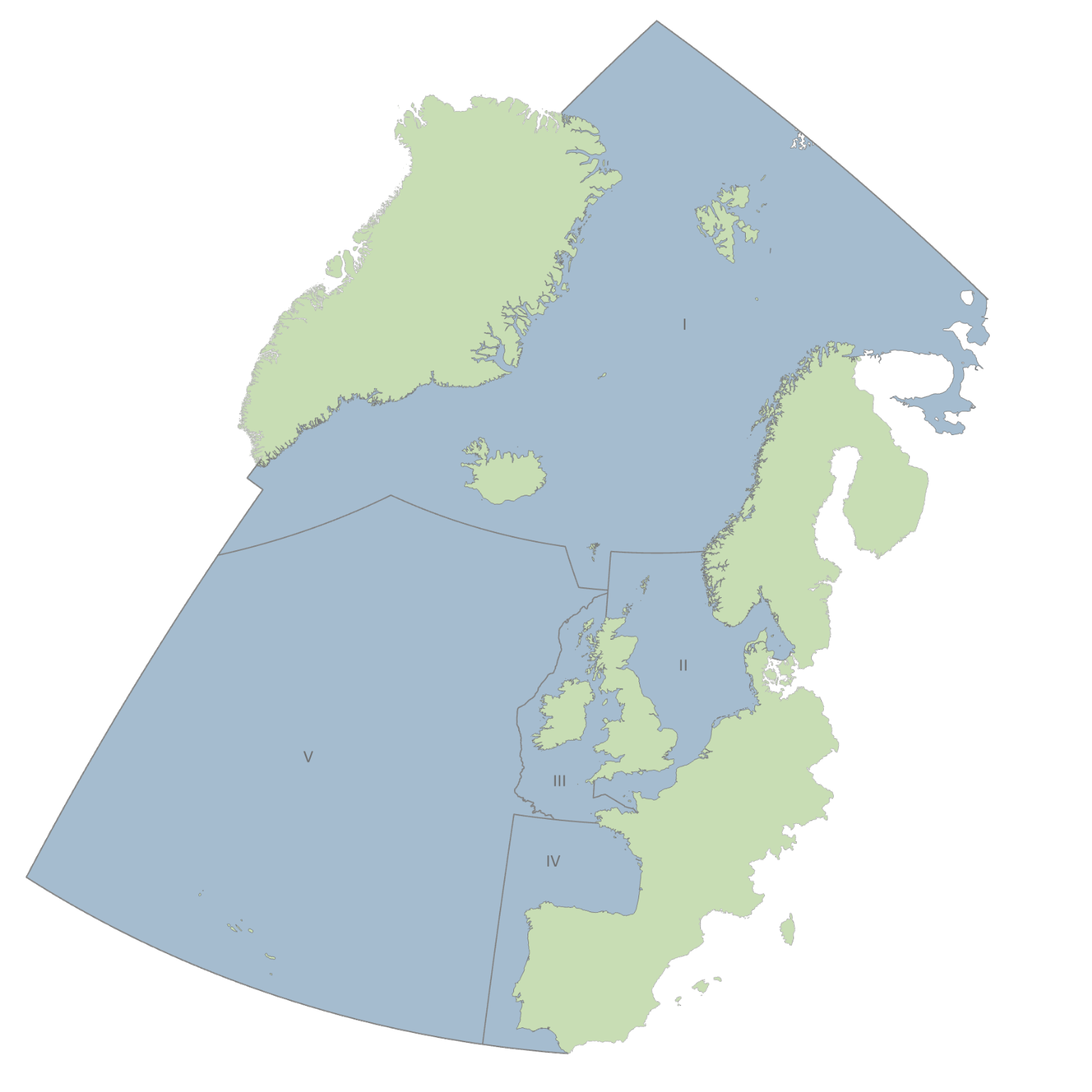
OSPAR Region: All Regions
Source of knowledge gap: QSR2023 - Waterborne and Atmospheric Inputs of Nutrients and Metals to the Sea
Impact of changing weather and land use on nutrient inputs and eutrophication in the sea
ID Number: E03.20
Knowledge gap description: Impacts of climate change on nutrient inputs to the sea and resulting ecological effects are uncertain. Predictability of drought conditions (because this may impact agriculture) may become an important factor in minimising future nutrient inputs. Changes in crops or irrigation techniques may mitigate some shortages while technological development may reduce industrial water use. On the other hand, episodic events such as flooding are expected to increase suspended sediment and nutrient inputs. Whether this cancels any general decrease in run-off is unclear. Furthermore, more investigation is needed in order to understand the ecological effects of the greater variability in nutrient inputs and how to monitor and assess such increasingly prevalent events for the purposes of future eutrophication assessments.
Knowledge Gap Category:
7. emerging issues of human activities
Assessment Category:
Other assessment
Relevant for MSFD Art 8:
N/A
Implementation Status
OSPAR Region: All Regions
Source of knowledge gap: QSR2023 - Waterborne and Atmospheric Inputs of Nutrients and Metals to the Sea
Improving confidence in national atmospheric emission data on heavy metals
ID Number: TBC
Knowledge gap description: Uncertainties of anthropogenic emission data: Lead, cadmium, and mercury may have uncertainties of national total emissions of tens or hundreds of percents. This leads to over or under predictions of observed concentrations or wet depositions by the model.
Topics:
Knowledge Gap Category:
4. data coverage
Assessment Category:
Other assessment
Relevant for MSFD Art 8:
D8C1
Implementation Status
OSPAR Region: All Regions
Source of knowledge gap: QSR2023 - Trends in Deposition of Heavy Metals to the OSPAR Maritime Area in the period 1990-2019
Improving confidence in parameters for modelling heavy metals atmospheric deposition
ID Number: TBC
Knowledge gap description: Uncertainties of anthropogenic emission data: There are uncertainties of the model parameterisations and other input data for modelling. Some parameters related to emissions are not reported or partly reported by countries, which can contribute to uncertainty in model results.
Topics:
Knowledge Gap Category:
4. data coverage
Assessment Category:
Other assessment
Relevant for MSFD Art 8:
D8C1
Implementation Status
OSPAR Region: All Regions
Source of knowledge gap: QSR2023 - Trends in Deposition of Heavy Metals to the OSPAR Maritime Area in the period 1990-2019
Improving confidence in quantification of natural and legacy sources of heavy metals
ID Number: TBC
Knowledge gap description: Uncertainties of anthropogenic emission data: Most calculations based on anthropogenic emissions result in underestimation of observed concentrations so secondary (natural/legacy) sources need to be considered. However, there are high uncertainties associated with estimates of secondary emissions.
Topics:
Knowledge Gap Category:
4. data coverage
Assessment Category:
Other assessment
Relevant for MSFD Art 8:
D8C1
Implementation Status
OSPAR Region: All Regions
Source of knowledge gap: QSR2023 - Trends in Deposition of Heavy Metals to the OSPAR Maritime Area in the period 1990-2019
Reduce discrepancies between model results and observations of heavy metal deposition
ID Number: TBC
Knowledge gap description: Uncertainties of the model parameterizations and input data are also a source of discrepancies between model results and observations.
Topics:
Knowledge Gap Category:
4. data coverage
Assessment Category:
Other assessment
Relevant for MSFD Art 8:
D8C1
Implementation Status
OSPAR Region: All Regions
Source of knowledge gap: QSR2023 - Trends in Deposition of Heavy Metals to the OSPAR Maritime Area in the period 1990-2019
Improve comparability of heavy metal sampling and handling of samples
ID Number: TBC
Knowledge gap description: Uncertainties of measurement data: Interpretation of the model evaluation results can also be affected by uncertainties of measurement data. Lead and cadmium monitoring data is examined via interlaboratory intercomparison tests, which only include the analytical component of the uncertainties of measurement data. Other sources of uncertainties, such as sampling, storing, and shipping, are unaccounted
Topics:
Knowledge Gap Category:
4. data coverage
Assessment Category:
Other assessment
Relevant for MSFD Art 8:
D8C1
Implementation Status
OSPAR Region: All Regions
Source of knowledge gap: QSR2023 - Trends in Deposition of Heavy Metals to the OSPAR Maritime Area in the period 1990-2019
Reduce discrepancies between model results and observations of heavy metal deposition and concentrations
ID Number: TBC
Knowledge gap description: Discrepancies exist between OSPAR CAMP monitoring programme observations and modelled air concentrations and wet deposition of lead and cadmium (agreement within a factor of two). The model tends to underestimate lead and cadmium wet deposition fluxes. There are discrepancies for wet deposition fluxes of mercury as well (±40%). Uncertainties of measurements likely caused higher discrepancies between modelled and observed lead, cadmium and mercury values for 1990-2000.
Topics:
Knowledge Gap Category:
4. data coverage
Assessment Category:
Other assessment
Relevant for MSFD Art 8:
D8C1
Implementation Status
OSPAR Region: All Regions
Source of knowledge gap: QSR2023 - Trends in Deposition of Heavy Metals to the OSPAR Maritime Area in the period 1990-2019
Improve consistency of heavy metal deposition time series
ID Number: TBC
Knowledge gap description: Time series for each year are often incomplete because of gaps caused by missing or incorrect measurements or by filtering out of outliers.
Topics:
Knowledge Gap Category:
4. data coverage
Assessment Category:
Other assessment
Relevant for MSFD Art 8:
D8C1
Implementation Status
OSPAR Region: All Regions
Source of knowledge gap: QSR2023 - Trends in Deposition of Heavy Metals to the OSPAR Maritime Area in the period 1990-2019
Innovative monitoring of eutrophication parameters
ID Number: E01.04
Knowledge gap description: Reduced monitoring is providing less data. Investigate solutions to fill existing and potential data gaps through additional data sources and data types (e.g. Copernicus/CMEMS, ferryboxes).
Topics:
Knowledge Gap Category:
4. data coverage
Assessment Category:
Common indicator assessment
Relevant for MSFD Art 8:
D5C1
Implementation Status
OSPAR Region: All Regions
Source of knowledge gap: QSR2023 - Winter Nutrient Concentrations in the Greater North Sea, Celtic Seas and Bay of Biscay and Iberian Coast
Nutrient sequestration in estuaries and the coastal zone
ID Number: E01.05
Knowledge gap description: Further investigation is needed to understand the role of estuaries and the coastal zone in removal of nutrients, in particular when the states of estuarine ecosystems improve as a consequence of the efforts under the Water Framework Directive.
Topics:
Knowledge Gap Category:
6. effectiveness of measures
Assessment Category:
Common indicator assessment
Relevant for MSFD Art 8:
D5C1
Implementation Status
OSPAR Region: All Regions
Source of knowledge gap: QSR2023 - Winter Nutrient Concentrations in the Greater North Sea, Celtic Seas and Bay of Biscay and Iberian Coast
Improve total nutrients data and estimates covering the entire year
ID Number: E01.06
Knowledge gap description: Including total nutrients in the future eutrophication assessment will provide an overall picture of nutrient processes throughout the year and not only in winter. Better informed models could support the inclusion of total nutrients where in-situ measurements are lacking. Also, better coverage of in situ data is needed.
Topics:
Knowledge Gap Category:
1. indicator development
Assessment Category:
Common indicator assessment
Relevant for MSFD Art 8:
D5C1
Implementation Status
OSPAR Region: All Regions
Source of knowledge gap: QSR2023 - Winter Nutrient Concentrations in the Greater North Sea, Celtic Seas and Bay of Biscay and Iberian Coast
Alternative methods to determine coherent threshold values for eutrophication parameters
ID Number: E01.07
Knowledge gap description: COMP4 uses common threshold values based on a harmonised modelling approach. However, adjustments were needed for some areas where model results for a reference situation were unrealistic, thereby undermining harmonisation. In addition, the current approach for nutrients and chlorophyll a threshold values (historic concentrations +50%) is not in accordance with our ecological knowledge. Furthermore the approach needs to better reflect the difference in responses of different parameters and spatial gradients in anthropogenic pressures between assessment areas. Therefore, this approach requires adjustment.
Knowledge Gap Category:
2. thresholds & references
Assessment Category:
Common indicator assessment
Relevant for MSFD Art 8:
D5C1
Implementation Status
OSPAR Region: All Regions
Source of knowledge gap: QSR2023 - Winter Nutrient Concentrations in the Greater North Sea, Celtic Seas and Bay of Biscay and Iberian Coast
Distinguish temperature and eutrophication impacts on oxygen dynamics close to the seafloor
ID Number: E02.02
Knowledge gap description: Insufficient understanding of the relative importance of biological and physical processes and of impacts of climate change in controlling near-bed oxygen dynamics, oxygen deficiency and consumption to distinguish between the effects of nutrient enrichment and changes in seawater temperature as a result of climate change.
Knowledge Gap Category:
5. cumulative effects & integration
Assessment Category:
Common indicator assessment
Relevant for MSFD Art 8:
D5C5
Implementation Status
OSPAR Region: All Regions
Source of knowledge gap: QSR2023 - Concentrations of Dissolved Oxygen Near the Seafloor in the Greater North Sea, Celtic Seas and Bay of Biscay and Iberian Coast
Improve spatial coverage of dissolved oxygen data in offshore areas
ID Number: E02.04
Knowledge gap description: Increased spatial coverage of data points (currently concentrated on nearshore waters), in order to improve confidence in assessments of wider marine areas.
Topics:
Knowledge Gap Category:
4. data coverage
Assessment Category:
Common indicator assessment
Relevant for MSFD Art 8:
D5C5
Implementation Status
OSPAR Region: All Regions
Source of knowledge gap: QSR2023 - Concentrations of Dissolved Oxygen Near the Seafloor in the Greater North Sea, Celtic Seas and Bay of Biscay and Iberian Coast
Contribute to filling the ICES database with dissoved oxygen data
ID Number: E02.06
Knowledge gap description: Improve future assessments by strengthening the ICES data base by uploading existing monitoring and/or research data, which are held in local or regional databases.
Topics:
Knowledge Gap Category:
4. data coverage
Assessment Category:
Common indicator assessment
Relevant for MSFD Art 8:
D5C5
Implementation Status
OSPAR Region: All Regions
Source of knowledge gap: QSR2023 - Concentrations of Dissolved Oxygen Near the Seafloor in the Greater North Sea, Celtic Seas and Bay of Biscay and Iberian Coast
Combine observed data and model estimates to capture oxygen dynamics
ID Number: E02.07
Knowledge gap description: Improved availability of suitable data is needed for robust assessments of oxygen deficiency. Since oxygen deficiency is localised and often short-lived, application of validated models can help in identifying hotspots, when data is lacking.
Topics:
Knowledge Gap Category:
4. data coverage
Assessment Category:
Common indicator assessment
Relevant for MSFD Art 8:
D5C5
Implementation Status
OSPAR Region: All Regions
Source of knowledge gap: QSR2023 - Concentrations of Dissolved Oxygen Near the Seafloor in the Greater North Sea, Celtic Seas and Bay of Biscay and Iberian Coast
Gaps in riverine inputs and direct discharges data to the Arctic Region
ID Number: TBC
Knowledge gap description: There are no Riverine Inputs and Direct Discharges Monitoring (RID) programme data from the Russian catchment to Region I (unmonitored by OSPAR), or from Region V.
Topics:
Knowledge Gap Category:
4. data coverage
Assessment Category:
Thematic assessment
Relevant for MSFD Art 8:
N/A
Implementation Status
OSPAR Region: All Regions
Source of knowledge gap: QSR2023 - Eutrophication Thematic Assessment
Trends in eutrophication in the Arctic region
ID Number: TBC
Knowledge gap description: There is a knowledge gap as to whether the substantial increase in nutrient inputs is causing eutrophication in OSPAR Arctic waters.
Topics:
Knowledge Gap Category:
2. thresholds & references
Assessment Category:
Thematic assessment
Relevant for MSFD Art 8:
N/A
Implementation Status
OSPAR Region: All Regions
Source of knowledge gap: QSR2023 - Eutrophication Thematic Assessment
Understanding impact of nutrient ratios on nearshore plankton dynamics
ID Number: TBC
Knowledge gap description: The assessment needs to build evidence of how nitrate and phosphate ratios lead to changes in phytoplankton communities which negatively impact the efficiency of the ecosystem services those communities provide. An improved understanding of nearshore plankton dynamics and the influence of river flows can inform the measures required to manage the nitrogen inputs from sources such as urban wastewater and agriculture.
Knowledge Gap Category:
1. indicator development
Assessment Category:
Thematic assessment
Relevant for MSFD Art 8:
D1C6
Implementation Status
OSPAR Region: All Regions
Source of knowledge gap: QSR2023 - Eutrophication Thematic Assessment
Distinguish temperature and eutrophication impacts on benthic ecology
ID Number: TBC
Knowledge gap description: In coastal ocean regions, anthropogenic eutrophication via continental run-off and atmospheric nutrient deposition, and ocean warming, are very likely to be the main drivers of deoxygenation. Future work should aim to decouple, where possible, the impacts of eutrophication on benthic ecology.
Knowledge Gap Category:
1. indicator development
Assessment Category:
Thematic assessment
Relevant for MSFD Art 8:
N/A
Implementation Status
OSPAR Region: All Regions
Source of knowledge gap: QSR2023 - Eutrophication Thematic Assessment
Understanding the contribution of eutrophication to cumulative impacts of human activities
ID Number: TBC
Knowledge gap description: Further analyses and evidence of ecological impacts of eutrophication are required in order to progress the assessment of cumulative effects and to evaluate the effectiveness of implemented measures.
Topics:
Knowledge Gap Category:
5. cumulative effects & integration
Assessment Category:
Thematic assessment
Relevant for MSFD Art 8:
N/A
Implementation Status
OSPAR Region: All Regions
Source of knowledge gap: QSR2023 - Eutrophication Thematic Assessment
Large scale cumulative effects from offshore renewable energy developments
ID Number: A3.02
Knowledge gap description: There is a need for evidence on the potential impacts of large scale offshore renewable energy developments, and their cumulative effects on the marine environment.
Knowledge Gap Category:
4. data coverage, 5. cumulative effects & integration, 7. emerging issues of human activities
Assessment Category:
Thematic assessment
Relevant for MSFD Art 8:
N/A
Implementation Status
OSPAR Region: All Regions
Source of knowledge gap: QSR2023 - Climate Change Thematic Assessment
Cumulative effects from offshore renewable energy developments
ID Number: A3.02a
Knowledge gap description: Knowledge gaps around cumulative effects of offshore renewable energy, especially at large scale.
Knowledge Gap Category:
7. emerging issues of human activities
Assessment Category:
Thematic assessment
Relevant for MSFD Art 8:
no MSFD Descriptor/Criterion
Implementation Status
OSPAR Region: All Regions
Source of knowledge gap: QSR2023 - Climate Change Thematic Assessment
Links between changes in the physical and chemical ocean climate
ID Number: A3.03
Knowledge gap description: Improved understanding of the fundamental links between changes in the physical and chemical ocean climate, the marine ecosystem, and human activities in the marine environment. Causal links between these changes and other OSPAR receptors (species, habitats, hazardous substances, marine litter, eutrophication, radioactive substances) are unknown, including the complex interactions between these.
Topics:
Knowledge Gap Category:
7. emerging issues of human activities
Assessment Category:
Thematic assessment
Relevant for MSFD Art 8:
N/A
Implementation Status
OSPAR Region: All Regions
Source of knowledge gap: QSR2023 - Climate Change Thematic Assessment