
OSPAR Science Agenda Knowledge Gap Portal
Welcome to the OSPAR Science Agenda knowledge gap portal. The page showcases important scientific questions and evidence needs identified by OSPAR to help protect and sustainably manage the North-East Atlantic. Use the filters and search options below to explore knowledge gaps by topic, category, region, and status, or browse visually to discover areas where new research, data, or collaborations are needed. The aim is to make it easy for anyone - scientists, funders, and policy makers to understand the current priorities, access key details, and get involved in helping to close these important gaps for a healthier ocean future.
Showing 1 - 25 of 60 items
Need to quantify the risk of climate change - induced spread of Non-Indigenous Species
ID Number: BB13.03
Knowledge gap description: Climate change-induced change in marine environmental conditions is anticipated to affect the introduction and spread of non-indigenous species (NIS), but more climate modelling is required to quantify this risk.
Knowledge Gap Category:
4. data coverage
Assessment Category:
Thematic assessment
Relevant for MSFD Art 8:
D2C1, D2C2
Implementation Status
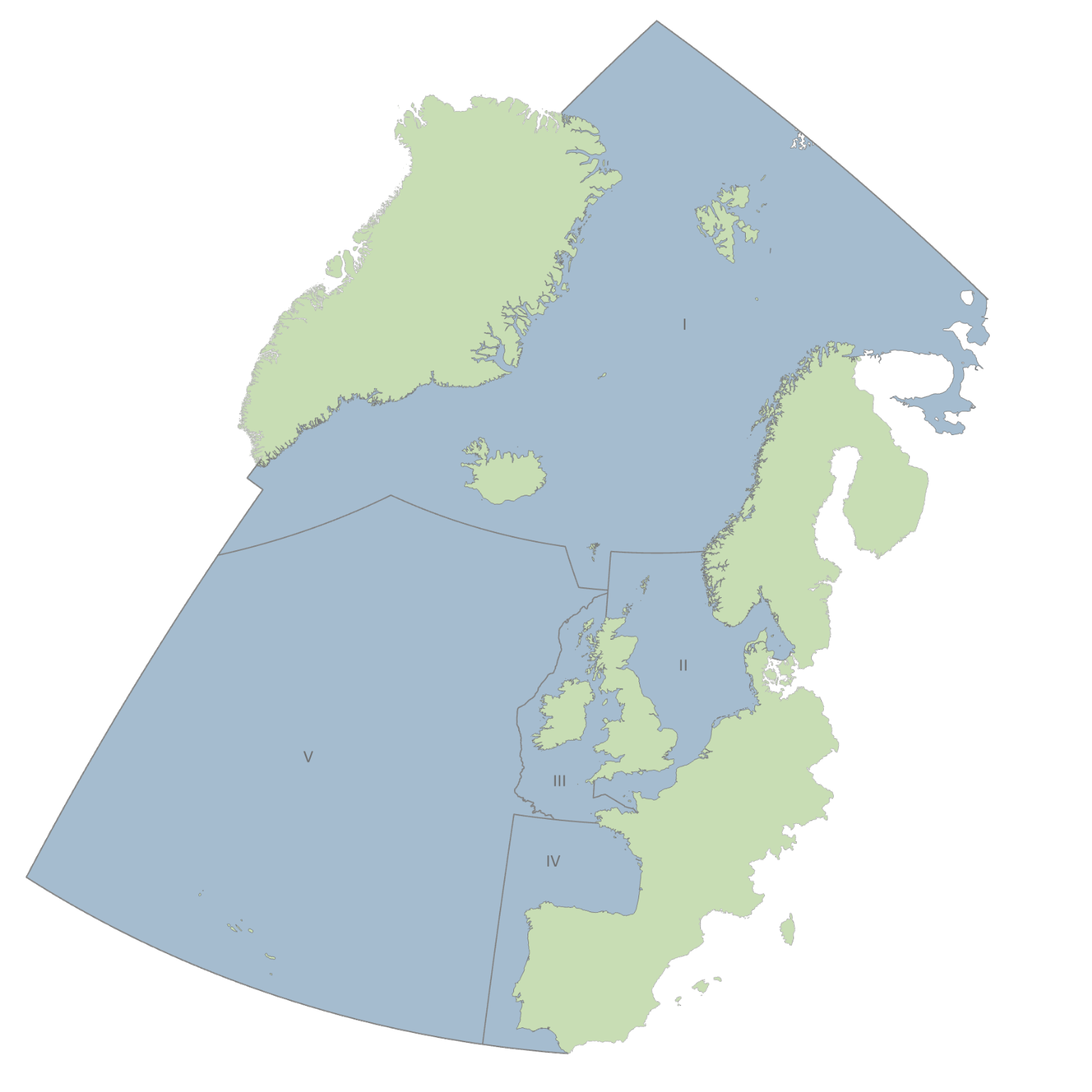
OSPAR Region: All Regions
Source of knowledge gap: QSR2023 - Non-Indigenous Species Thematic Assessment
The influence of climate change on Balearic shearwater
ID Number: TBC
Knowledge gap description: Information on the influence of climate change
Knowledge Gap Category:
5. cumulative effects & integration
Assessment Category:
Status assessment
Relevant for MSFD Art 8:
D1C2
Implementation Status
OSPAR Region: All Regions
Source of knowledge gap: QSR2023 - Status Assessment 2022 - Balearic shearwater
The influence of climate change on Thick-billed murre/Brünnich's guillemot
ID Number: TBC
Knowledge gap description: An in-depth understanding of how climate change affects population status is needed
Knowledge Gap Category:
5. cumulative effects & integration
Assessment Category:
Status assessment
Relevant for MSFD Art 8:
D1C2
Implementation Status
OSPAR Region: All Regions
Source of knowledge gap: QSR2023 - Status Assessment 2020 - Thick-billed murre or Brünnich‘s guillemot
Improve predictability of effects from climate change on future primary production
ID Number: BB32.02
Knowledge gap description: Climate change is changing the predictability of how physical processes affecting the patterns of primary production produce patches of plankton concentration. Such changes, often occurring across multiple temporal and spatial scales, should be considered in the development and adaptation of marine management processes, so as to effectively and adaptably plan towards, and manage for, future conditions.
Knowledge Gap Category:
7. emerging issues of human activities
Assessment Category:
Thematic assessment
Relevant for MSFD Art 8:
D1C6
Implementation Status
OSPAR Region: All Regions
Source of knowledge gap: QSR2023 - Pelagic Habitats Thematic Assessment
Understand the dynamic systems of plankton communities and anticipated changes due to climate change
ID Number: BB32.04
Knowledge gap description: Ecosystems and the species interactions within them are not static, and how anticipating change in these dynamic systems under climate change is needed.
Knowledge Gap Category:
7. emerging issues of human activities
Assessment Category:
Thematic assessment
Relevant for MSFD Art 8:
D1C6
Implementation Status
OSPAR Region: All Regions
Source of knowledge gap: QSR2023 - Pelagic Habitats Thematic Assessment
Links between pressures and pelagic habitats at a fine spatiotemporal scale
ID Number: BB10.03
Knowledge gap description: Examine national datasets at a finer spatiotemporal scale, to help establish clearer links between climatic and anthropogenic pressures with changes in pelagic habitats and plankton diversity.
Knowledge Gap Category:
1. indicator development
Assessment Category:
Common indicator assessment
Relevant for MSFD Art 8:
D1C6
Implementation Status
OSPAR Region: All Regions
Source of knowledge gap: QSR2023 - Changes in Phytoplankton and Zooplankton Communities
Impacts from climate change and human activities on bowhead whale
ID Number: TBC
Knowledge gap description: Effect of melting sea ice and other climate change-induced pressures, including increased human activities in the Arctic
Knowledge Gap Category:
5. cumulative effects & integration
Assessment Category:
Status assessment
Relevant for MSFD Art 8:
D1C2
Implementation Status
OSPAR Region: All Regions
Source of knowledge gap: QSR2023 - Status Assessment 2020 - Bowhead Whale
Integration methods and cumulative effects assessments to assess impacts of human activities and climate change on food webs
ID Number: TBC
Knowledge gap description: Integration methods and cumulative effects assessments need to be further developed to capture impacts of human activities and climate change on food webs, in terms of changes in trophic and non-trophic interactions and the supply of ecosystem services.
Knowledge Gap Category:
5. cumulative effects & integration
Assessment Category:
Thematic assessment
Relevant for MSFD Art 8:
D4C1, D4C2, D4C3, D4C4
Implementation Status
OSPAR Region: All Regions
Source of knowledge gap: QSR2023 - Food webs Thematic Assessment
Climate change predictions to assess future impacts of benthic habitats
ID Number: TBC
Knowledge gap description: Climate Change: There are some uncertainties in the climate change predictions, which will require additional research in order to increase accuracy on the future impacts of benthic habitats, particularly along the coastline.
Knowledge Gap Category:
4. data coverage
Assessment Category:
Thematic assessment
Relevant for MSFD Art 8:
D6C4, D6C5
Implementation Status
OSPAR Region: All Regions
Source of knowledge gap: QSR2023 - Benthic Habitats Thematic Assessment
Monitoring programs to measure the effects of climate change and ocean acidification on benthic habitats and species
ID Number: TBC
Knowledge gap description: Climate Change: There is not always a wide range of datasets available to systematically measure the effects of climate change and ocean acidification on benthic habitats and species, due to the paucity of the monitoring programme.
Knowledge Gap Category:
4. data coverage
Assessment Category:
Thematic assessment
Relevant for MSFD Art 8:
D6C4, D6C5
Implementation Status
OSPAR Region: All Regions
Source of knowledge gap: QSR2023 - Benthic Habitats Thematic Assessment
Climate change: Acquisition of information on habitats
ID Number: TBC
Knowledge gap description: Climate Change: For example, carbonate mounds, Haploops habitat and Cymodocea meadows were excluded due to the lack of information available within the Marine Evidence based Sensitivity Assessment (MarESA) sources.
Knowledge Gap Category:
4. data coverage
Assessment Category:
Thematic assessment
Relevant for MSFD Art 8:
D6C4, D6C5
Implementation Status
OSPAR Region: All Regions
Source of knowledge gap: QSR2023 - Benthic Habitats Thematic Assessment
Climate Change: predictions of future trends for the condition of deep-sea sponge aggregations
ID Number: TBC
Knowledge gap description: Climate Change: The predictions of future trends (2020-2030) for the condition of deep-sea sponge aggregations are challenging. Future environmental conditions in the OSPAR Maritime Area may contribute to deterioration in the condition of deep-sea sponge aggregations. However, further research is needed to advance scientific knowledge on this front.
Knowledge Gap Category:
4. data coverage
Assessment Category:
Thematic assessment
Relevant for MSFD Art 8:
D6C4, D6C5
Implementation Status
OSPAR Region: All Regions
Source of knowledge gap: QSR2023 - Benthic Habitats Thematic Assessment
Impacts of climate change and ocean acidification on carbonate mounds
ID Number: TBC
Knowledge gap description: Climate Change: Climate change and ocean acidification impacts on carbonate mounds remain unknown.
Knowledge Gap Category:
4. data coverage
Assessment Category:
Thematic assessment
Relevant for MSFD Art 8:
D6C4, D6C5
Implementation Status
OSPAR Region: All Regions
Source of knowledge gap: QSR2023 - Benthic Habitats Thematic Assessment
Impacts of ocean acidification on coral gardens
ID Number: TBC
Knowledge gap description: Climate Change: The current and immediate future impacts on coral gardens from ocean acidification are difficult to quantify. Predictions tend not to take into account the potential increased vulnerability of early life stages to ocean acidification.
Knowledge Gap Category:
4. data coverage
Assessment Category:
Thematic assessment
Relevant for MSFD Art 8:
D6C4, D6C5
Implementation Status
OSPAR Region: All Regions
Source of knowledge gap: QSR2023 - Benthic Habitats Thematic Assessment
Adaptation of adult vent organisms to climate change.
ID Number: TBC
Knowledge gap description: Climate Change: Although adult vent organisms are adapted to oscillations and variable low pH, high temperature and low oxygen in vent fluids, it is not known whether species are adapted to permanent change in environmental variables.
Knowledge Gap Category:
4. data coverage
Assessment Category:
Thematic assessment
Relevant for MSFD Art 8:
D6C4, D6C5
Implementation Status
OSPAR Region: All Regions
Source of knowledge gap: QSR2023 - Benthic Habitats Thematic Assessment
Effects of climate change on deep-sea ecosystems
ID Number: TBC
Knowledge gap description: Limited understanding of the effects of climate change on deep-sea ecosystems. Climate change and ocean acidification is increasing but evidence of impacts since the Quality Status Report (QSR) 2010 assessment is still lacking.(Note that this is relevant for all deep sea benthic habitats).
Knowledge Gap Category:
4. data coverage
Assessment Category:
Status assessment
Relevant for MSFD Art 8:
D6C4, D6C5
Implementation Status
OSPAR Region: All Regions
Source of knowledge gap: QSR2023 - Status Assessment 2022 - Coral Gardens
The impacts of climate-related stressors on the health of deep-sea sponges
ID Number: TBC
Knowledge gap description: Experimental work assessing the (synergistic) impacts of climate-related stressors on the health of deep-sea sponges will substantially advance the scientific knowledge about the status of deep-sea sponge aggregations under future environmental conditions e.g. climate change.
Knowledge Gap Category:
4. data coverage
Assessment Category:
Status assessment
Relevant for MSFD Art 8:
D6C4, D6C5
Implementation Status
OSPAR Region: All Regions
Source of knowledge gap: QSR2023 - Status Assessment 2022 - Deep-sea sponge aggregations
Understanding life history characteristics and population dynamics to predict changes in deep-sea sponges
ID Number: TBC
Knowledge gap description: Further work is required to understand life history characteristics and population dynamics of deep-sea sponges, to predict effects on populations and habitats of e.g. climate change.
Knowledge Gap Category:
4. data coverage
Assessment Category:
Status assessment
Relevant for MSFD Art 8:
D6C4, D6C5
Implementation Status
OSPAR Region: All Regions
Source of knowledge gap: QSR2023 - Status Assessment 2022 - Deep-sea sponge aggregations
Knowledge about the resilience of communities to disturbance and change
ID Number: TBC
Knowledge gap description: Knowledge gaps of biodiversity and resilience of communities to disturbance and change (e.g. fishing, climate change, potential future deep-seabed mining).
Knowledge Gap Category:
4. data coverage
Assessment Category:
Status assessment
Relevant for MSFD Art 8:
D6C4, D6C5
Implementation Status
OSPAR Region: All Regions
Source of knowledge gap: QSR2023 - Status Assessment 2022 - Oceanic Ridges with hydrothermal vents
Effects of warming sea temperature on fish
ID Number: BB07.02
Knowledge gap description: The effects of warming sea temperature on large fish index (LFI) threshold values and on demersal fish size composition recovery rates are not known fully.
Knowledge Gap Category:
7. emerging issues of human activities
Assessment Category:
Common indicator assessment
Relevant for MSFD Art 8:
D4C3
Implementation Status
OSPAR Region: All Regions
Source of knowledge gap: QSR2023 - Proportion of Large Fish (Large Fish Index)
Population impact of warming seas on sensitive fish species
ID Number: BB06.02
Knowledge gap description: How warming seas may impact population recovery among sensitive fish species is not known.
Knowledge Gap Category:
7. emerging issues of human activities
Assessment Category:
Common indicator assessment
Relevant for MSFD Art 8:
D1C2
Implementation Status
OSPAR Region: All Regions
Source of knowledge gap: QSR2023 - Recovery of Sensitive Fish Species
Suitability of areas in the light of climate change
ID Number: TBC
Knowledge gap description: Climate change: identify future unsuitable areas (i.e. southern Europe) and locate potential suitable ones that will ensure reproductive success
Knowledge Gap Category:
4. data coverage
Assessment Category:
Status assessment
Relevant for MSFD Art 8:
D1C4
Implementation Status
OSPAR Region: All Regions
Source of knowledge gap: QSR2023 - Status Assessment 2022 - Allis shad
Basking shark: Impacts of range shift in prey species, climate change, coastal development and potential habitats in MSP
ID Number: TBC
Knowledge gap description: Impacts of range shifts in prey species as well as ocean warming and acidification should be investigated. Special attention should be drawn to any coastal development project, and potential habitat and/or hotspots included in national or regional marine spatial planning frameworks
Knowledge Gap Category:
4. data coverage
Assessment Category:
Status assessment
Relevant for MSFD Art 8:
D1C2, D1C3
Implementation Status
OSPAR Region: All Regions
Source of knowledge gap: QSR2023 - Status Assessment 2021 - Basking shark
Atlantic Salmon: Extend of the effects of climate change
ID Number: TBC
Knowledge gap description: Limited data and understanding on the extent of the effects of climate change.
Knowledge Gap Category:
4. data coverage
Assessment Category:
Status assessment
Relevant for MSFD Art 8:
D1C2
Implementation Status
OSPAR Region: All Regions
Source of knowledge gap: QSR2023 - Status Assessment 2022 - Atlantic salmon
Impact of changing weather and land use on nutrient inputs and eutrophication in the sea
ID Number: E03.20
Knowledge gap description: Impacts of climate change on nutrient inputs to the sea and resulting ecological effects are uncertain. Predictability of drought conditions (because this may impact agriculture) may become an important factor in minimising future nutrient inputs. Changes in crops or irrigation techniques may mitigate some shortages while technological development may reduce industrial water use. On the other hand, episodic events such as flooding are expected to increase suspended sediment and nutrient inputs. Whether this cancels any general decrease in run-off is unclear. Furthermore, more investigation is needed in order to understand the ecological effects of the greater variability in nutrient inputs and how to monitor and assess such increasingly prevalent events for the purposes of future eutrophication assessments.
Knowledge Gap Category:
7. emerging issues of human activities
Assessment Category:
Other assessment
Relevant for MSFD Art 8:
N/A
Implementation Status
OSPAR Region: All Regions
Source of knowledge gap: QSR2023 - Waterborne and Atmospheric Inputs of Nutrients and Metals to the Sea