
OSPAR Science Agenda Knowledge Gap Portal
Welcome to the OSPAR Science Agenda knowledge gap portal. The page showcases important scientific questions and evidence needs identified by OSPAR to help protect and sustainably manage the North-East Atlantic. Use the filters and search options below to explore knowledge gaps by topic, category, region, and status, or browse visually to discover areas where new research, data, or collaborations are needed. The aim is to make it easy for anyone - scientists, funders, and policy makers to understand the current priorities, access key details, and get involved in helping to close these important gaps for a healthier ocean future.
Showing 26 - 43 of 43 items
Implementation of spatial and temporal confidence
ID Number: BB12.03
Knowledge gap description: For a more robust assessment, spatial and temporal confidence of the results should be developed and implemented. This will lead to targeting the location which requires a better sampling effort. Spatial and temporal confidence indices (which will be implemented in future assessments) will address the sampling effort in the pelagic habitats within OSPAR Regions. These spatial and temporal confidence indices will be implemented in future assessments.
Topics:
Knowledge Gap Category:
4. data coverage
Assessment Category:
Common indicator assessment
Relevant for MSFD Art 8:
D1C6
Implementation Status
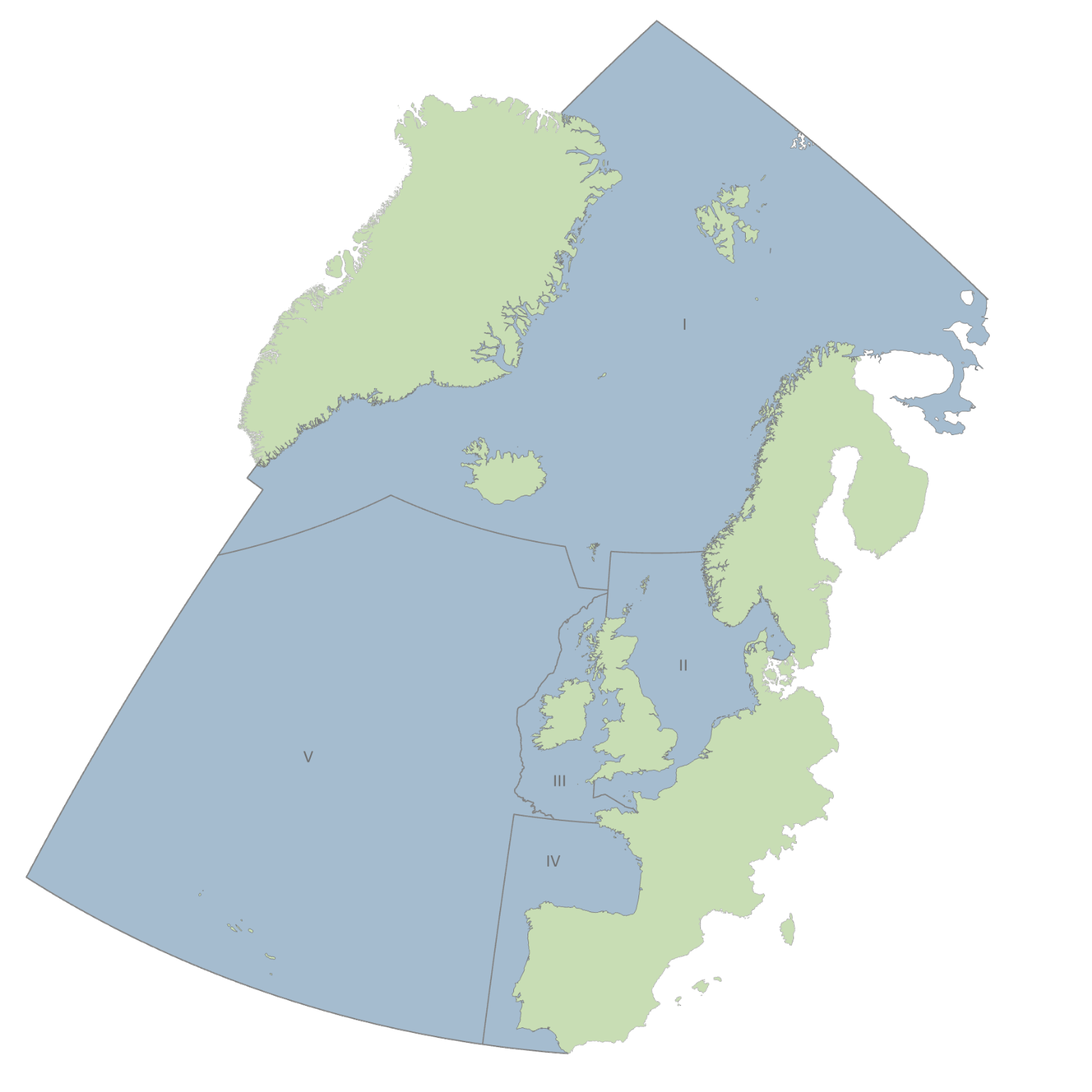
OSPAR Region: All Regions
Source of knowledge gap: QSR2023 - Changes in Plankton Diversity
Need to investigate possibilites for an intergrated pelagic habitat assessment
ID Number: BB12.04
Knowledge gap description: For a more robust assessment of the pelagic habitat, information on phytoplankton community structure (this assessment) should be complemented by other parameters, such as total community biomass/abundance (PH2) and the dynamics of phytoplankton functional groups (PH1/FW5). Thus, a more holistic assessment of plankton dynamics could be obtained and possibilities for an integrated overall pelagic habitat assessment result should be investigated further.
Topics:
Knowledge Gap Category:
5. cumulative effects & integration
Assessment Category:
Common indicator assessment
Relevant for MSFD Art 8:
D1C6
Implementation Status
OSPAR Region: All Regions
Source of knowledge gap: QSR2023 - Changes in Plankton Diversity
Incorporating the Hill concept in future Plankton Diversity Indicator Assessments
ID Number: BB12.05
Knowledge gap description: Future assessments will be improved by incorporating the Hill concept so that the influence of sampling effort is factored into indicator calculation.
Topics:
Knowledge Gap Category:
1. indicator development
Assessment Category:
Common indicator assessment
Relevant for MSFD Art 8:
D1C6
Implementation Status
OSPAR Region: All Regions
Source of knowledge gap: QSR2023 - Changes in Plankton Diversity
Combining microscopic examinations and molecular methods when monitoring phytoplankton communities
ID Number: BB12.07b
Knowledge gap description: Include additional data sets: characterising marine plankton by manual counting and identifying plankton in a small sample of seawater through a microscope has its limitations. Additional methods could include state-of-the-art (semi-)automated methods and molecular methods. Combining multiple methods may help fill the gaps in microscopic examinations and applying complementary methods will facilitate monitoring the full-size range of the phytoplankton community.
Topics:
Knowledge Gap Category:
4. data coverage
Assessment Category:
Common indicator assessment
Relevant for MSFD Art 8:
D1C6
Implementation Status
OSPAR Region: All Regions
Source of knowledge gap: QSR2023 - Changes in Plankton Diversity
Knock-on effects of change in feeding guilds across assemblages
ID Number: TBC
Knowledge gap description: The knock-on effects of change in feeding guilds across assemblages (plankton, benthos, top predators) requires further research.
Knowledge Gap Category:
5. cumulative effects & integration
Assessment Category:
Pilot assessment
Relevant for MSFD Art 8:
D4C1, D4C2, D4C3, D4C4
Implementation Status
OSPAR Region: All Regions
Source of knowledge gap: QSR2023 - Pilot Assessment of Feeding Guilds
Guilds classification for top predators and organisms lower in the food web.
ID Number: TBC
Knowledge gap description: Top-predators (e.g. seabirds, cetaceans) and organisms lower in the food web (e.g. benthos, plankton) have not yet been classified into guilds but diet databases for such taxa do exist and could be included in future.
Knowledge Gap Category:
4. data coverage
Assessment Category:
Pilot assessment
Relevant for MSFD Art 8:
D4C1, D4C2, D4C3, D4C4
Implementation Status
OSPAR Region: All Regions
Source of knowledge gap: QSR2023 - Pilot Assessment of Feeding Guilds
Comparison to relevant pelagic habitat and food web indicators (FW2 and PH2) to better address the extent of changes.
ID Number: BB14.03
Knowledge gap description: Comparison should be made to relevant pelagic habitat and food web indicators (FW2 and PH2) to better address the extent of changes.
Knowledge Gap Category:
1. indicator development
Assessment Category:
Pilot assessment
Relevant for MSFD Art 8:
D4C1, D4C2, D4C3, D4C4, D1C6
Implementation Status
OSPAR Region: All Regions
Source of knowledge gap: QSR2023 - Pilot Assessment of Primary Productivity
Data for assessment of the candidate indicator, size composition and spatial distribution of zooplankton
ID Number: TBC
Knowledge gap description: The candidate indicator, size composition and spatial distribution of zooplankton (FW6), was not assessed because of lack of data.
Knowledge Gap Category:
4. data coverage
Assessment Category:
Thematic assessment
Relevant for MSFD Art 8:
D4C1, D4C2, D4C3, D4C4, D1C6
Implementation Status
OSPAR Region: All Regions
Source of knowledge gap: QSR2023 - Food webs Thematic Assessment
Plankton monitoring in Greater North Sea
ID Number: TBC
Knowledge gap description: Greater North Sea (Region II) - Variable salinity ecosystems / Plankton community assessment: Plankton monitoring datasets were available for a limited number of assessment units, with significant gaps in time series. Lower confidence must therefore be assigned to these results, particularly for the zooplankton lifeform time-series.
Knowledge Gap Category:
4. data coverage
Assessment Category:
Thematic assessment
Relevant for MSFD Art 8:
D4C1, D4C2, D4C3, D4C4, D1C6
Implementation Status
OSPAR Region: All Regions
Source of knowledge gap: QSR2023 - Food webs Thematic Assessment
Link between trends in lifeform abundance with environmental pressures for the assessment of Coastal ecosystems / Plankton community in Greater North Sea.
ID Number: TBC
Knowledge gap description: Greater North Sea (Region II) - Coastal ecosystems / Plankton community assessment: Data used to assess trends exhibited a high degree of confidence and the majority of assessment units were well represented, except for the gelatinous zooplankton lifeform. However, a high degree of variability resulted from linking trends in lifeform abundance with environmental pressures, and thus the associations with change in sea surface temperature and salinity lacked confidence.
Knowledge Gap Category:
5. cumulative effects & integration
Assessment Category:
Thematic assessment
Relevant for MSFD Art 8:
D4C1, D4C2, D4C3, D4C4, D1C6
Implementation Status
OSPAR Region: All Regions
Source of knowledge gap: QSR2023 - Food webs Thematic Assessment
Variable salinity ecosystem /Plankton community assessment in Celtic Seas.
ID Number: TBC
Knowledge gap description: Celtic Seas (OSPAR Region III): Variable salinity ecosystem /Plankton community assessment. For the Common Indicator Assessment on Changes in Phytoplankton and Zooplankton Communities (PH1 / FW5), there was very low representation of assessment units for all zooplankton lifeforms. There are also gaps in existing relevant literature: scarce literature on primary production trends in the area and no investigation of the link between ocean acidification and primary production over long-term timescales. It is unclear if the decrease in primary production in the variable salinity and coastal habitats assessed here is due to decreasing pH or if it is the cause of decreasing pH. Further investigations is needed to understand links between phytoplankton activity
(production and respiration) and long-term concentration of dissolved inorganic carbon and anthropogenic carbon dioxide.
Knowledge Gap Category:
4. data coverage
Assessment Category:
Thematic assessment
Relevant for MSFD Art 8:
D4C1, D4C2, D4C3, D4C4, D1C6
Implementation Status
OSPAR Region: All Regions
Source of knowledge gap: QSR2023 - Food webs Thematic Assessment
Data for the gelatinous zooplankton lifeform in Celtic Seas for coastal ecosystems
ID Number: TBC
Knowledge gap description: Celtic Seas (OSPAR Region III): Coastal ecosystems /
Plankton community assessment. Common Indicator Assessment on Changes in Phytoplankton and Zooplankton
Communities (PH1 / FW5): No data were available for the gelatinous zooplankton lifeform. As in variable salinity habitats, it is unclear whether the decrease in primary production detected was the consequence of ocean acidification.
Knowledge Gap Category:
4. data coverage
Assessment Category:
Thematic assessment
Relevant for MSFD Art 8:
D4C1, D4C2, D4C3, D4C4, D1C6
Implementation Status
OSPAR Region: All Regions
Source of knowledge gap: QSR2023 - Food webs Thematic Assessment
Data for the gelatinous zooplankton lifeform in Celtic seas for shelf ecosystems
ID Number: TBC
Knowledge gap description: Celtic Seas (OSPAR Region III): Shelf ecosystems /
Plankton community assessment. Common Indicator Assessment on Changes in Phytoplankton and Zooplankton
Communities (PH1 / FW5): No data were available for the gelatinous zooplankton lifeform.
Knowledge Gap Category:
4. data coverage
Assessment Category:
Thematic assessment
Relevant for MSFD Art 8:
D4C1, D4C2, D4C3, D4C4, D1C6
Implementation Status
OSPAR Region: All Regions
Source of knowledge gap: QSR2023 - Food webs Thematic Assessment
Data on plankton monitoring to assess the pelagic habitat indicators.
ID Number: TBC
Knowledge gap description: Bay of Biscay and Iberian Coast (OSPAR Region IV): Variable salinity habitat / Plankton community assessment - There were no suitable plankton monitoring data available to evaluate the pelagic habitat indicators. For the Candidate Indicator Pilot Assessment of Primary Productivity (FW2), the assessment was also not possible because of lack of data.
Knowledge Gap Category:
4. data coverage
Assessment Category:
Thematic assessment
Relevant for MSFD Art 8:
D4C1, D4C2, D4C3, D4C4, D1C6
Implementation Status
OSPAR Region: All Regions
Source of knowledge gap: QSR2023 - Food webs Thematic Assessment
Lack of data for assessment of food web indicators
ID Number: TBC
Knowledge gap description: Bay of Biscay and Iberian Coast (OSPAR Region IV): Coastal ecosystems / Plankton community assessments - For coastal habitats, only phytoplankton data were available to inform Common Indicator Assessment on Changes in Phytoplankton and Zooplankton Communities (PH1/FW5). For the Candidate Indicator Pilot Assessment of Primary Productivity (FW2), assessment was also not possible because of lack of data.
Knowledge Gap Category:
4. data coverage
Assessment Category:
Thematic assessment
Relevant for MSFD Art 8:
D4C1, D4C2, D4C3, D4C4, D1C6
Implementation Status
OSPAR Region: All Regions
Source of knowledge gap: QSR2023 - Food webs Thematic Assessment
Data for the gelatinous zooplankton lifeform in the Bay of Biscay and Iberian Coast for beyond shelf assessment
ID Number: TBC
Knowledge gap description: Bay of Biscay and Iberian Coast (OSPAR Region IV): beyond shelf / Plankton community assessment. Common Indicator Assessment on Changes in Phytoplankton and Zooplankton Communities (PH1 / FW5): No data were available for the gelatinous zooplankton lifeform so it was not assessed.
Knowledge Gap Category:
4. data coverage
Assessment Category:
Thematic assessment
Relevant for MSFD Art 8:
D4C1, D4C2, D4C3, D4C4, D1C6
Implementation Status
OSPAR Region: All Regions
Source of knowledge gap: QSR2023 - Food webs Thematic Assessment
Spatial coverage of indicator assessments related to primary production
ID Number: TBC
Knowledge gap description: Bay of Biscay and Iberian Coast (OSPAR Region IV): beyond shelf / Plankton community assessment. Candidate Indicator Pilot Assessment of Primary Productivity (FW2) - pilot assessment results indicated significant downward trend in primary production. Spatial assessment was limited to one area representing 20% of all sub-divisions in the habitat, resulting in low confidence in those results. Future projection of primary production in the Bay of Biscay and Iberian Coast is subject to large uncertainty.
Knowledge Gap Category:
4. data coverage
Assessment Category:
Thematic assessment
Relevant for MSFD Art 8:
D4C1, D4C2, D4C3, D4C4, D1C6
Implementation Status
OSPAR Region: All Regions
Source of knowledge gap: QSR2023 - Food webs Thematic Assessment
Understanding impact of nutrient ratios on nearshore plankton dynamics
ID Number: TBC
Knowledge gap description: The assessment needs to build evidence of how nitrate and phosphate ratios lead to changes in phytoplankton communities which negatively impact the efficiency of the ecosystem services those communities provide. An improved understanding of nearshore plankton dynamics and the influence of river flows can inform the measures required to manage the nitrogen inputs from sources such as urban wastewater and agriculture.
Knowledge Gap Category:
1. indicator development
Assessment Category:
Thematic assessment
Relevant for MSFD Art 8:
D1C6
Implementation Status
OSPAR Region: All Regions
Source of knowledge gap: QSR2023 - Eutrophication Thematic Assessment