
OSPAR Science Agenda Knowledge Gap Portal
Welcome to the OSPAR Science Agenda knowledge gap portal. The page showcases important scientific questions and evidence needs identified by OSPAR to help protect and sustainably manage the North-East Atlantic. Use the filters and search options below to explore knowledge gaps by topic, category, region, and status, or browse visually to discover areas where new research, data, or collaborations are needed. The aim is to make it easy for anyone - scientists, funders, and policy makers to understand the current priorities, access key details, and get involved in helping to close these important gaps for a healthier ocean future.
Showing 1 - 23 of 23 items
Restoration of benthic habitats to benefit benthic feeding and grazing birds
ID Number: TBC
Knowledge gap description: OSPAR's work on the restoration of benthic habitats, could be particularly beneficial for benthic feeding and grazing birds.
Topics:
Knowledge Gap Category:
5. cumulative effects & integration
Assessment Category:
Thematic assessment
Relevant for MSFD Art 8:
D1C5
Implementation Status
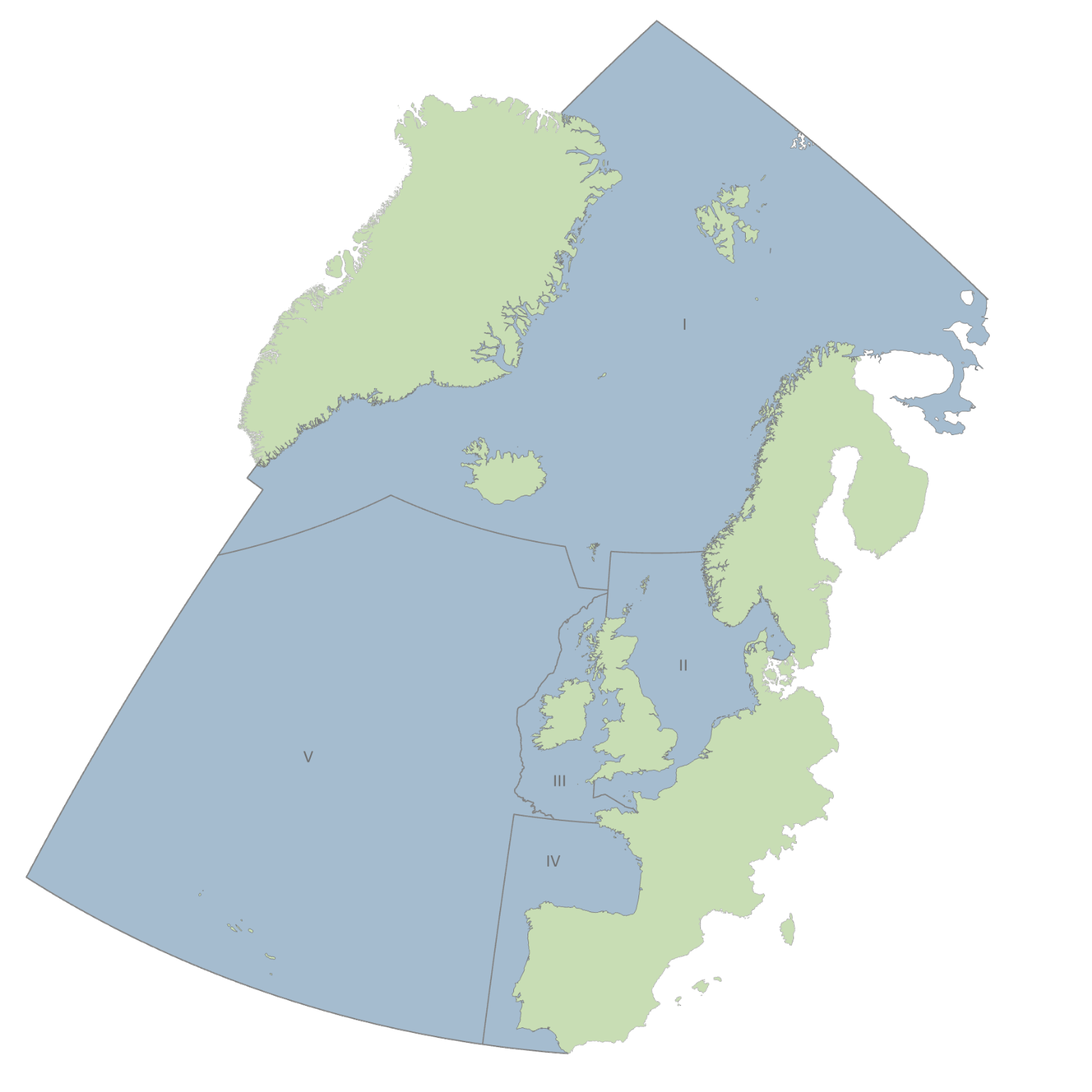
OSPAR Region: All Regions
Source of knowledge gap: QSR2023 - Marine Birds Thematic Assessment
At-sea data needed for Marine Birds offshore
ID Number: BB04.07
Knowledge gap description: Inclusion of at-sea data: Species occurring mostly offshore (outside of range of land-based counts) were omitted. Include updates of the indicator assessment data on seabirds at sea collected from boats or planes to obtain reliable results on trends in species that occur in substantial numbers offshore.
Topics:
Knowledge Gap Category:
4. data coverage
Assessment Category:
Common indicator assessment
Relevant for MSFD Art 8:
D1C2
Implementation Status
OSPAR Region: All Regions
Source of knowledge gap: QSR2023 - Marine Bird Abundance
Need for multi-country Marine Birds abundance surveys
ID Number: BB04.09
Knowledge gap description: There is a need for multi-country coordinated surveys to deliver data for the indicator work on abundance, to implement this concept in the framework of national survey programmes in future years.
Topics:
Knowledge Gap Category:
4. data coverage
Assessment Category:
Common indicator assessment
Relevant for MSFD Art 8:
D1C2
Implementation Status
OSPAR Region: All Regions
Source of knowledge gap: QSR2023 - Marine Bird Abundance
Need of surveys focusing on representative Marine Birds area in predictive modelling
ID Number: BB23.01
Knowledge gap description: The great size of the North-East Atlantic impedes an overall good coverage by ship-based and aerial surveys, given the logistic and financial effort needed for such surveys. Therefore, surveys focusing on representative area sub-samples and advances in predictive modelling might help increasing effectiveness of assessments.
Topics:
Knowledge Gap Category:
4. data coverage
Assessment Category:
Pilot assessment
Relevant for MSFD Art 8:
D1C2
Implementation Status
OSPAR Region: All Regions
Source of knowledge gap: QSR2023 - Pilot Assessment of Marine Bird Abundance - Non-Breeding Offshore Birds
Need of representative Marine Bird plot samples from Region I; Arctic Waters
ID Number: BB05.03
Knowledge gap description: The Arctic Waters assessment was largely confined to Norwegian coasts (including High-Arctic islands) due to lack of data. More data are needed from Contracting Parties in the Region. If whole colony/area counts are not possible, then representative plot samples can be used.
Topics:
Knowledge Gap Category:
4. data coverage
Assessment Category:
Common indicator assessment
Relevant for MSFD Art 8:
D1C3
Implementation Status
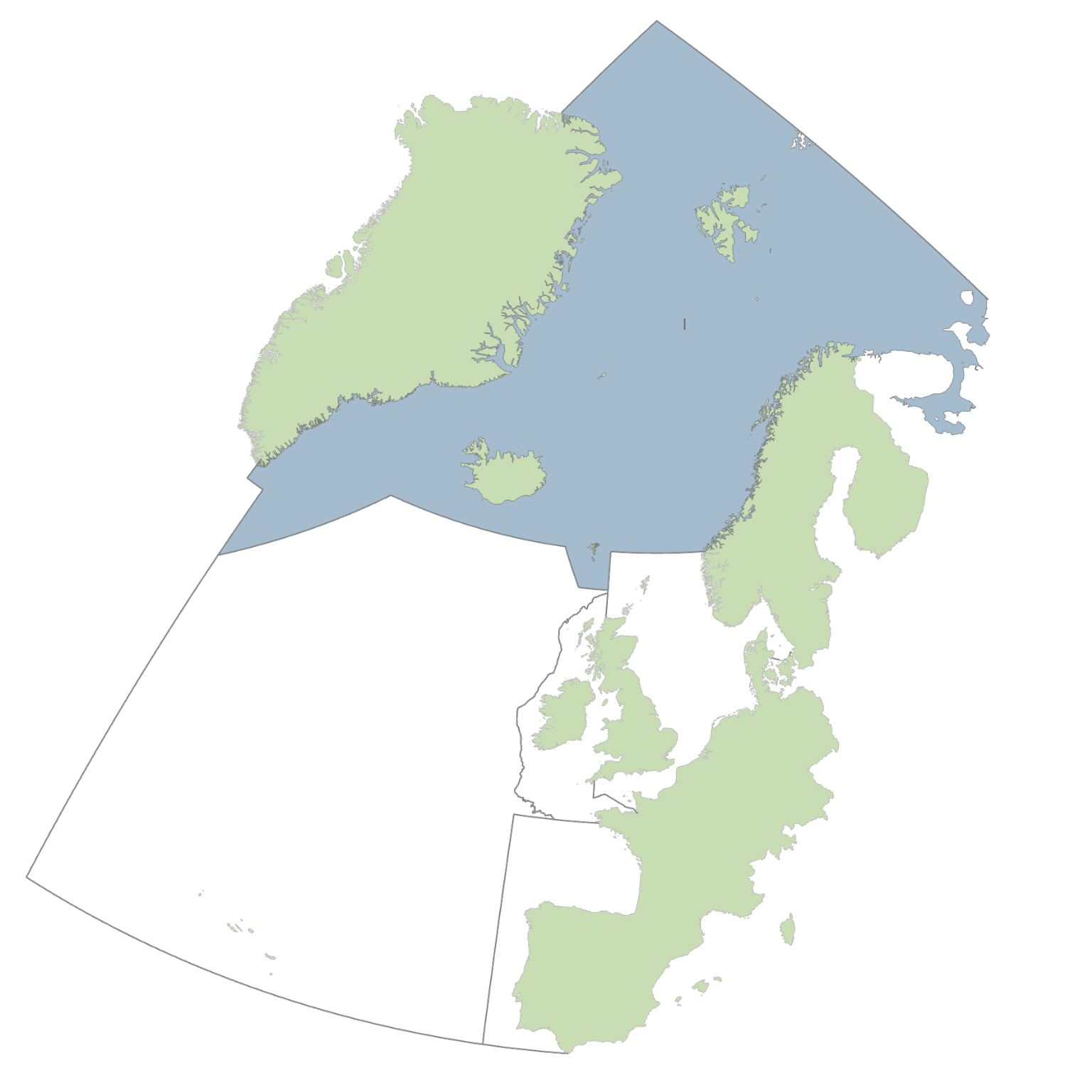
OSPAR Region: Arctic Waters
Source of knowledge gap: QSR2023 - Marine Bird Breeding Productivity
Need for Monitoring of Marine Bird Breeding productivity
ID Number: BB05.10
Knowledge gap description: Contracting Parties should strive to implement monitoring of breeding productivity or extend existing schemes to species and species groups not yet covered to allow more comprehensive, region-wide assessments.
Topics:
Knowledge Gap Category:
4. data coverage
Assessment Category:
Common indicator assessment
Relevant for MSFD Art 8:
D1C3
Implementation Status
OSPAR Region: All Regions
Source of knowledge gap: QSR2023 - Marine Bird Breeding Productivity
Need for an intergrated Marine Bird Population Model Approach
ID Number: BB05.12
Knowledge gap description: An integrated population model (IPM) approach would offer significant advantages over existing bird indicators and could, in time, replace B1 (Marine Bird Abundance) and B3 (Marine Bird Breeding Productivity) indicators and possibly assessments related to mortality such as the bycatch of marine birds in fishing gear (B5 Marine Bird Bycatch). Moreover, such an approach would provide a platform to much more effectively assess the links between marine bird state and the pressures and human activities that control them., and could potentially have benefits for OSPAR assessment beyond birds. In order to provide data for the IPM, there is a need also to develop statistical methods for assessing impacts of specific management actions on seabird populations; while an IPM will help document overall impacts, impacts of specific actions will need to be measured more directly. A quasi-experimental approach (i.e. before-after/control-impact, or BACI design) is needed.
Topics:
Knowledge Gap Category:
5. cumulative effects & integration
Assessment Category:
Common indicator assessment
Relevant for MSFD Art 8:
D1C3
Implementation Status
OSPAR Region: All Regions
Source of knowledge gap: QSR2023 - Marine Bird Breeding Productivity
Lack of by-catch data
ID Number: BB24.01
Knowledge gap description: There is a long-lasting and persisting deficiency of by-catch data for most species (not just birds) and from most parts of the OSPAR Maritime Area. Relevant fishing effort data are still not available or are of insufficient quality. The poor data availability significantly hinders the assessment of by-catch and makes it difficult to plan and apply specifically tailored
management measures.
Knowledge Gap Category:
4. data coverage
Assessment Category:
Pilot assessment
Relevant for MSFD Art 8:
D1C1
Implementation Status
OSPAR Region: All Regions
Source of knowledge gap: QSR2023 - Pilot Assessment of Marine Bird Bycatch
Need for adaptation on the Marine Bird Habitat Quality model
ID Number: BB25.01
Knowledge gap description: In a few cases, explanation of the effects of specific human activities on marine bird species are not straightforward. Therefore, the results of this indicator need to be carefully analysed. Where necessary, the method must be adapted and refined. Specifically, common scoters are disturbed in all areas of their habitat, either by bottom trawlers or by wind farms, so the model cannot estimate a difference between disturbed and undisturbed.
Topics:
Knowledge Gap Category:
1. indicator development
Assessment Category:
Pilot assessment
Relevant for MSFD Art 8:
D1C5
Implementation Status
OSPAR Region: All Regions
Source of knowledge gap: QSR2023 - Pilot Assessment of Marine Bird Habitat Quality
Understand the effects of by-catch on the Balearic shearwater
ID Number: TBC
Knowledge gap description: Need to better understand and address the issue of by-catch.
Knowledge Gap Category:
5. cumulative effects & integration
Assessment Category:
Status assessment
Relevant for MSFD Art 8:
D1C1, D10C4
Implementation Status
OSPAR Region: All Regions
Source of knowledge gap: QSR2023 - Status Assessment 2022 - Balearic shearwater
How food availability is affecting Balearic shearwater
ID Number: TBC
Knowledge gap description: Information needed of how food availability might affect the species.
Topics:
Knowledge Gap Category:
5. cumulative effects & integration
Assessment Category:
Status assessment
Relevant for MSFD Art 8:
D1C2
Implementation Status
OSPAR Region: All Regions
Source of knowledge gap: QSR2023 - Status Assessment 2022 - Balearic shearwater
The impacts of plastic on Balearic shearwater
ID Number: TBC
Knowledge gap description: Information on impact of plastics
Knowledge Gap Category:
5. cumulative effects & integration
Assessment Category:
Status assessment
Relevant for MSFD Art 8:
D10C4
Implementation Status
OSPAR Region: All Regions
Source of knowledge gap: QSR2023 - Status Assessment 2022 - Balearic shearwater
The influence of climate change on Balearic shearwater
ID Number: TBC
Knowledge gap description: Information on the influence of climate change
Knowledge Gap Category:
5. cumulative effects & integration
Assessment Category:
Status assessment
Relevant for MSFD Art 8:
D1C2
Implementation Status
OSPAR Region: All Regions
Source of knowledge gap: QSR2023 - Status Assessment 2022 - Balearic shearwater
Gap in information on past distributions of the Iberian guillemot
ID Number: TBC
Knowledge gap description: Little information regarding past distribution, population size, trends and biology of the Iberian guillemot. Another considerable gap when analysing the trend of the Iberian guillemot in Spain, even in the last few decades, is the scarcity of accurate censuses available, and the lack of periodicity between them.
Topics:
Knowledge Gap Category:
4. data coverage
Assessment Category:
Status assessment
Relevant for MSFD Art 8:
D1C3, D1C4
Implementation Status
OSPAR Region: All Regions
Source of knowledge gap: QSR2023 - Status Assessment 2022 - Iberian guillemot
Gap in understanding joint impact from stressors responsible for Lesser black-backed gull population decline
ID Number: TBC
Knowledge gap description: The assessment of threats suffers from a lack of understanding of the joint impact of the stressors potentially responsible for the continuation of the population decline
Topics:
Knowledge Gap Category:
5. cumulative effects & integration
Assessment Category:
Status assessment
Relevant for MSFD Art 8:
D1C2
Implementation Status
OSPAR Region: All Regions
Source of knowledge gap: QSR2023 - Status Assessment 2020 - Lesser black-backed gull
The influence of climate change on Thick-billed murre/Brünnich's guillemot
ID Number: TBC
Knowledge gap description: An in-depth understanding of how climate change affects population status is needed
Knowledge Gap Category:
5. cumulative effects & integration
Assessment Category:
Status assessment
Relevant for MSFD Art 8:
D1C2
Implementation Status
OSPAR Region: All Regions
Source of knowledge gap: QSR2023 - Status Assessment 2020 - Thick-billed murre or Brünnich‘s guillemot
Guilds classification for top predators and organisms lower in the food web.
ID Number: TBC
Knowledge gap description: Top-predators (e.g. seabirds, cetaceans) and organisms lower in the food web (e.g. benthos, plankton) have not yet been classified into guilds but diet databases for such taxa do exist and could be included in future.
Knowledge Gap Category:
4. data coverage
Assessment Category:
Pilot assessment
Relevant for MSFD Art 8:
D4C1, D4C2, D4C3, D4C4
Implementation Status
OSPAR Region: All Regions
Source of knowledge gap: QSR2023 - Pilot Assessment of Feeding Guilds
Impact of human induced pressures on Balearic shearwater
ID Number: TBC
Knowledge gap description: Need to better understand and address the issue of by-catch. while the occurrence and impact of plastics on the species, as well as the influence of climate change, should also be addressed.
Knowledge Gap Category:
5. cumulative effects & integration
Assessment Category:
Status assessment
Relevant for MSFD Art 8:
D1C1, D1C2, D10C4
Implementation Status
OSPAR Region: All Regions
Source of knowledge gap: QSR2023 - Status Assessment 2022 - Balearic shearwater
Improved evaluation of discard reduction measures
ID Number: TBC
Knowledge gap description: The reduction of discards associated to the Common Fisheries Policy's (CFP) landing obligation should be properly evaluated.
Topics:
Knowledge Gap Category:
5. cumulative effects & integration
Assessment Category:
Status assessment
Relevant for MSFD Art 8:
D1C2
Implementation Status
OSPAR Region: All Regions
Source of knowledge gap: QSR2023 - Status Assessment 2022 - Balearic shearwater
Impact of wind farms on Balearic shearwater
ID Number: TBC
Knowledge gap description: Regarding new/increasing potential threats, windfarm development should receive particular attention
Knowledge Gap Category:
5. cumulative effects & integration
Assessment Category:
Status assessment
Relevant for MSFD Art 8:
D1C2
Implementation Status
OSPAR Region: All Regions
Source of knowledge gap: QSR2023 - Status Assessment 2022 - Balearic shearwater
Impact of plastic litter on Balearic shearwater
ID Number: TBC
Knowledge gap description: Information on impact of plastics
Topics:
Knowledge Gap Category:
5. cumulative effects & integration
Assessment Category:
Status assessment
Relevant for MSFD Art 8:
D10C4
Implementation Status
OSPAR Region: All Regions
Source of knowledge gap: QSR2023 - Status Assessment 2022 - Balearic shearwater
Impact of combined stressors on lesser black-backed gull
ID Number: TBC
Knowledge gap description: The assessment of threats suffers from a lack of understanding of the joint impact of the stressors potentially responsible for the continuation of the population decline
Topics:
Knowledge Gap Category:
5. cumulative effects & integration
Assessment Category:
Status assessment
Relevant for MSFD Art 8:
D1C2
Implementation Status
OSPAR Region: All Regions
Source of knowledge gap: QSR2023 - Status Assessment 2020 - Lesser black-backed gull
Impact of artificial structures on birds
ID Number: TBC
Knowledge gap description: The influence of artificial structures on the nesting population of marine birds
Knowledge Gap Category:
4. data coverage, 7. emerging issues of human activities
Assessment Category:
N/A
Relevant for MSFD Art 8:
D1C2