OSPAR Science Agenda Knowledge Gap Portal
Welcome to the OSPAR Science Agenda knowledge gap portal. The page showcases important scientific questions and evidence needs identified by OSPAR to help protect and sustainably manage the North-East Atlantic. Use the filters and search options below to explore knowledge gaps by topic, category, region, and status, or browse visually to discover areas where new research, data, or collaborations are needed. The aim is to make it easy for anyone - scientists, funders, and policy makers to understand the current priorities, access key details, and get involved in helping to close these important gaps for a healthier ocean future.
Showing 1 - 15 of 15 items
Linkages across trophic levels
ID Number: BB32.08
Knowledge gap description: Include the trophic cascade concept within OSPAR’s work so as to be able to continue developing linkages across trophic levels (top-down and bottom-up), including between plankton health, food web function and derived ecosystem services
Knowledge Gap Category:
5. cumulative effects & integration
Assessment Category:
Thematic assessment
Relevant for MSFD Art 8:
D1C6
Implementation Status
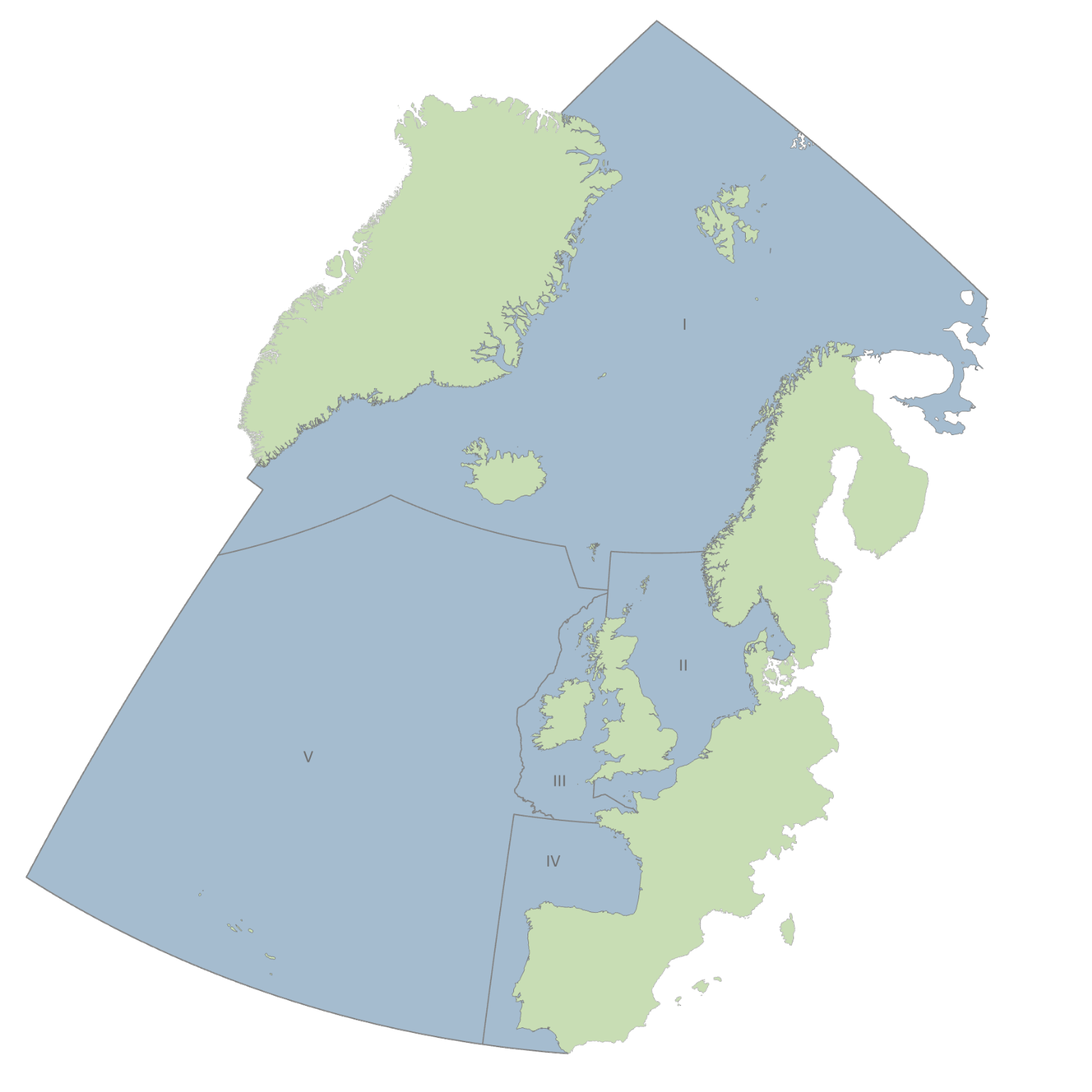
OSPAR Region: All Regions
Source of knowledge gap: QSR2023 - Pelagic Habitats Thematic Assessment
Integration methods and cumulative effects assessments to assess impacts of human activities and climate change on food webs
ID Number: TBC
Knowledge gap description: Integration methods and cumulative effects assessments need to be further developed to capture impacts of human activities and climate change on food webs, in terms of changes in trophic and non-trophic interactions and the supply of ecosystem services.
Knowledge Gap Category:
5. cumulative effects & integration
Assessment Category:
Thematic assessment
Relevant for MSFD Art 8:
D4C1, D4C2, D4C3, D4C4
Implementation Status
OSPAR Region: All Regions
Source of knowledge gap: QSR2023 - Food webs Thematic Assessment
Improve methods for understanding impacts of climate change on ecosystem services
ID Number: A3.12
Knowledge gap description: The impact of climate change on the ecosystem services in the OSPAR Maritime Area remains knowledge gap. This is the case for specific services, for example that of the provision of genetic material, but also more broadly interms of quantifying what these impacts are and which ecosystem services are at greatest risk. The Quality Status Report (QSR)2023 approached this by surveying experts, but a larger participant pool across a greater range of expertise would improve such an assessment. Other quantitative methods to improve our understanding of climate change impacts on ecosystem services are needed.
Knowledge Gap Category:
7. emerging issues of human activities
Assessment Category:
Thematic assessment
Relevant for MSFD Art 8:
N/A
Implementation Status
OSPAR Region: All Regions
Source of knowledge gap: QSR2023 - Climate Change Thematic Assessment
Marine litter impacting ecosystem services
ID Number: TBC
Knowledge gap description: Socio economic aspects: Further work on “impact on ecosystem services is needed.
Knowledge Gap Category:
4. data coverage
Assessment Category:
Thematic assessment
Relevant for MSFD Art 8:
N/A
Implementation Status
OSPAR Region: All Regions
Source of knowledge gap: QSR2023 - Marine Litter Thematic Assessment
Uniform description of the economic activity ‘recreation and tourism' and standardised data
ID Number: TBC
Knowledge gap description: It is a challenge to arrive at standardised data, both in terms of economics, but also in quantitative environmental information about their impact on marine and coastal ecosystems. Develop a uniform description of the economic activity ‘recreation and tourism’ because there is no Nomenclature des Activités Économiques dans la Communauté Européenne (NACE) code specifically for this activity, and therefore it is more difficult to collect or present relevant data in a uniform matter.
Knowledge Gap Category:
1. indicator development
Assessment Category:
Other assessment
Relevant for MSFD Art 8:
N/A
Implementation Status
OSPAR Region: All Regions
Source of knowledge gap: QSR2023 - Feeder Report 2021 - Recreation and Tourism in the North-East Atlantic
Causal relations between changing state of the marine environment and ecosystem services
ID Number: TBC
Knowledge gap description: Refine the methodology for assessing the impacts of a changing state of the marine environment on ecosystem services: It is difficult to estimate magnitude of state change impacts on ecosystem services because of limited information in the scientific literature, and little is known about causality linkages.
Topics:
Knowledge Gap Category:
1. indicator development
Assessment Category:
Other assessment
Relevant for MSFD Art 8:
N/A
Implementation Status
OSPAR Region: All Regions
Source of knowledge gap: QSR2023 - Impacts on ecosystem services due to changes in the state of the environment in the North-East Atlantic Ocean
Improve data on changing state of the marine environment and ecosystem services
ID Number: TBC
Knowledge gap description: Refine the methodology for assessing the impacts of a changing state of the marine environment on ecosystem services: There is a lack of quantitative data regarding provision of marine ecosystem services and changes in their provision as a result of marine state change impacts, particularly at the North-East Atlantic scale.
Topics:
Knowledge Gap Category:
4. data coverage
Assessment Category:
Other assessment
Relevant for MSFD Art 8:
N/A
Implementation Status
OSPAR Region: All Regions
Source of knowledge gap: QSR2023 - Impacts on ecosystem services due to changes in the state of the environment in the North-East Atlantic Ocean
Integrate information on impacts on ecosystem services using NCA or comparable methods
ID Number: TBC
Knowledge gap description: Refine the methodology for assessing the impacts of a changing state of the marine environment on ecosystem services: integrate quantitative information relating to impacts on ecosystem service provision, potentially through economic valuation of ecosystem service flows (integrating Natural Capital Accounting; NCA). NCA could address the need for quantitative data and spatial detail. NCA could address the need to expand the list of ecosystem services to ensure that the coverage of the ecosystem account is as complete as possible and to decide how and which ecosystem service should be prioritised.
Topics:
Knowledge Gap Category:
5. cumulative effects & integration
Assessment Category:
Other assessment
Relevant for MSFD Art 8:
N/A
Implementation Status
OSPAR Region: All Regions
Source of knowledge gap: QSR2023 - Impacts on ecosystem services due to changes in the state of the environment in the North-East Atlantic Ocean
Improve spatial detail in data on changing state of the marine environment and ecosystem services
ID Number: TBC
Knowledge gap description: Refine the methodology for assessing the impacts of a changing state of the marine environment on ecosystem services: there is a need for more spatial detail. Consider pursuing an explicit spatial approach to allow differentiation (e.g., between areas with higher ecosystem service provision that receive a higher/lower magnitude of state change impact and areas with lower ecosystem service provision receiving higher/lower magnitude of impact). One way to do this is to focus on differences in impacts of state change and ecosystem service provision between the five OSPAR regions. This could overcome current uncertainties in assigning magnitudes to the impacts of state change on ecosystem services.
Topics:
Knowledge Gap Category:
4. data coverage
Assessment Category:
Other assessment
Relevant for MSFD Art 8:
N/A
Implementation Status
OSPAR Region: All Regions
Source of knowledge gap: QSR2023 - Impacts on ecosystem services due to changes in the state of the environment in the North-East Atlantic Ocean
Case studies on impact of environmental state changes on ecosystem services
ID Number: TBC
Knowledge gap description: Quantify impacts by conducting a case study that focuses on one or two ecosystem services whose provision is more quantifiable (e.g., carbon storage).
Topics:
Knowledge Gap Category:
4. data coverage
Assessment Category:
Other assessment
Relevant for MSFD Art 8:
N/A
Implementation Status
OSPAR Region: All Regions
Source of knowledge gap: QSR2023 - Impacts on ecosystem services due to changes in the state of the environment in the North-East Atlantic Ocean
Causal links in the DAPSIR framework focused on ecosystem services
ID Number: TBC
Knowledge gap description: Continue to explore the links between ecosystem services and the Drivers and Activities components of the DAPSIR framework and the consequences of impacts on ecosystem services on these components.
Topics:
Knowledge Gap Category:
5. cumulative effects & integration
Assessment Category:
Other assessment
Relevant for MSFD Art 8:
N/A
Implementation Status
OSPAR Region: All Regions
Source of knowledge gap: QSR2023 - Impacts on ecosystem services due to changes in the state of the environment in the North-East Atlantic Ocean
Relationships between ecological functioning and the ecosystem services
ID Number: TBC
Knowledge gap description: Scientific knowledge of the complex relationships between ecological functioning by specific ecosystem components and the provision of ecosystem services is still progressing. This often makes it challenging to apply ecosystem services, since this must be supported by clear understanding of the ecosystem components that provide the services and the ecological functions that underly their provision (particularly for regulation and maintenance services).
Topics:
Knowledge Gap Category:
5. cumulative effects & integration
Assessment Category:
Other assessment
Relevant for MSFD Art 8:
N/A
Implementation Status
OSPAR Region: All Regions
Source of knowledge gap: QSR2023 - Impacts on ecosystem services due to changes in the state of the environment in the North-East Atlantic Ocean
Improve quantitative information on detailed ecosystem services
ID Number: TBC
Knowledge gap description: The ecosystem services considered in this report are categories that consolidate other categories or parts of categories. This was done for efficiency, clarity, and to avoid data gaps associated with some detailed ecosystem services. This could lead to gaps in future exercises of economic valuation of ecosystem services.
Topics:
Knowledge Gap Category:
1. indicator development
Assessment Category:
Other assessment
Relevant for MSFD Art 8:
N/A
Implementation Status
OSPAR Region: All Regions
Source of knowledge gap: QSR2023 - Impacts on ecosystem services due to changes in the state of the environment in the North-East Atlantic Ocean
Review visualisation of the impacts to ecosystem services for all thematic assessments
ID Number: TBC
Knowledge gap description: The visualisation of the impacts to ecosystem services was done for two case studies: Marine Litter and Marine Mammals. The same methodology was applied to all the other thematic assessments but these need to further review.
Knowledge Gap Category:
1. indicator development
Assessment Category:
Other assessment
Relevant for MSFD Art 8:
N/A
Implementation Status
OSPAR Region: All Regions
Source of knowledge gap: QSR2023 - Impacts on ecosystem services due to changes in the state of the environment in the North-East Atlantic Ocean
Impacts of hazardous substances on ecosystem services
ID Number: TBC
Knowledge gap description: There are possible, but uncertain, impacts on many ecosystem services.
Knowledge Gap Category:
5. cumulative effects & integration
Assessment Category:
Thematic assessment
Relevant for MSFD Art 8:
N/A
Implementation Status
OSPAR Region: All Regions
Source of knowledge gap: QSR2023 - Hazardous Substances Thematic Assessment