
OSPAR Science Agenda Knowledge Gap Portal
Welcome to the OSPAR Science Agenda knowledge gap portal. The page showcases important scientific questions and evidence needs identified by OSPAR to help protect and sustainably manage the North-East Atlantic. Use the filters and search options below to explore knowledge gaps by topic, category, region, and status, or browse visually to discover areas where new research, data, or collaborations are needed. The aim is to make it easy for anyone - scientists, funders, and policy makers to understand the current priorities, access key details, and get involved in helping to close these important gaps for a healthier ocean future.
Showing 326 - 350 of 539 items
Impacts of climate change and ocean acidification
ID Number: A3.04
Knowledge gap description: A lack of distinction of the impacts of climate change and ocean acidification from those of other processes that are either primary or managed drivers. This includes how indicators change in response to these multiple stressors.
Knowledge Gap Category:
1. indicator development
Assessment Category:
Thematic assessment
Relevant for MSFD Art 8:
N/A
Implementation Status
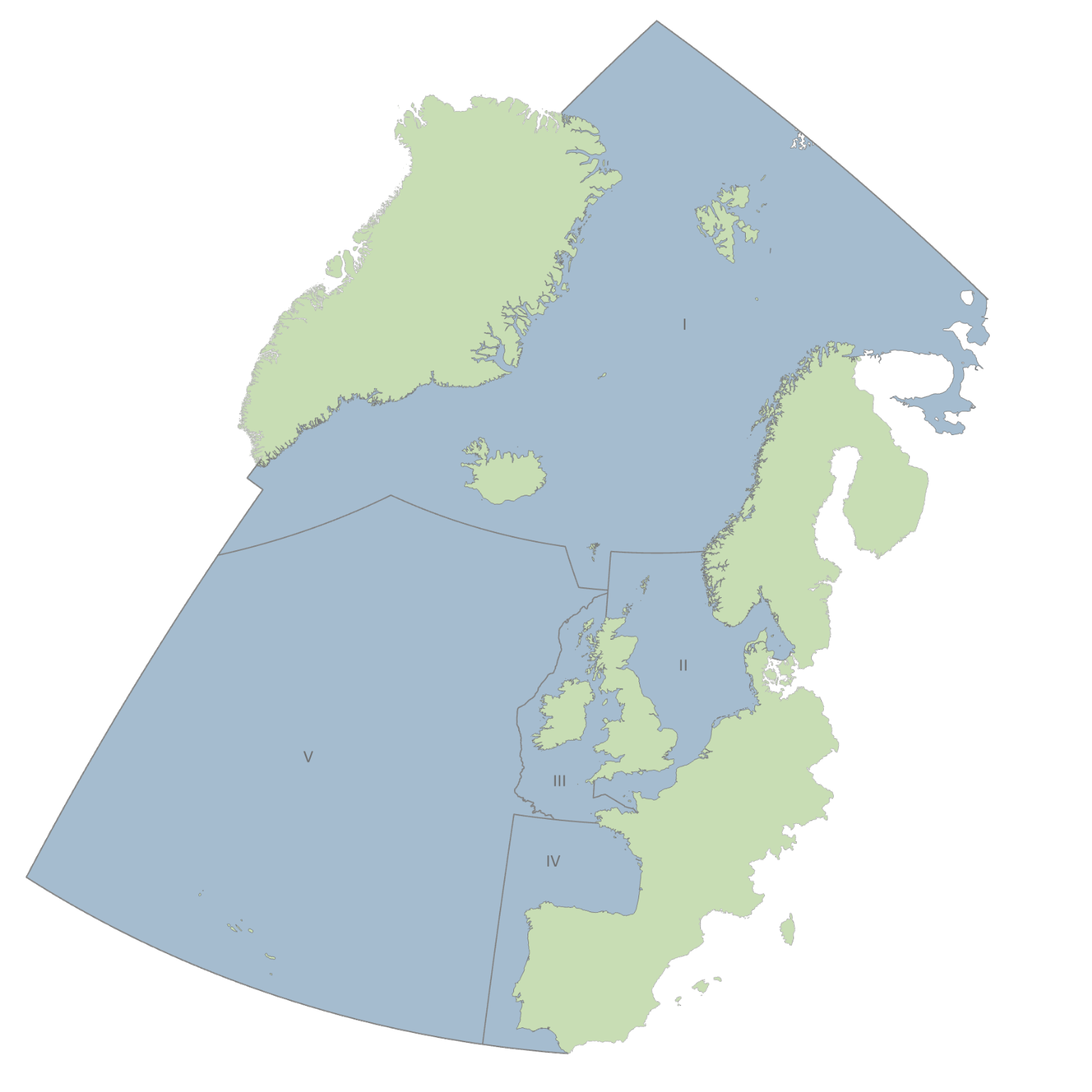
OSPAR Region: All Regions
Source of knowledge gap: QSR2023 - Climate Change Thematic Assessment
Improve methods for understanding impacts of climate change on ecosystem services
ID Number: A3.12
Knowledge gap description: The impact of climate change on the ecosystem services in the OSPAR Maritime Area remains knowledge gap. This is the case for specific services, for example that of the provision of genetic material, but also more broadly interms of quantifying what these impacts are and which ecosystem services are at greatest risk. The Quality Status Report (QSR)2023 approached this by surveying experts, but a larger participant pool across a greater range of expertise would improve such an assessment. Other quantitative methods to improve our understanding of climate change impacts on ecosystem services are needed.
Knowledge Gap Category:
7. emerging issues of human activities
Assessment Category:
Thematic assessment
Relevant for MSFD Art 8:
N/A
Implementation Status
OSPAR Region: All Regions
Source of knowledge gap: QSR2023 - Climate Change Thematic Assessment
Change in carbonate chemistry in coastal waters
ID Number: A1.02
Knowledge gap description: Advances in knowledge on drivers of change in carbonate chemistry in coastal waters are needed
Knowledge Gap Category:
7. emerging issues of human activities
Assessment Category:
Other assessment
Relevant for MSFD Art 8:
N/A
Implementation Status
OSPAR Region: All Regions
Source of knowledge gap: QSR2023 - Ocean Acidification
Ocean acidification monitoring
ID Number: A1.03
Knowledge gap description: There is a need for capacity in Europe for carbonate system CRM production to support OA monitoring
Knowledge Gap Category:
7. emerging issues of human activities
Assessment Category:
Other assessment
Relevant for MSFD Art 8:
N/A
Implementation Status
OSPAR Region: All Regions
Source of knowledge gap: QSR2023 - Ocean Acidification
Ocean acidification process-based models for coastal environment
ID Number: A1.04
Knowledge gap description: There is a need for down-scaled process-based models for the near-shore, coastal and shelf environment
Knowledge Gap Category:
7. emerging issues of human activities
Assessment Category:
Other assessment
Relevant for MSFD Art 8:
N/A
Implementation Status
OSPAR Region: All Regions
Source of knowledge gap: QSR2023 - Ocean Acidification
Biological impacts from ocean acidification
ID Number: A1.05
Knowledge gap description: There is a need for better insight in biological impact and responses. More field observations are needed, and experiments should work with more realistic conditions (as opposed to unrealistically extreme)
Knowledge Gap Category:
7. emerging issues of human activities
Assessment Category:
Other assessment
Relevant for MSFD Art 8:
N/A
Implementation Status
OSPAR Region: All Regions
Source of knowledge gap: QSR2023 - Ocean Acidification
Collaboration between modelling communities to improve models and monitoring
ID Number: A1.06
Knowledge gap description: Collaboration between modelling communities and (physicochemical and biological) observation communities is needed to inform and improve both models and monitoring programmes
Knowledge Gap Category:
7. emerging issues of human activities
Assessment Category:
Other assessment
Relevant for MSFD Art 8:
N/A
Implementation Status
OSPAR Region: All Regions
Source of knowledge gap: QSR2023 - Ocean Acidification
Methods to disentangle stressor impacts in a multistressor environment
ID Number: A1.07
Knowledge gap description: There is a need for methods to disentangle individual stressor impact in a multistressor environment
Knowledge Gap Category:
7. emerging issues of human activities
Assessment Category:
Other assessment
Relevant for MSFD Art 8:
N/A
Implementation Status
OSPAR Region: All Regions
Source of knowledge gap: QSR2023 - Ocean Acidification
Evolutionary adaptations to climate change and ocean acidification
ID Number: A1.08
Knowledge gap description: There is a need for better understanding of mechanisms and rates of evolutionary adaptations to climate change and ocean acidification
Knowledge Gap Category:
7. emerging issues of human activities
Assessment Category:
Other assessment
Relevant for MSFD Art 8:
N/A
Implementation Status
OSPAR Region: All Regions
Source of knowledge gap: QSR2023 - Ocean Acidification
Indicators of biological impact of climate change and ocean acidification
ID Number: A1.09
Knowledge gap description: There is a need for development of indicators of biological impact of climate change and ocean acidification that operate on the OSPAR regional scale
Knowledge Gap Category:
7. emerging issues of human activities
Assessment Category:
Other assessment
Relevant for MSFD Art 8:
N/A
Implementation Status
OSPAR Region: All Regions
Source of knowledge gap: QSR2023 - Ocean Acidification
Risk and impacts of mitigation strategies
ID Number: A1.10
Knowledge gap description: There is a need for more knowledge on the risks and impacts of climate change and ocean acidification mitigations strategies
Knowledge Gap Category:
7. emerging issues of human activities
Assessment Category:
Other assessment
Relevant for MSFD Art 8:
N/A
Implementation Status
OSPAR Region: All Regions
Source of knowledge gap: QSR2023 - Ocean Acidification
Climate change and ocean acidification projections to support planning in OSPAR regions
ID Number: A1.11
Knowledge gap description: There is a need for enhanced capabilities to produce climate change/OA projections appropriate scenarios and time scales to support risk assessments and adaptation planning in OSPAR regions
Knowledge Gap Category:
7. emerging issues of human activities
Assessment Category:
Other assessment
Relevant for MSFD Art 8:
N/A
Implementation Status
OSPAR Region: All Regions
Source of knowledge gap: QSR2023 - Ocean Acidification
A federated data system for projections
ID Number: A1.12
Knowledge gap description: There is a need for a federated data system for projections with regional models to faciliate availability of products supporting OSPAR assessments
Knowledge Gap Category:
7. emerging issues of human activities
Assessment Category:
Other assessment
Relevant for MSFD Art 8:
N/A
Implementation Status
OSPAR Region: All Regions
Source of knowledge gap: QSR2023 - Ocean Acidification
Uncertainty in reduced rate of introduction of non-indigenous species
ID Number: TBC
Knowledge gap description: The noted trend of reduced rate of introduction of non-indigenous species (NIS) in the assessed regions of the Greater North Sea, Celtic Seas and Bay of Biscay and Iberian Coast is associated with great uncertainty.
Topics:
Knowledge Gap Category:
6. effectiveness of measures
Assessment Category:
Thematic assessment
Relevant for MSFD Art 8:
D2C1
Implementation Status
OSPAR Region: All Regions
Source of knowledge gap: QSR2023 - Non-Indigenous Species Thematic Assessment
Target all vectors of introduction and spread
ID Number: TBC
Knowledge gap description: Some vectors of introduction and spread could also be better targeted. For instance, while (commercial) shipping has been well targeted, management of leisure boating is still in the early stages.
Knowledge Gap Category:
1. indicator development
Assessment Category:
Thematic assessment
Relevant for MSFD Art 8:
N/A
Implementation Status
OSPAR Region: All Regions
Source of knowledge gap: QSR2023 - Non-Indigenous Species Thematic Assessment
Climate modelling to quantify risk of introduction and spread of non-indigenous species
ID Number: TBC
Knowledge gap description: Climate change-induced change in marine environmental conditions is anticipated to affect the introduction and spread of non-indigenous species (NIS), but more climate modelling is required to quantify this risk.
Knowledge Gap Category:
4. data coverage
Assessment Category:
Thematic assessment
Relevant for MSFD Art 8:
N/A
Implementation Status
OSPAR Region: All Regions
Source of knowledge gap: QSR2023 - Non-Indigenous Species Thematic Assessment
Identify sources of marine litter
ID Number: BE01.01
Knowledge gap description: Nearly 13% of beach litter observed in the OSPAR Maritime Area are non-identifiable fragments. This means they cannot be linked to specific sources or activities, which prevents implementing dedicated measures. More research is needed to improve the knowledge of the composition and sources of fragments.
Knowledge Gap Category:
4. data coverage
Assessment Category:
Common indicator assessment
Relevant for MSFD Art 8:
D10C1
Implementation Status
OSPAR Region: All Regions
Source of knowledge gap: QSR2023 - Abundance, Composition and Trends of Beach Litter
Environmental conditions on marine litter survey sites
ID Number: BE01.05
Knowledge gap description: Variable environmental conditions and human activities at survey different sites can influence the amount of litter deposited on the beach. Such differences were succinctly considered in aggregation method but need to be considered further in future assessments. More comprehensive information on environmental conditions and human activities need to be made available for all the survey sites in a useable form.
Knowledge Gap Category:
5. cumulative effects & integration
Assessment Category:
Common indicator assessment
Relevant for MSFD Art 8:
D10C1
Implementation Status
OSPAR Region: All Regions
Source of knowledge gap: QSR2023 - Abundance, Composition and Trends of Beach Litter
Identify transboundary sources of marine litter
ID Number: BE01.10
Knowledge gap description: There is a lack of information on sources of beach litter found in the OSPAR Maritime Area. In addition, transboundary pollution is known to occur in the OSPAR Maritime Area, however this phenomenon is not well quantified. More studies should be performed to identify litter sources and assess transboundary pollution.
Knowledge Gap Category:
4. data coverage
Assessment Category:
Common indicator assessment
Relevant for MSFD Art 8:
D10C1
Implementation Status
OSPAR Region: All Regions
Source of knowledge gap: QSR2023 - Abundance, Composition and Trends of Beach Litter
More studies on socioeconomic impacts from beach litter
ID Number: BE01.11
Knowledge gap description: There is a lack of information regarding beach litter harm, socio-economic impacts and shoreline ecosystems sensitivity. More studies are needed to address these topics.
Knowledge Gap Category:
4. data coverage
Assessment Category:
Common indicator assessment
Relevant for MSFD Art 8:
D10C1
Implementation Status
OSPAR Region: All Regions
Source of knowledge gap: QSR2023 - Abundance, Composition and Trends of Beach Litter
Meteo-oceanic conditions influencing on beach litter data
ID Number: BE01.12
Knowledge gap description: The dynamic of beach litter stranding is still not well understood. The effect of meteo-oceanic conditions should be studied to assess their influence on beach litter data.
Knowledge Gap Category:
4. data coverage
Assessment Category:
Common indicator assessment
Relevant for MSFD Art 8:
D10C1
Implementation Status
OSPAR Region: All Regions
Source of knowledge gap: QSR2023 - Abundance, Composition and Trends of Beach Litter
Monitoring marine litter in line with MSFD TG
ID Number: BE01.13
Knowledge gap description: OSPAR beaches are affected by the presence of numerous mesoplastic fragments and pellets which are currently not monitored. This should be addressed in line with recommendations of the MSFD TG on Marine litter.
Knowledge Gap Category:
4. data coverage
Assessment Category:
Common indicator assessment
Relevant for MSFD Art 8:
D10C1
Implementation Status
OSPAR Region: All Regions
Source of knowledge gap: QSR2023 - Abundance, Composition and Trends of Beach Litter
Amounts of litter on the seafloor
ID Number: BE02.01
Knowledge gap description: There is a lack of understanding about the quantity of litter on the seafloor.Development (and harmonization) of new optical methods to monitor seafloor litter such as the use of high-resolution cameras is needed to better understand the true amounts of litter on the seafloor.
Knowledge Gap Category:
4. data coverage
Assessment Category:
Common indicator assessment
Relevant for MSFD Art 8:
D10C1
Implementation Status
OSPAR Region: All Regions
Source of knowledge gap: QSR2023 - Composition and Spatial Distribution of Litter on the Seafloor
Environmental and sosio-economic impacts of seafloor litter
ID Number: BE02.02
Knowledge gap description: There is a lack of information regarding the environmental and socio-economic impacts of seafloor litter.
Knowledge Gap Category:
5. cumulative effects & integration
Assessment Category:
Common indicator assessment
Relevant for MSFD Art 8:
D10C1
Implementation Status
OSPAR Region: All Regions
Source of knowledge gap: QSR2023 - Composition and Spatial Distribution of Litter on the Seafloor
Identifying seafloor litter hotspots and sinks
ID Number: BE02.03
Knowledge gap description: There needs to be further understanding of the sources, transport, fate and distribution of seafloor litter. Understanding of the hydrodynamics, geomorphology and human factors that influence the geographical distribution of litter on the seafloor is needed, especially with focus on understanding transboundary movements, degradation and sinking of items, how they move around the seafloor and where the hotspots and ultimate sinks are.
Knowledge Gap Category:
5. cumulative effects & integration
Assessment Category:
Common indicator assessment
Relevant for MSFD Art 8:
D10C1
Implementation Status
OSPAR Region: All Regions
Source of knowledge gap: QSR2023 - Composition and Spatial Distribution of Litter on the Seafloor