
OSPAR Science Agenda Knowledge Gap Portal
Welcome to the OSPAR Science Agenda knowledge gap portal. The page showcases important scientific questions and evidence needs identified by OSPAR to help protect and sustainably manage the North-East Atlantic. Use the filters and search options below to explore knowledge gaps by topic, category, region, and status, or browse visually to discover areas where new research, data, or collaborations are needed. The aim is to make it easy for anyone - scientists, funders, and policy makers to understand the current priorities, access key details, and get involved in helping to close these important gaps for a healthier ocean future.
Showing 1 - 19 of 19 items
Sensitivity test for assessing indicators of Non-Indigenous Species
ID Number: BB13.02
Knowledge gap description: Perform a sensitivity test of different proposed indicators for assessing spread and impact of non-indigenous species (NIS).
Topics:
Knowledge Gap Category:
1. indicator development
Assessment Category:
Common indicator assessment
Relevant for MSFD Art 8:
D2C2
Implementation Status
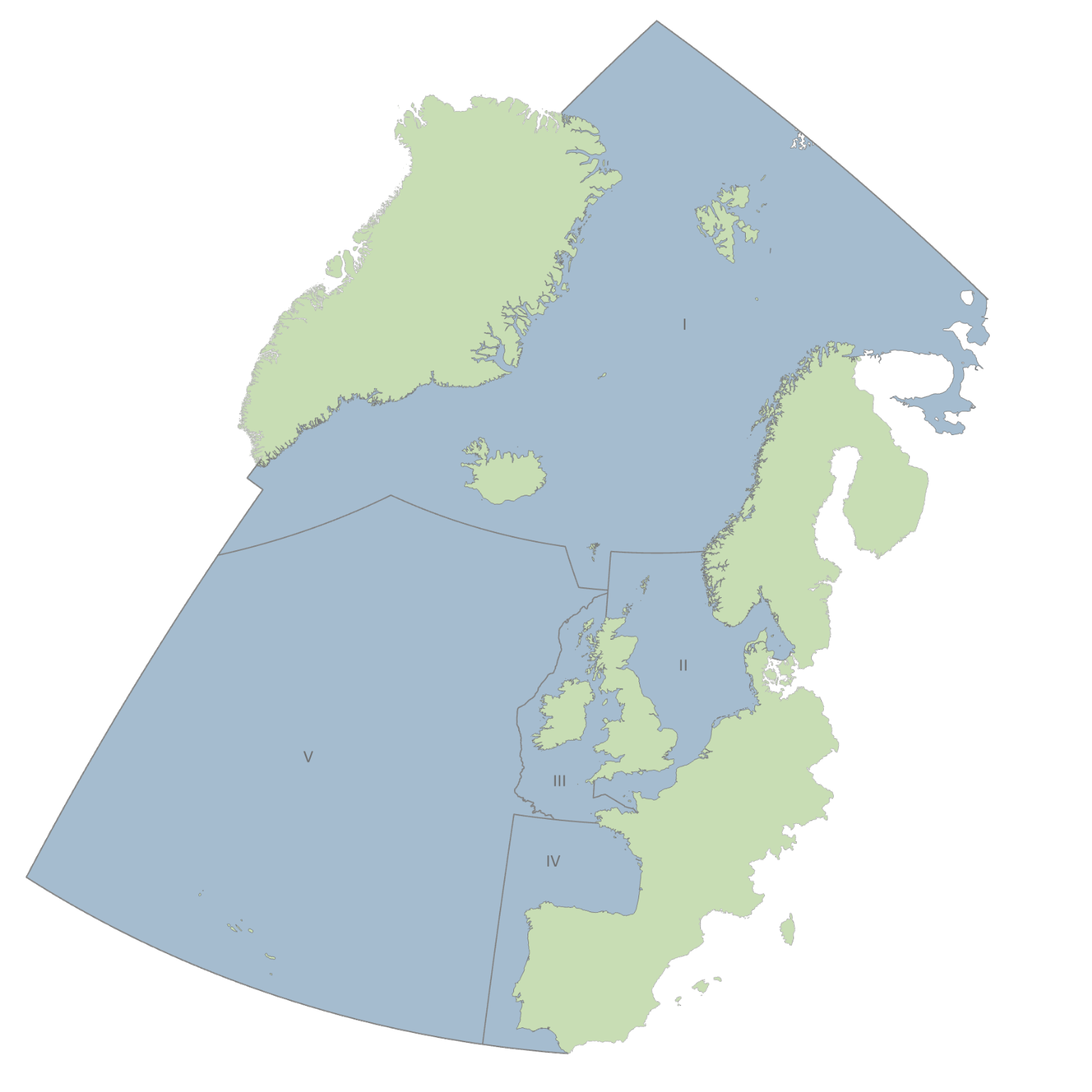
OSPAR Region: All Regions
Source of knowledge gap: QSR2023 - Trends in New Records of Non-indigenous Species Introduced by Human Activities
Strengthen monitoring efforts on Non-Indigenous Species
ID Number: BB13.03
Knowledge gap description: Consider approaches and methodology used by other organisations and for other regulatory requirements for a better appraisal of the monitoring effort.
Topics:
Knowledge Gap Category:
6. effectiveness of measures
Assessment Category:
Common indicator assessment
Relevant for MSFD Art 8:
D2C1, D2C2
Implementation Status
OSPAR Region: All Regions
Source of knowledge gap: QSR2023 - Trends in New Records of Non-indigenous Species Introduced by Human Activities
Early detection of Non-Indigenous Species
ID Number: BB13.04
Knowledge gap description: Develop methods to improve the speed and probability of early detection of non-indigenous species (NIS), notably in areas at high risk of introduction.
Topics:
Knowledge Gap Category:
6. effectiveness of measures
Assessment Category:
Common indicator assessment
Relevant for MSFD Art 8:
D2C1
Implementation Status
OSPAR Region: All Regions
Source of knowledge gap: QSR2023 - Trends in New Records of Non-indigenous Species Introduced by Human Activities
Documenting different vectors to the introduction of Non-Indigenous Species
ID Number: BB13.05
Knowledge gap description: Develop and test methods for documenting the importance of different vectors to the introduction of non-indigenous species (NIS).
Topics:
Knowledge Gap Category:
6. effectiveness of measures
Assessment Category:
Common indicator assessment
Relevant for MSFD Art 8:
D1C1
Implementation Status
OSPAR Region: All Regions
Source of knowledge gap: QSR2023 - Trends in New Records of Non-indigenous Species Introduced by Human Activities
Assess dispersal and impact of Non-Indigenous Species
ID Number: BB13.06
Knowledge gap description: Test complementary NIS indicators to assess dispersal and impact of non-indigenous species (NIS).
Topics:
Knowledge Gap Category:
1. indicator development
Assessment Category:
Common indicator assessment
Relevant for MSFD Art 8:
D2C2, D2C3
Implementation Status
OSPAR Region: All Regions
Source of knowledge gap: QSR2023 - Trends in New Records of Non-indigenous Species Introduced by Human Activities
A coordinated and harmonised monitoring approach of Non-Indigenous Species
ID Number: BB13.07
Knowledge gap description: There are limitations with available data reduce the accuracy and reliability of the current assessment of introductions of non-indigenous species (NIS) and thus the possibility to assess the effectiveness of management measures. Therefore, develop and implement a coordinated and harmonised monitoring approach, and longer-term datasets, to provide accurate interpretations for future assessments of trends in NIS introductions and to assess geographical spread and impact of invasive NIS.
Topics:
Knowledge Gap Category:
4. data coverage
Assessment Category:
Common indicator assessment
Relevant for MSFD Art 8:
D2C1, D2C2
Implementation Status
OSPAR Region: All Regions
Source of knowledge gap: QSR2023 - Trends in New Records of Non-indigenous Species Introduced by Human Activities
Improve data flow on Non-Indigenous Species
ID Number: BB13.08
Knowledge gap description: Improve data flow and management processes.
Topics:
Knowledge Gap Category:
4. data coverage
Assessment Category:
Common indicator assessment
Relevant for MSFD Art 8:
D2C1, D2C2
Implementation Status
OSPAR Region: All Regions
Source of knowledge gap: QSR2023 - Trends in New Records of Non-indigenous Species Introduced by Human Activities
Uncertainty in rate of introduction of Non-Indigenous Species
ID Number: BB13.01
Knowledge gap description: The noted trend of reduced rate of introduction of non-indigenous species (NIS) in the assessed regions of the Greater North Sea, Celtic Seas and Bay of Biscay and Iberian Coast is associated with great uncertainty.
Topics:
Knowledge Gap Category:
6. effectiveness of measures
Assessment Category:
Thematic assessment
Relevant for MSFD Art 8:
D2C1
Implementation Status
OSPAR Region: All Regions
Source of knowledge gap: QSR2023 - Non-Indigenous Species Thematic Assessment
Target different vectors to introductions of Non-Indigenous Species
ID Number: BB13.02
Knowledge gap description: Some vectors of introduction and spread could also be better targeted. For instance, while (commercial) shipping has been well targeted, management of leisure boating is still in the early stages.
Knowledge Gap Category:
1. indicator development
Assessment Category:
Thematic assessment
Relevant for MSFD Art 8:
D2C1
Implementation Status
OSPAR Region: All Regions
Source of knowledge gap: QSR2023 - Non-Indigenous Species Thematic Assessment
Need to quantify the risk of climate change - induced spread of Non-Indigenous Species
ID Number: BB13.03
Knowledge gap description: Climate change-induced change in marine environmental conditions is anticipated to affect the introduction and spread of non-indigenous species (NIS), but more climate modelling is required to quantify this risk.
Knowledge Gap Category:
4. data coverage
Assessment Category:
Thematic assessment
Relevant for MSFD Art 8:
D2C1, D2C2
Implementation Status
OSPAR Region: All Regions
Source of knowledge gap: QSR2023 - Non-Indigenous Species Thematic Assessment
Monitoring of non-indigenous species and impact on food webs
ID Number: TBC
Knowledge gap description: Non-indigenous species, which can change the structure and functioning of food webs, continue to be introduced. Continued implementation of the joint response by OSPAR and HELCOM, the EU MSFD, the Invasive Alien Species Regulation and the International Maritime Organization Ballast Water Management Convention should ensure that some of the gaps identified in monitoring are addressed and also strengthen the monitoring required to reduce bias and data gaps.
Knowledge Gap Category:
5. cumulative effects & integration
Assessment Category:
Thematic assessment
Relevant for MSFD Art 8:
D4C1, D4C2, D4C3, D4C4
Implementation Status
OSPAR Region: All Regions
Source of knowledge gap: QSR2023 - Food webs Thematic Assessment
Investigation of interactions with predators, non indigenous species and competitors and european flat oyster beds
ID Number: TBC
Knowledge gap description: Interactions with predators, non-indigenous species and competitors need to be investigated,
Knowledge Gap Category:
4. data coverage
Assessment Category:
Status assessment
Relevant for MSFD Art 8:
D1C3
Implementation Status
OSPAR Region: All Regions
Source of knowledge gap: QSR2023 - Status Assessment 2020 - European flat oyster and Ostrea edulis beds
Potential effect of invasive species
ID Number: TBC
Knowledge gap description: Potential effect of invasive species
Knowledge Gap Category:
4. data coverage
Assessment Category:
Status assessment
Relevant for MSFD Art 8:
D2C3
Implementation Status
OSPAR Region: All Regions
Source of knowledge gap: QSR2023 - Status Assessment 2022 - Allis shad
Uncertainty in reduced rate of introduction of non-indigenous species
ID Number: TBC
Knowledge gap description: The noted trend of reduced rate of introduction of non-indigenous species (NIS) in the assessed regions of the Greater North Sea, Celtic Seas and Bay of Biscay and Iberian Coast is associated with great uncertainty.
Topics:
Knowledge Gap Category:
6. effectiveness of measures
Assessment Category:
Thematic assessment
Relevant for MSFD Art 8:
D2C1
Implementation Status
OSPAR Region: All Regions
Source of knowledge gap: QSR2023 - Non-Indigenous Species Thematic Assessment
Target all vectors of introduction and spread
ID Number: TBC
Knowledge gap description: Some vectors of introduction and spread could also be better targeted. For instance, while (commercial) shipping has been well targeted, management of leisure boating is still in the early stages.
Knowledge Gap Category:
1. indicator development
Assessment Category:
Thematic assessment
Relevant for MSFD Art 8:
N/A
Implementation Status
OSPAR Region: All Regions
Source of knowledge gap: QSR2023 - Non-Indigenous Species Thematic Assessment
Climate modelling to quantify risk of introduction and spread of non-indigenous species
ID Number: TBC
Knowledge gap description: Climate change-induced change in marine environmental conditions is anticipated to affect the introduction and spread of non-indigenous species (NIS), but more climate modelling is required to quantify this risk.
Knowledge Gap Category:
4. data coverage
Assessment Category:
Thematic assessment
Relevant for MSFD Art 8:
N/A
Implementation Status
OSPAR Region: All Regions
Source of knowledge gap: QSR2023 - Non-Indigenous Species Thematic Assessment
Understanding impacts of future growth of aquaculture
ID Number: TBC
Knowledge gap description: Aquaculture: increase understanding of potential impacts of future growth in aquaculture, including risks of a spread of non-indigenous species or parasites, or of contamination of the marine environment with hazardous substances, therapeutants, or nutrients. Engage with ICES on significant knowledge gaps. Include implications of new/expanded forms of aquaculture including offshore aquaculture, growth in cultivation of new or currently minor species (such as seaweeds), and recirculating aquaculture systems.
Knowledge Gap Category:
7. emerging issues of human activities
Assessment Category:
Thematic assessment
Relevant for MSFD Art 8:
D2C1, D2C2, D2C3, D8C1, D5C1
Implementation Status
OSPAR Region: All Regions
Source of knowledge gap: QSR2023 - Human Activities Thematic Assessment
Confidence in data on trends on number of new introductions of non-indigenous species.
ID Number: TBC
Knowledge gap description: There is fairly low confidence in data on trends on number of new introductions of non-indigenous species.
Knowledge Gap Category:
4. data coverage
Assessment Category:
Other assessment
Relevant for MSFD Art 8:
D2C1
Implementation Status
OSPAR Region: All Regions
Source of knowledge gap: QSR2023 - Feeder Report 2021 - Shipping and Ports
Monitoring of non-indigenous species
ID Number: TBC
Knowledge gap description: Monitoring of non-indigenous species is a knowledge gap for implementation of the Marine Strategy Framework Directive.
Knowledge Gap Category:
4. data coverage
Assessment Category:
Other assessment
Relevant for MSFD Art 8:
D2C1, D2C2, D2C3
Implementation Status
OSPAR Region: All Regions
Source of knowledge gap: QSR2023 - Feeder Report 2021 - Shipping and Ports