OSPAR Science Agenda Knowledge Gap Portal
Welcome to the OSPAR Science Agenda knowledge gap portal. The page showcases important scientific questions and evidence needs identified by OSPAR to help protect and sustainably manage the North-East Atlantic. Use the filters and search options below to explore knowledge gaps by topic, category, region, and status, or browse visually to discover areas where new research, data, or collaborations are needed. The aim is to make it easy for anyone - scientists, funders, and policy makers to understand the current priorities, access key details, and get involved in helping to close these important gaps for a healthier ocean future.
Showing 51 - 64 of 64 items
Deep-water sharks: Increase in population monitoring
ID Number: TBC
Knowledge gap description: Increased and rigorous monitoring of deep-water shark populations
Topics:
Knowledge Gap Category:
4. data coverage
Assessment Category:
Status assessment
Relevant for MSFD Art 8:
D1C3
Implementation Status
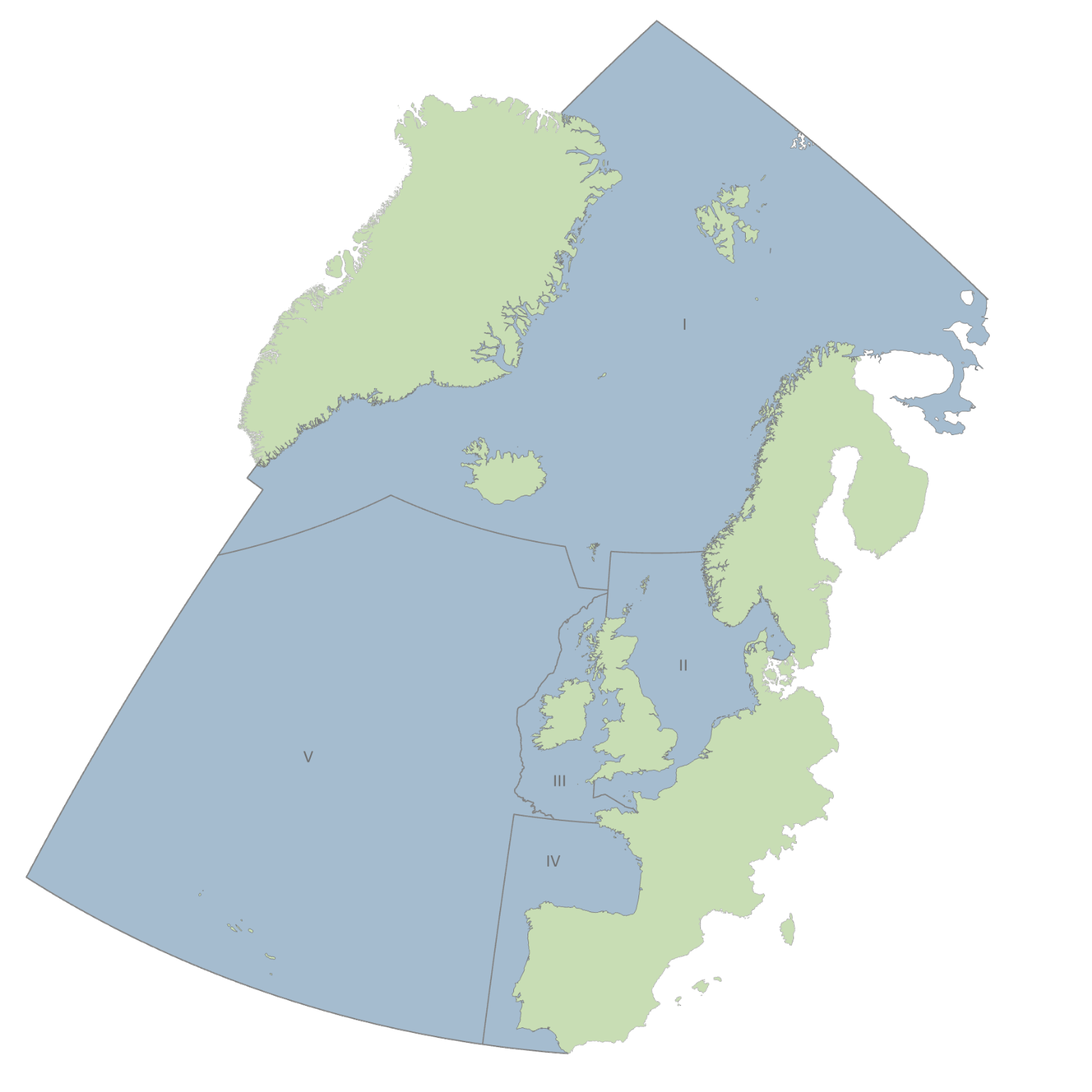
OSPAR Region: All Regions
Source of knowledge gap: QSR2023 - Status Assessment 2021 - Portuguese dogfish
Atlantic Salmon: Extend of the effects of climate change
ID Number: TBC
Knowledge gap description: Limited data and understanding on the extent of the effects of climate change.
Knowledge Gap Category:
4. data coverage
Assessment Category:
Status assessment
Relevant for MSFD Art 8:
D1C2
Implementation Status
OSPAR Region: All Regions
Source of knowledge gap: QSR2023 - Status Assessment 2022 - Atlantic salmon
Atlantic Salmon: Multiple pressures in different life stages
ID Number: TBC
Knowledge gap description: Combined effect from multiple pressures during different life stages
Topics:
Knowledge Gap Category:
4. data coverage
Assessment Category:
Status assessment
Relevant for MSFD Art 8:
D1C2
Implementation Status
OSPAR Region: All Regions
Source of knowledge gap: QSR2023 - Status Assessment 2022 - Atlantic salmon
Sea lamprey: lamprey-host interaction
ID Number: TBC
Knowledge gap description: More information is needed concerning the dynamic lamprey-host interactions
Topics:
Knowledge Gap Category:
4. data coverage
Assessment Category:
Status assessment
Relevant for MSFD Art 8:
D1C3
Implementation Status
OSPAR Region: All Regions
Source of knowledge gap: QSR2023 - Status Assessment 2022 - Sea lamprey
Sea lamprey: Limiting factors for the number of spawners
ID Number: TBC
Knowledge gap description: Studies on oceanographic limiting factors affecting the number of spawners
Topics:
Knowledge Gap Category:
4. data coverage
Assessment Category:
Status assessment
Relevant for MSFD Art 8:
D1C3
Implementation Status
OSPAR Region: All Regions
Source of knowledge gap: QSR2023 - Status Assessment 2022 - Sea lamprey
Spurdog: Growth parameters and natural mortality
ID Number: TBC
Knowledge gap description: Updated and validated growth parameters and better estimates of natural mortality
Topics:
Knowledge Gap Category:
4. data coverage
Assessment Category:
Status assessment
Relevant for MSFD Art 8:
D1C3
Implementation Status
OSPAR Region: All Regions
Source of knowledge gap: QSR2023 - Status Assessment 2021 - Spurdog
Impacts of noise on marine mammals, fish and invertebrate species
ID Number: BE04.07
Knowledge gap description: This assessment of the indicator covers only harbour porpoise. Future assessments may encompass further marine mammal species, and fish or invertebrate species.
Knowledge Gap Category:
4. data coverage
Assessment Category:
Common indicator assessment
Relevant for MSFD Art 8:
D11C1
Implementation Status
OSPAR Region: All Regions
Source of knowledge gap: QSR2023 - Risk of Impact from Anthropogenic Impulsive Sound
Sea lamprey protection
ID Number: TBC
Knowledge gap description: OSPAR Recommendation 2015/03 on furthering the protection and conservation of the sea lamprey includes proposed measures to assist agriculture and forestry in reducing destruction or degradation of spawning habitats and river migration routes. Progress made in implementing this measure is not clear.
Topics:
Knowledge Gap Category:
6. effectiveness of measures
Assessment Category:
Other assessment
Relevant for MSFD Art 8:
N/A
Implementation Status
OSPAR Region: All Regions
Source of knowledge gap: QSR2023 - Feeder Report 2021 - Agriculture
Impact of underwater noise and electromagnetic fields on Allis shad
ID Number: TBC
Knowledge gap description: Lack of knowledge on impact of aquatic noise, electromagnetic fields on diadromous fish behaviour
Knowledge Gap Category:
4. data coverage
Assessment Category:
Status assessment
Relevant for MSFD Art 8:
D11C1, D11C2
Implementation Status
OSPAR Region: All Regions
Source of knowledge gap: QSR2023 - Status Assessment 2022 - Allis shad
Impacts of climate change and coastal development on Basking sharks
ID Number: TBC
Knowledge gap description: Impacts of range shifts in prey species as well as ocean warming and acidification should be investigated. Special attention should be drawn to any coastal development project, and potential habitat and/or hotspots included in national or regional marine spatial planning frameworks
Knowledge Gap Category:
4. data coverage
Assessment Category:
Status assessment
Relevant for MSFD Art 8:
D1C2
Implementation Status
OSPAR Region: All Regions
Source of knowledge gap: QSR2023 - Status Assessment 2021 - Basking shark
Ecotoxicological data voor improving heavy metals assessment criteria
ID Number: H01.01
Knowledge gap description: Lack of ecotoxicological data for developing new assessment criteria based on the EU Water Framework Directive (WFD) or OSPAR Environmental Assessment Criteria (EAC) principles, to replace the current Effects Range-Low (ERL) criteria. Thresholds for trace metals in sediments, fish and shellfish should be developed or updated.
Knowledge Gap Category:
2. thresholds & references
Assessment Category:
Common indicator assessment
Relevant for MSFD Art 8:
D8C1
Implementation Status
OSPAR Region: All Regions
Source of knowledge gap: QSR2023 - Status and Trend for Heavy Metals (Mercury, Cadmium and Lead) in Fish, Shellfish and Sediment
Understanding increasing trends in heavy metal levels in biota
ID Number: H01.02
Knowledge gap description: A better understanding is needed of why concentrations of metals in fish and shellfish are increasing, despite perceived decreasing inputs to the marine environment, and decreasing trends in sediments. Links between metal concentrations and confounding factors like the size of shellfish and fish, the condition of the species analysed, trophic level and dry weight/lipid concentrations should be investigated further.
Knowledge Gap Category:
5. cumulative effects & integration
Assessment Category:
Common indicator assessment
Relevant for MSFD Art 8:
D8C1
Implementation Status
OSPAR Region: All Regions
Source of knowledge gap: QSR2023 - Status and Trend for Heavy Metals (Mercury, Cadmium and Lead) in Fish, Shellfish and Sediment
Understanding diffuse terrestrial sources and pathways of PCBs
ID Number: H02.01
Knowledge gap description: Further research and modelling is required to understand, define and quantify diffuse emissions and inputs to air and water from terrestrial sources (secondary sources such as leachate from land fill and waste disposal sites)
Knowledge Gap Category:
4. data coverage
Assessment Category:
Common indicator assessment
Relevant for MSFD Art 8:
D8C1
Implementation Status
OSPAR Region: All Regions
Source of knowledge gap: QSR2023 - Status and Trends of Polychlorinated Biphenyls (PCB) in Fish, Shellfish and Sediment
Improving comparability of PBDEs data in various biota
ID Number: H05.02
Knowledge gap description: A strategy is needed for making data from monitoring of different species (shellfish and fish) comparable.
Knowledge Gap Category:
5. cumulative effects & integration
Assessment Category:
Common indicator assessment
Relevant for MSFD Art 8:
D8C1
Implementation Status
OSPAR Region: All Regions
Source of knowledge gap: QSR2023 - Status and Trends of Polybrominated Diphenyl Ethers (PBDEs) in Biota and Sediment