
OSPAR Science Agenda Knowledge Gap Portal
Welcome to the OSPAR Science Agenda knowledge gap portal. The page showcases important scientific questions and evidence needs identified by OSPAR to help protect and sustainably manage the North-East Atlantic. Use the filters and search options below to explore knowledge gaps by topic, category, region, and status, or browse visually to discover areas where new research, data, or collaborations are needed. The aim is to make it easy for anyone - scientists, funders, and policy makers to understand the current priorities, access key details, and get involved in helping to close these important gaps for a healthier ocean future.
Showing 226 - 250 of 539 items
Climate change predictions to assess future impacts of benthic habitats
ID Number: TBC
Knowledge gap description: Climate Change: There are some uncertainties in the climate change predictions, which will require additional research in order to increase accuracy on the future impacts of benthic habitats, particularly along the coastline.
Knowledge Gap Category:
4. data coverage
Assessment Category:
Thematic assessment
Relevant for MSFD Art 8:
D6C4, D6C5
Implementation Status
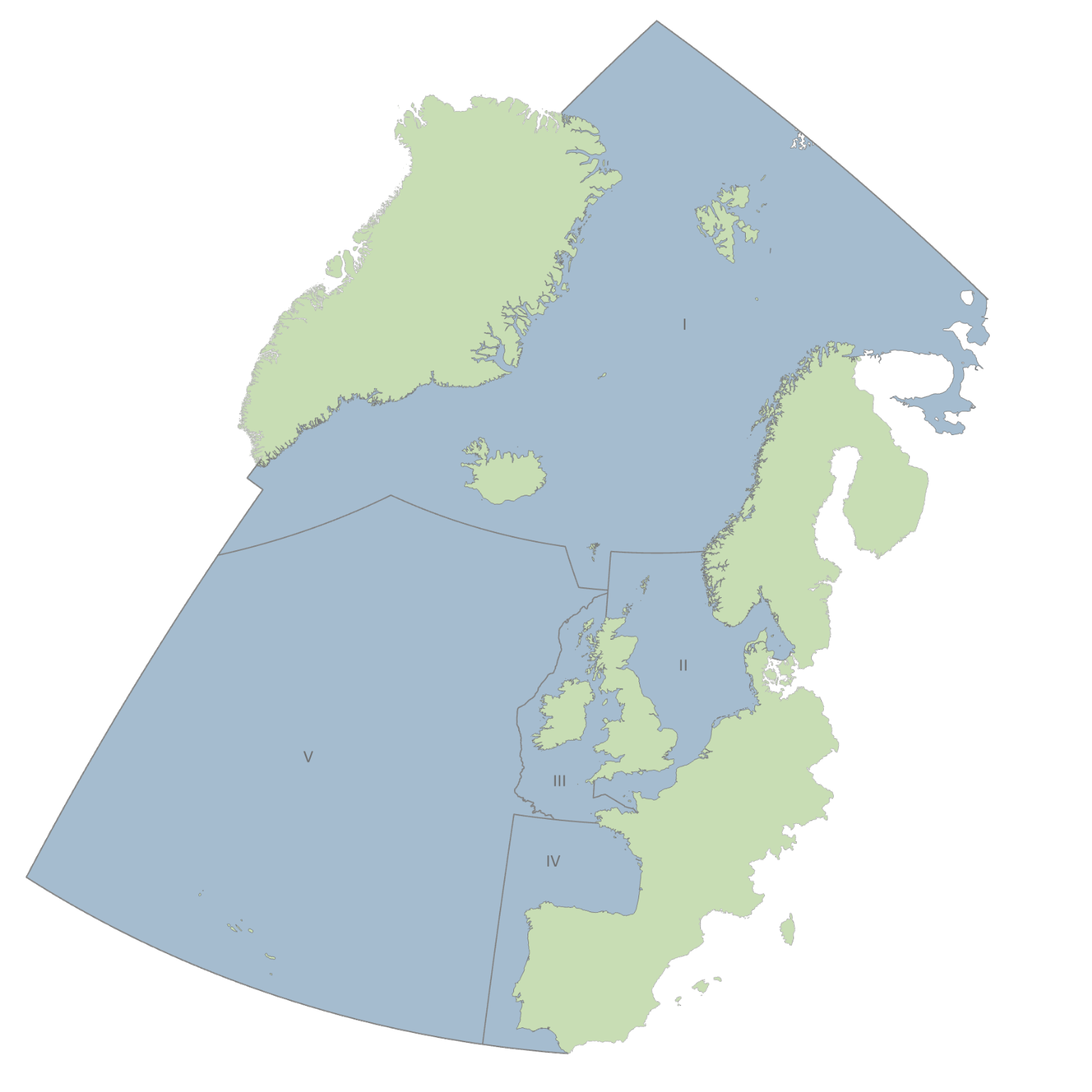
OSPAR Region: All Regions
Source of knowledge gap: QSR2023 - Benthic Habitats Thematic Assessment
Monitoring programs to measure the effects of climate change and ocean acidification on benthic habitats and species
ID Number: TBC
Knowledge gap description: Climate Change: There is not always a wide range of datasets available to systematically measure the effects of climate change and ocean acidification on benthic habitats and species, due to the paucity of the monitoring programme.
Knowledge Gap Category:
4. data coverage
Assessment Category:
Thematic assessment
Relevant for MSFD Art 8:
D6C4, D6C5
Implementation Status
OSPAR Region: All Regions
Source of knowledge gap: QSR2023 - Benthic Habitats Thematic Assessment
Climate change: Acquisition of information on habitats
ID Number: TBC
Knowledge gap description: Climate Change: For example, carbonate mounds, Haploops habitat and Cymodocea meadows were excluded due to the lack of information available within the Marine Evidence based Sensitivity Assessment (MarESA) sources.
Knowledge Gap Category:
4. data coverage
Assessment Category:
Thematic assessment
Relevant for MSFD Art 8:
D6C4, D6C5
Implementation Status
OSPAR Region: All Regions
Source of knowledge gap: QSR2023 - Benthic Habitats Thematic Assessment
Climate Change: predictions of future trends for the condition of deep-sea sponge aggregations
ID Number: TBC
Knowledge gap description: Climate Change: The predictions of future trends (2020-2030) for the condition of deep-sea sponge aggregations are challenging. Future environmental conditions in the OSPAR Maritime Area may contribute to deterioration in the condition of deep-sea sponge aggregations. However, further research is needed to advance scientific knowledge on this front.
Knowledge Gap Category:
4. data coverage
Assessment Category:
Thematic assessment
Relevant for MSFD Art 8:
D6C4, D6C5
Implementation Status
OSPAR Region: All Regions
Source of knowledge gap: QSR2023 - Benthic Habitats Thematic Assessment
Impacts of climate change and ocean acidification on carbonate mounds
ID Number: TBC
Knowledge gap description: Climate Change: Climate change and ocean acidification impacts on carbonate mounds remain unknown.
Knowledge Gap Category:
4. data coverage
Assessment Category:
Thematic assessment
Relevant for MSFD Art 8:
D6C4, D6C5
Implementation Status
OSPAR Region: All Regions
Source of knowledge gap: QSR2023 - Benthic Habitats Thematic Assessment
Impacts of ocean acidification on coral gardens
ID Number: TBC
Knowledge gap description: Climate Change: The current and immediate future impacts on coral gardens from ocean acidification are difficult to quantify. Predictions tend not to take into account the potential increased vulnerability of early life stages to ocean acidification.
Knowledge Gap Category:
4. data coverage
Assessment Category:
Thematic assessment
Relevant for MSFD Art 8:
D6C4, D6C5
Implementation Status
OSPAR Region: All Regions
Source of knowledge gap: QSR2023 - Benthic Habitats Thematic Assessment
Adaptation of adult vent organisms to climate change.
ID Number: TBC
Knowledge gap description: Climate Change: Although adult vent organisms are adapted to oscillations and variable low pH, high temperature and low oxygen in vent fluids, it is not known whether species are adapted to permanent change in environmental variables.
Knowledge Gap Category:
4. data coverage
Assessment Category:
Thematic assessment
Relevant for MSFD Art 8:
D6C4, D6C5
Implementation Status
OSPAR Region: All Regions
Source of knowledge gap: QSR2023 - Benthic Habitats Thematic Assessment
Effectiveness of measures to improve the status of benthic habitats
ID Number: TBC
Knowledge gap description: It is difficult to measure the effectiveness of measures to improve the status of benthic habitats, due to the multiple activities and pressures involved, and because the effects of measures on the recovery of habitats
may take a long time to become evident.
Topics:
Knowledge Gap Category:
6. effectiveness of measures
Assessment Category:
Thematic assessment
Relevant for MSFD Art 8:
D6C4, D6C5
Implementation Status
OSPAR Region: All Regions
Source of knowledge gap: QSR2023 - Benthic Habitats Thematic Assessment
Effects of climate change on deep-sea ecosystems
ID Number: TBC
Knowledge gap description: Limited understanding of the effects of climate change on deep-sea ecosystems. Climate change and ocean acidification is increasing but evidence of impacts since the Quality Status Report (QSR) 2010 assessment is still lacking.(Note that this is relevant for all deep sea benthic habitats).
Knowledge Gap Category:
4. data coverage
Assessment Category:
Status assessment
Relevant for MSFD Art 8:
D6C4, D6C5
Implementation Status
OSPAR Region: All Regions
Source of knowledge gap: QSR2023 - Status Assessment 2022 - Coral Gardens
Knowledge on baseline conditions and natural variability
ID Number: TBC
Knowledge gap description: Knowledge on baseline conditions (in “pristine” areas) and natural variability is lacking
Topics:
Knowledge Gap Category:
4. data coverage
Assessment Category:
Status assessment
Relevant for MSFD Art 8:
D6C4, D6C5
Implementation Status
OSPAR Region: All Regions
Source of knowledge gap: QSR2023 - Status Assessment 2022 - Deep-sea sponge aggregations
Nature, behaviour and distribution of deep-sea sponge larvae and effect of change in ocean circulation
ID Number: TBC
Knowledge gap description: In terms of life history characteristics major knowledge gaps exist regarding the nature, behaviour and distribution of deep-sea sponge larvae as well as how changes in ocean circulation (e.g., basin scale shifts and environmental conditions) affect larval distribution and connectivity among deep-sea sponge populations. Note that this is relevant for Corals as well - both Coral gardens and Cold Water Corals.
Topics:
Knowledge Gap Category:
4. data coverage
Assessment Category:
Status assessment
Relevant for MSFD Art 8:
D6C4, D6C5
Implementation Status
OSPAR Region: All Regions
Source of knowledge gap: QSR2023 - Status Assessment 2022 - Deep-sea sponge aggregations
Genetic connectivity between sponge ground
ID Number: TBC
Knowledge gap description: More generally, information on genetic connectivity between sponge grounds is lacking.
Topics:
Knowledge Gap Category:
4. data coverage
Assessment Category:
Status assessment
Relevant for MSFD Art 8:
D6C4, D6C5
Implementation Status
OSPAR Region: All Regions
Source of knowledge gap: QSR2023 - Status Assessment 2022 - Deep-sea sponge aggregations
Longevity, growth rates, fecundity and reproductive patterns of deep-sea sponges
ID Number: TBC
Knowledge gap description: Longevity, growth rates, fecundity and reproductive patterns are also important population dynamic gaps that are fundamental to model and predict effects on the populations and habitats.
Topics:
Knowledge Gap Category:
4. data coverage
Assessment Category:
Status assessment
Relevant for MSFD Art 8:
D6C4, D6C5
Implementation Status
OSPAR Region: All Regions
Source of knowledge gap: QSR2023 - Status Assessment 2022 - Deep-sea sponge aggregations
The impacts of climate-related stressors on the health of deep-sea sponges
ID Number: TBC
Knowledge gap description: Experimental work assessing the (synergistic) impacts of climate-related stressors on the health of deep-sea sponges will substantially advance the scientific knowledge about the status of deep-sea sponge aggregations under future environmental conditions e.g. climate change.
Knowledge Gap Category:
4. data coverage
Assessment Category:
Status assessment
Relevant for MSFD Art 8:
D6C4, D6C5
Implementation Status
OSPAR Region: All Regions
Source of knowledge gap: QSR2023 - Status Assessment 2022 - Deep-sea sponge aggregations
Understanding life history characteristics and population dynamics to predict changes in deep-sea sponges
ID Number: TBC
Knowledge gap description: Further work is required to understand life history characteristics and population dynamics of deep-sea sponges, to predict effects on populations and habitats of e.g. climate change.
Knowledge Gap Category:
4. data coverage
Assessment Category:
Status assessment
Relevant for MSFD Art 8:
D6C4, D6C5
Implementation Status
OSPAR Region: All Regions
Source of knowledge gap: QSR2023 - Status Assessment 2022 - Deep-sea sponge aggregations
Maerl beds: knowledge of human activities and pressure/sensitivity studies
ID Number: TBC
Knowledge gap description: Improved knowledge of human activities and pressure/sensitivity studies will increase understanding of the status of maerl beds.
Knowledge Gap Category:
4. data coverage
Assessment Category:
Status assessment
Relevant for MSFD Art 8:
D6C4, D6C5
Implementation Status
OSPAR Region: All Regions
Source of knowledge gap: QSR2023 - Status Assessment 2019 - Maerl beds
Knowledge about the resilience of communities to disturbance and change
ID Number: TBC
Knowledge gap description: Knowledge gaps of biodiversity and resilience of communities to disturbance and change (e.g. fishing, climate change, potential future deep-seabed mining).
Knowledge Gap Category:
4. data coverage
Assessment Category:
Status assessment
Relevant for MSFD Art 8:
D6C4, D6C5
Implementation Status
OSPAR Region: All Regions
Source of knowledge gap: QSR2023 - Status Assessment 2022 - Oceanic Ridges with hydrothermal vents
Understanding of the connectivity between benthic habitats, life history of assessed biodiversity and functions
ID Number: TBC
Knowledge gap description: Lack of understanding of connectivity between habitats, life histories of ass.biodiversity (including for example reproduction and growth rates), and functions. There is a trend of deeper vent fields having more endemic species compared to shallower vent fields. Underlying reasons for this trend is not known.
Topics:
Knowledge Gap Category:
4. data coverage
Assessment Category:
Status assessment
Relevant for MSFD Art 8:
N/A
Implementation Status
OSPAR Region: All Regions
Source of knowledge gap: QSR2023 - Status Assessment 2022 - Oceanic Ridges with hydrothermal vents
Sea-pen and Burrowing Megafauna Communities: definition, data and threshold values
ID Number: TBC
Knowledge gap description: Insufficent data, pressure thresholds in relation to varying intensity of fishing pressure and condition of habitat. Habitat definition inexplicit.
Knowledge Gap Category:
2. thresholds & references, 4. data coverage
Assessment Category:
Status assessment
Relevant for MSFD Art 8:
D1C1, D1C5
Implementation Status
OSPAR Region: All Regions
Source of knowledge gap: QSR2023 - Status Assessment 2022 - Sea-pen and Burrowing Megafauna Communities
Zostera beds: lack of knowledge about the impact of pressures on the habitat.
ID Number: TBC
Knowledge gap description: lack of knowledge of how different pressures may interact to disturb and damage the habitat. Changes following human-induced threats in comparison to changes related to natural variability can also be hard to determine.
Knowledge Gap Category:
4. data coverage
Assessment Category:
Status assessment
Relevant for MSFD Art 8:
D1C2, D1C5
Implementation Status
OSPAR Region: All Regions
Source of knowledge gap: QSR2023 - Status Assessment 2022 - Zostera beds
Investigation of interactions with predators, non indigenous species and competitors and european flat oyster beds
ID Number: TBC
Knowledge gap description: Interactions with predators, non-indigenous species and competitors need to be investigated,
Knowledge Gap Category:
4. data coverage
Assessment Category:
Status assessment
Relevant for MSFD Art 8:
D1C3
Implementation Status
OSPAR Region: All Regions
Source of knowledge gap: QSR2023 - Status Assessment 2020 - European flat oyster and Ostrea edulis beds
Succes in settlement and recruitment of wild populations european flat oyster beds
ID Number: TBC
Knowledge gap description: Research on factors and requirements for successful settlement and recruitment of wild populations
Topics:
Knowledge Gap Category:
4. data coverage
Assessment Category:
Status assessment
Relevant for MSFD Art 8:
N/A
Implementation Status
OSPAR Region: All Regions
Source of knowledge gap: QSR2023 - Status Assessment 2020 - European flat oyster and Ostrea edulis beds
Ecological restoration measures for self-sustaining oyster habitats.
ID Number: TBC
Knowledge gap description: Ecological restoration measures to support the recovery of self-sustaining oyster habitats. Investigations needed to better understand factors determining the success of restoration measures.
Topics:
Knowledge Gap Category:
4. data coverage
Assessment Category:
Status assessment
Relevant for MSFD Art 8:
N/A
Implementation Status
OSPAR Region: All Regions
Source of knowledge gap: QSR2023 - Status Assessment 2020 - European flat oyster and Ostrea edulis beds
Effetcs of diseases, infections and hazardous substances on european flat oyster beds
ID Number: TBC
Knowledge gap description: Effects of diseases and infections and the effects of hazardous substances.
Knowledge Gap Category:
4. data coverage
Assessment Category:
Status assessment
Relevant for MSFD Art 8:
D1C2, D1C3
Implementation Status
OSPAR Region: All Regions
Source of knowledge gap: QSR2023 - Status Assessment 2020 - European flat oyster and Ostrea edulis beds
Historical data on large fish
ID Number: BB07.01
Knowledge gap description: There is a lack of historical data (for seas other than the North Sea and Firth of Clyde) or appropriate models to inform large fish index (LFI) threshold value setting.
Topics:
Knowledge Gap Category:
2. thresholds & references
Assessment Category:
Common indicator assessment
Relevant for MSFD Art 8:
D4C3
Implementation Status
OSPAR Region: All Regions
Source of knowledge gap: QSR2023 - Proportion of Large Fish (Large Fish Index)