
OSPAR Science Agenda Knowledge Gap Portal
Welcome to the OSPAR Science Agenda knowledge gap portal. The page showcases important scientific questions and evidence needs identified by OSPAR to help protect and sustainably manage the North-East Atlantic. Use the filters and search options below to explore knowledge gaps by topic, category, region, and status, or browse visually to discover areas where new research, data, or collaborations are needed. The aim is to make it easy for anyone - scientists, funders, and policy makers to understand the current priorities, access key details, and get involved in helping to close these important gaps for a healthier ocean future.
Showing 26 - 49 of 49 items
Lack of data on deep-diving toothed cetaceans
ID Number: BB31.13
Knowledge gap description: Assessment units for deep-diving toothed cetaceans need to be defined to enable future assessments. Their current status is unknown. There is a lack of data to inform the indicators.
Topics:
Knowledge Gap Category:
1. indicator development
Assessment Category:
Thematic assessment
Relevant for MSFD Art 8:
D1C4
Implementation Status
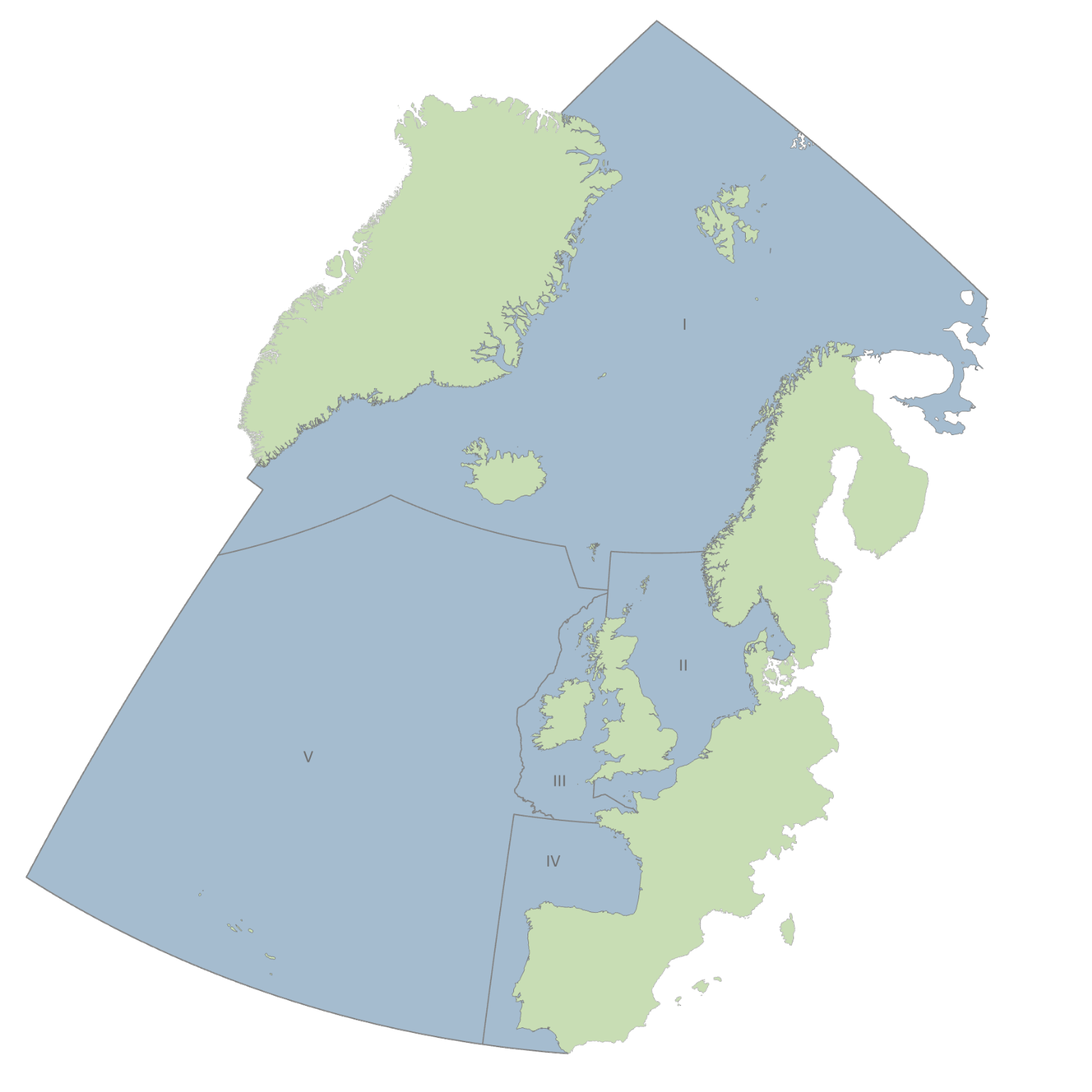
OSPAR Region: All Regions
Source of knowledge gap: QSR2023 - Marine Mammals Thematic Assessment
Limited data and time series on baleen whales, deep-diving cetaceans and seals
ID Number: BB31.14
Knowledge gap description: The statuses are unknown, due to limited data and time series, of: 1. baleen whales and deep-diving toothed cetaceans in the OSPAR Maritime Area (with data available only in the Greater North Sea (Region II), Celtic Seas (Region III) and Bay of Biscay and Iberian Coast (Region IV)); and, 2. seals in the Celtic Seas are unknown.
Topics:
Knowledge Gap Category:
4. data coverage
Assessment Category:
Thematic assessment
Relevant for MSFD Art 8:
D1C1, D1C2, D1C3, D1C4
Implementation Status
OSPAR Region: All Regions
Source of knowledge gap: QSR2023 - Marine Mammals Thematic Assessment
Lack of data on small toothed cetaceans
ID Number: BB31.15
Knowledge gap description: Small toothed cetacean species common indicator outcomes: several were unknown because of scarce data.
Topics:
Knowledge Gap Category:
4. data coverage
Assessment Category:
Thematic assessment
Relevant for MSFD Art 8:
D1C1, D1C2, D1C3, D1C4
Implementation Status
OSPAR Region: All Regions
Source of knowledge gap: QSR2023 - Marine Mammals Thematic Assessment
Unknown reasons for distribution trends of grey seals in Norway
ID Number: BB31.16
Knowledge gap description: Grey seal pup production: There are increasing trend in northern Norway and a recent decline in southern part of the Norwegian coast in Arctic waters, but the reason form these opposing trends is not known.
Topics:
Knowledge Gap Category:
4. data coverage
Assessment Category:
Thematic assessment
Relevant for MSFD Art 8:
D1C3
Implementation Status
OSPAR Region: All Regions
Source of knowledge gap: QSR2023 - Marine Mammals Thematic Assessment
Impacts from noise on marine mammals
ID Number: BB31.17
Knowledge gap description: There is a need to consider the potential impacts of noise on marine mammals from offshore wind developments, particularly impulsive noise from pile driving of foundations.
Knowledge Gap Category:
4. data coverage
Assessment Category:
Thematic assessment
Relevant for MSFD Art 8:
D1C2, D11C2, D11C2
Implementation Status
OSPAR Region: All Regions
Source of knowledge gap: QSR2023 - Marine Mammals Thematic Assessment
Need for monitoring of marine mammals to understand impact of tourism and recreation
ID Number: BB31.18
Knowledge gap description: Monitoring is needed to evaluate tourism and recreation pressure and impact.
Knowledge Gap Category:
4. data coverage
Assessment Category:
Thematic assessment
Relevant for MSFD Art 8:
D1C2
Implementation Status
OSPAR Region: All Regions
Source of knowledge gap: QSR2023 - Marine Mammals Thematic Assessment
Cumulative effects on marine mammals
ID Number: BB31.19
Knowledge gap description: Cumulative effects: OSPAR needs to consider causes and consequences of changes in ecosystem state more holistically (recognising consequences of measures and interactions of pressures).
Topics:
Knowledge Gap Category:
5. cumulative effects & integration
Assessment Category:
Thematic assessment
Relevant for MSFD Art 8:
N/A
Implementation Status
OSPAR Region: All Regions
Source of knowledge gap: QSR2023 - Marine Mammals Thematic Assessment
Target human activities to reduce pressures and impact
ID Number: BB31.20
Knowledge gap description: Consider how human activities could be best targeted to reduce pressures and impacts within an Ecosystem Approach.
Knowledge Gap Category:
6. effectiveness of measures
Assessment Category:
Thematic assessment
Relevant for MSFD Art 8:
D1C2
Implementation Status
OSPAR Region: All Regions
Source of knowledge gap: QSR2023 - Marine Mammals Thematic Assessment
Blue whale migration routes
ID Number: TBC
Knowledge gap description: Migration routes and exchange between the Northwest and Northeast Atlantic
Topics:
Knowledge Gap Category:
4. data coverage
Assessment Category:
Status assessment
Relevant for MSFD Art 8:
D1C4
Implementation Status
OSPAR Region: All Regions
Source of knowledge gap: QSR2023 - Status Assessment 2020 - Blue Whale
Impacts from human activities on blue whale
ID Number: TBC
Knowledge gap description: Impact of human activities such as shipping, underwater noise, entanglement and contaminants on species
Knowledge Gap Category:
5. cumulative effects & integration
Assessment Category:
Status assessment
Relevant for MSFD Art 8:
D1C2, D11C1, D11C2
Implementation Status
OSPAR Region: All Regions
Source of knowledge gap: QSR2023 - Status Assessment 2020 - Blue Whale
Bowhead whale stok information
ID Number: TBC
Knowledge gap description: Information on stock and its relationship to other stocks
Topics:
Knowledge Gap Category:
4. data coverage
Assessment Category:
Status assessment
Relevant for MSFD Art 8:
D1C3
Implementation Status
OSPAR Region: All Regions
Source of knowledge gap: QSR2023 - Status Assessment 2020 - Bowhead Whale
Impacts from climate change and human activities on bowhead whale
ID Number: TBC
Knowledge gap description: Effect of melting sea ice and other climate change-induced pressures, including increased human activities in the Arctic
Knowledge Gap Category:
5. cumulative effects & integration
Assessment Category:
Status assessment
Relevant for MSFD Art 8:
D1C2
Implementation Status
OSPAR Region: All Regions
Source of knowledge gap: QSR2023 - Status Assessment 2020 - Bowhead Whale
Guilds classification for top predators and organisms lower in the food web.
ID Number: TBC
Knowledge gap description: Top-predators (e.g. seabirds, cetaceans) and organisms lower in the food web (e.g. benthos, plankton) have not yet been classified into guilds but diet databases for such taxa do exist and could be included in future.
Knowledge Gap Category:
4. data coverage
Assessment Category:
Pilot assessment
Relevant for MSFD Art 8:
D4C1, D4C2, D4C3, D4C4
Implementation Status
OSPAR Region: All Regions
Source of knowledge gap: QSR2023 - Pilot Assessment of Feeding Guilds
Uncertainties in modelled estimates of impulsive sounds for North Sea harbour porpoise
ID Number: BE04.04
Knowledge gap description: Despite best available data for North Sea harbour porpoise being used, there are substantial uncertainties in these modelled estimates which are even greater for other species, which translate into uncertainties in the assessment.
Knowledge Gap Category:
4. data coverage
Assessment Category:
Common indicator assessment
Relevant for MSFD Art 8:
D11C1
Implementation Status
OSPAR Region: All Regions
Source of knowledge gap: QSR2023 - Risk of Impact from Anthropogenic Impulsive Sound
Impacts of noise on marine mammals, fish and invertebrate species
ID Number: BE04.07
Knowledge gap description: This assessment of the indicator covers only harbour porpoise. Future assessments may encompass further marine mammal species, and fish or invertebrate species.
Knowledge Gap Category:
4. data coverage
Assessment Category:
Common indicator assessment
Relevant for MSFD Art 8:
D11C1
Implementation Status
OSPAR Region: All Regions
Source of knowledge gap: QSR2023 - Risk of Impact from Anthropogenic Impulsive Sound
Consider the significance of newly emerging or poorly understood issues and risks
ID Number: TBC
Knowledge gap description: Consider the significance of newly emerging or poorly understood issues and risks and potential OSPAR involvement (e.g. discharges from scrubbers, microplastics in ship paints; potential increase in risks or impact from collision/accident due to expansion of wind farms or larger ships; better understanding of the impact of ship wakes; effects of new low-sulphur fuels in terms of toxicity and difficulty in clean-up)
Knowledge Gap Category:
7. emerging issues of human activities
Assessment Category:
Other assessment
Relevant for MSFD Art 8:
N/A
Implementation Status
OSPAR Region: All Regions
Source of knowledge gap: QSR2023 - Feeder Report 2021 - Shipping and Ports
Review visualisation of the impacts to ecosystem services for all thematic assessments
ID Number: TBC
Knowledge gap description: The visualisation of the impacts to ecosystem services was done for two case studies: Marine Litter and Marine Mammals. The same methodology was applied to all the other thematic assessments but these need to further review.
Knowledge Gap Category:
1. indicator development
Assessment Category:
Other assessment
Relevant for MSFD Art 8:
N/A
Implementation Status
OSPAR Region: All Regions
Source of knowledge gap: QSR2023 - Impacts on ecosystem services due to changes in the state of the environment in the North-East Atlantic Ocean
Improve geographical comparability of PCB concentrations in marine mammal tissues
ID Number: H15.01
Knowledge gap description: Structure and harmonize: There is a need for structural and harmonised protocols for data acquisition of Polychlorinated Biphenyls (PCBs), including the list of congeners and the tissue matrix analysed, as well as integration on a spatial scale, in order to allow geographical comparison.
Knowledge Gap Category:
5. cumulative effects & integration
Assessment Category:
Pilot assessment
Relevant for MSFD Art 8:
D8C2
Implementation Status
OSPAR Region: All Regions
Source of knowledge gap: QSR2023 - Pilot Assessment of Status and Trends of Persistent Chemicals in Marine Mammals
Improve comparability of PCB analyses in marine mammal tissues
ID Number: H15.01a
Knowledge gap description: Structure and harmonise pollutants data acquisition: There is a large variability of laboratory techniques for the analysis of Polychlorinated Biphenyls (PCBs)s (and other pollutants). Harmonize these techniques across OSPAR Contracting Parties (CPs) of: (1) reference material (fish or marine mammals’ tissues); (2) blubber extraction, pretreatment and storage; (3) calculation of the detection and quantification limits. The same homogenate of marine mammals’ blubber should be analysed in the laboratories of all OSPAR Contracting Parties (CPs) to assess interlaboratory repeatability.
Knowledge Gap Category:
5. cumulative effects & integration
Assessment Category:
Pilot assessment
Relevant for MSFD Art 8:
D8C2
Implementation Status
OSPAR Region: All Regions
Source of knowledge gap: QSR2023 - Pilot Assessment of Status and Trends of Persistent Chemicals in Marine Mammals
Improve PCB congener data availability
ID Number: H15.01b
Knowledge gap description: Structure and harmonise pollutants data acquisition: Major gaps exist on a temporal scale regarding the concentrations of Polychlorinated Biphenyls (PCBs)s at a congener level, since most studies until 2008 focused on the sum of the ICES 7 Polychlorinated Biphenyls (PCBs)s.
Knowledge Gap Category:
5. cumulative effects & integration
Assessment Category:
Pilot assessment
Relevant for MSFD Art 8:
D8C2
Implementation Status
OSPAR Region: All Regions
Source of knowledge gap: QSR2023 - Pilot Assessment of Status and Trends of Persistent Chemicals in Marine Mammals
Impact of persistent chemicals on marine mammal health
ID Number: H15.01c
Knowledge gap description: Structure and harmonise pathological data acquisition: Conduct toxicity studies including several health indicators (i.e. rate of infectious disease, general health)
Knowledge Gap Category:
5. cumulative effects & integration
Assessment Category:
Pilot assessment
Relevant for MSFD Art 8:
D8C2
Implementation Status
OSPAR Region: All Regions
Source of knowledge gap: QSR2023 - Pilot Assessment of Status and Trends of Persistent Chemicals in Marine Mammals
Historic trends in PCB concentrations in marine mammal tissues
ID Number: H15.02
Knowledge gap description: Conduct analysis on old samples in tissue banks for Polychlorinated Biphenyls (PCBs) not included in previous studies.
Knowledge Gap Category:
4. data coverage
Assessment Category:
Pilot assessment
Relevant for MSFD Art 8:
D8C2
Implementation Status
OSPAR Region: All Regions
Source of knowledge gap: QSR2023 - Pilot Assessment of Status and Trends of Persistent Chemicals in Marine Mammals
Validation of reproductive toxicity thresholds in marine mammals
ID Number: H15.03
Knowledge gap description: Only few toxicity thresholds exist, which focus only on reproductive or immunotoxicological impairment. Validate the existing estimated reproductive toxicity thresholds.
Knowledge Gap Category:
2. thresholds & references
Assessment Category:
Pilot assessment
Relevant for MSFD Art 8:
D8C2
Implementation Status
OSPAR Region: All Regions
Source of knowledge gap: QSR2023 - Pilot Assessment of Status and Trends of Persistent Chemicals in Marine Mammals
Combined effects of diseases and hazardous substances in marine mammals
ID Number: TBC
Knowledge gap description: Effects of diseases and infections and the effects of hazardous substances.
Knowledge Gap Category:
4. data coverage
Assessment Category:
Status assessment
Relevant for MSFD Art 8:
D8C2
Implementation Status
OSPAR Region: All Regions
Source of knowledge gap: QSR2023 - Status Assessment 2020 - Blue Whale