
OSPAR Science Agenda Knowledge Gap Portal
Welcome to the OSPAR Science Agenda knowledge gap portal. The page showcases important scientific questions and evidence needs identified by OSPAR to help protect and sustainably manage the North-East Atlantic. Use the filters and search options below to explore knowledge gaps by topic, category, region, and status, or browse visually to discover areas where new research, data, or collaborations are needed. The aim is to make it easy for anyone - scientists, funders, and policy makers to understand the current priorities, access key details, and get involved in helping to close these important gaps for a healthier ocean future.
Showing 326 - 337 of 337 items
Impacts of human activities on ecological functioning of hydrothermal vents communities
ID Number: TBC
Knowledge gap description: Knowledge gaps of biodiversity, connectivity, life histories (including for example reproduction and growth rates), function and resilience of communities to disturbance and change (e.g. fishing, climate change, potential future deep-seabed mining).
Knowledge Gap Category:
4. data coverage
Assessment Category:
Status assessment
Relevant for MSFD Art 8:
D1C2
Implementation Status
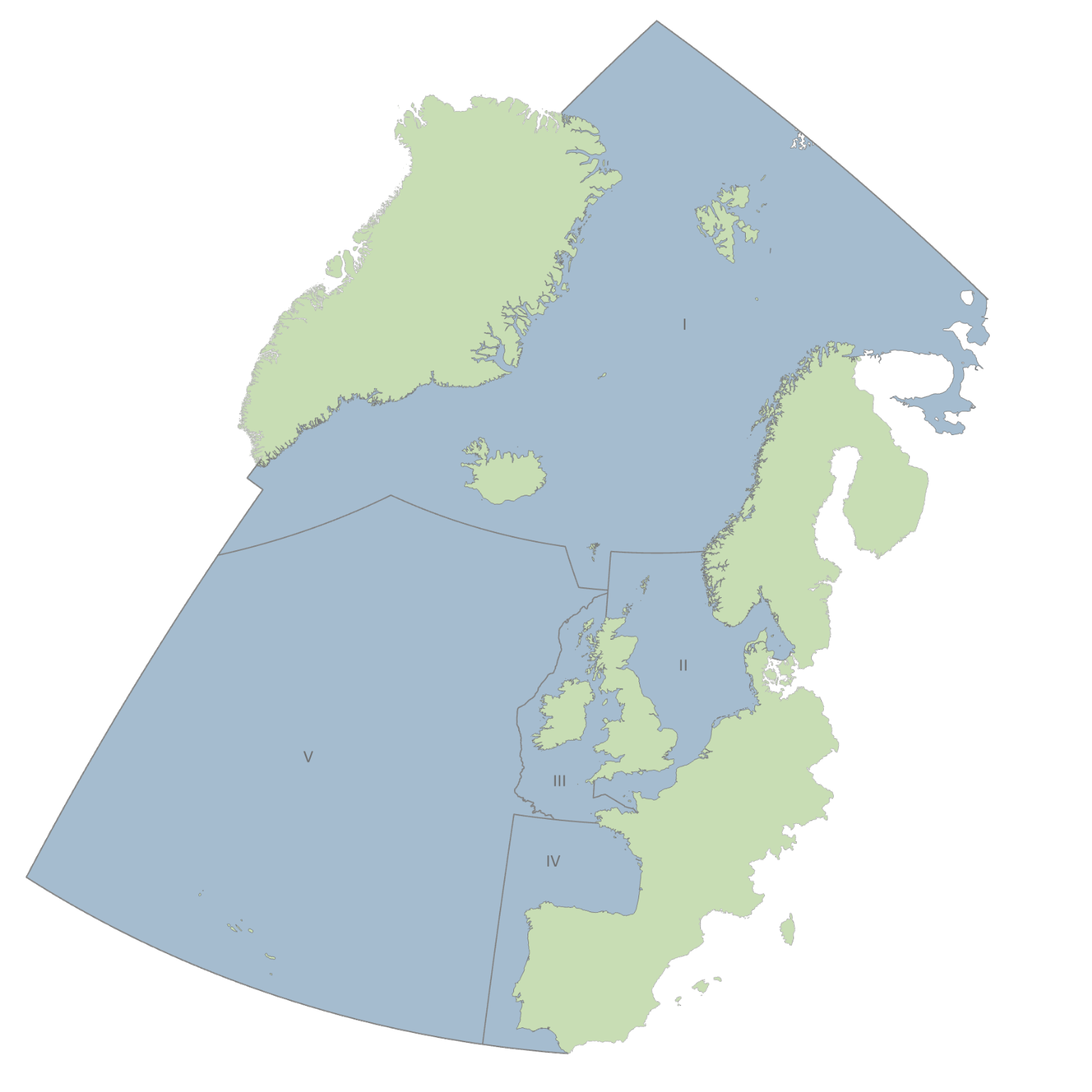
OSPAR Region: All Regions
Source of knowledge gap: QSR2023 - Status Assessment 2022 - Oceanic Ridges with hydrothermal vents
Distinguishing human impacts from natural variability in Zostera beds
ID Number: TBC
Knowledge gap description: Changes following human-induced threats in comparison to changes related to natural variability can also be hard to determine.
Topics:
Knowledge Gap Category:
4. data coverage
Assessment Category:
Status assessment
Relevant for MSFD Art 8:
D6C3, D6C4, D6C5
Implementation Status
OSPAR Region: All Regions
Source of knowledge gap: QSR2023 - Status Assessment 2022 - Zostera beds
Impact of underwater noise and electromagnetic fields on Allis shad
ID Number: TBC
Knowledge gap description: Lack of knowledge on impact of aquatic noise, electromagnetic fields on diadromous fish behaviour
Knowledge Gap Category:
4. data coverage
Assessment Category:
Status assessment
Relevant for MSFD Art 8:
D11C1, D11C2
Implementation Status
OSPAR Region: All Regions
Source of knowledge gap: QSR2023 - Status Assessment 2022 - Allis shad
Impacts of climate change and coastal development on Basking sharks
ID Number: TBC
Knowledge gap description: Impacts of range shifts in prey species as well as ocean warming and acidification should be investigated. Special attention should be drawn to any coastal development project, and potential habitat and/or hotspots included in national or regional marine spatial planning frameworks
Knowledge Gap Category:
4. data coverage
Assessment Category:
Status assessment
Relevant for MSFD Art 8:
D1C2
Implementation Status
OSPAR Region: All Regions
Source of knowledge gap: QSR2023 - Status Assessment 2021 - Basking shark
Impact of human pressures on Leatherback turtles
ID Number: TBC
Knowledge gap description: Limited knowledge of the impact of threats.
Topics:
Knowledge Gap Category:
4. data coverage
Assessment Category:
Status assessment
Relevant for MSFD Art 8:
D1C2
Implementation Status
OSPAR Region: All Regions
Source of knowledge gap: QSR2023 - Status Assessment 2022 - Leatherback turtle
Improve geographical comparability of PCB concentrations in marine mammal tissues
ID Number: H15.01
Knowledge gap description: Structure and harmonize: There is a need for structural and harmonised protocols for data acquisition of Polychlorinated Biphenyls (PCBs), including the list of congeners and the tissue matrix analysed, as well as integration on a spatial scale, in order to allow geographical comparison.
Knowledge Gap Category:
5. cumulative effects & integration
Assessment Category:
Pilot assessment
Relevant for MSFD Art 8:
D8C2
Implementation Status
OSPAR Region: All Regions
Source of knowledge gap: QSR2023 - Pilot Assessment of Status and Trends of Persistent Chemicals in Marine Mammals
Improve comparability of PCB analyses in marine mammal tissues
ID Number: H15.01a
Knowledge gap description: Structure and harmonise pollutants data acquisition: There is a large variability of laboratory techniques for the analysis of Polychlorinated Biphenyls (PCBs)s (and other pollutants). Harmonize these techniques across OSPAR Contracting Parties (CPs) of: (1) reference material (fish or marine mammals’ tissues); (2) blubber extraction, pretreatment and storage; (3) calculation of the detection and quantification limits. The same homogenate of marine mammals’ blubber should be analysed in the laboratories of all OSPAR Contracting Parties (CPs) to assess interlaboratory repeatability.
Knowledge Gap Category:
5. cumulative effects & integration
Assessment Category:
Pilot assessment
Relevant for MSFD Art 8:
D8C2
Implementation Status
OSPAR Region: All Regions
Source of knowledge gap: QSR2023 - Pilot Assessment of Status and Trends of Persistent Chemicals in Marine Mammals
Improve PCB congener data availability
ID Number: H15.01b
Knowledge gap description: Structure and harmonise pollutants data acquisition: Major gaps exist on a temporal scale regarding the concentrations of Polychlorinated Biphenyls (PCBs)s at a congener level, since most studies until 2008 focused on the sum of the ICES 7 Polychlorinated Biphenyls (PCBs)s.
Knowledge Gap Category:
5. cumulative effects & integration
Assessment Category:
Pilot assessment
Relevant for MSFD Art 8:
D8C2
Implementation Status
OSPAR Region: All Regions
Source of knowledge gap: QSR2023 - Pilot Assessment of Status and Trends of Persistent Chemicals in Marine Mammals
Impact of persistent chemicals on marine mammal health
ID Number: H15.01c
Knowledge gap description: Structure and harmonise pathological data acquisition: Conduct toxicity studies including several health indicators (i.e. rate of infectious disease, general health)
Knowledge Gap Category:
5. cumulative effects & integration
Assessment Category:
Pilot assessment
Relevant for MSFD Art 8:
D8C2
Implementation Status
OSPAR Region: All Regions
Source of knowledge gap: QSR2023 - Pilot Assessment of Status and Trends of Persistent Chemicals in Marine Mammals
Historic trends in PCB concentrations in marine mammal tissues
ID Number: H15.02
Knowledge gap description: Conduct analysis on old samples in tissue banks for Polychlorinated Biphenyls (PCBs) not included in previous studies.
Knowledge Gap Category:
4. data coverage
Assessment Category:
Pilot assessment
Relevant for MSFD Art 8:
D8C2
Implementation Status
OSPAR Region: All Regions
Source of knowledge gap: QSR2023 - Pilot Assessment of Status and Trends of Persistent Chemicals in Marine Mammals
Validation of reproductive toxicity thresholds in marine mammals
ID Number: H15.03
Knowledge gap description: Only few toxicity thresholds exist, which focus only on reproductive or immunotoxicological impairment. Validate the existing estimated reproductive toxicity thresholds.
Knowledge Gap Category:
2. thresholds & references
Assessment Category:
Pilot assessment
Relevant for MSFD Art 8:
D8C2
Implementation Status
OSPAR Region: All Regions
Source of knowledge gap: QSR2023 - Pilot Assessment of Status and Trends of Persistent Chemicals in Marine Mammals
Combined effects of diseases and hazardous substances in marine mammals
ID Number: TBC
Knowledge gap description: Effects of diseases and infections and the effects of hazardous substances.
Knowledge Gap Category:
4. data coverage
Assessment Category:
Status assessment
Relevant for MSFD Art 8:
D8C2
Implementation Status
OSPAR Region: All Regions
Source of knowledge gap: QSR2023 - Status Assessment 2020 - Blue Whale