OSPAR Science Agenda Knowledge Gap Portal
Welcome to the OSPAR Science Agenda knowledge gap portal. The page showcases important scientific questions and evidence needs identified by OSPAR to help protect and sustainably manage the North-East Atlantic. Use the filters and search options below to explore knowledge gaps by topic, category, region, and status, or browse visually to discover areas where new research, data, or collaborations are needed. The aim is to make it easy for anyone - scientists, funders, and policy makers to understand the current priorities, access key details, and get involved in helping to close these important gaps for a healthier ocean future.
Showing 301 - 325 of 337 items
Uncertainty in reduced rate of introduction of non-indigenous species
ID Number: TBC
Knowledge gap description: The noted trend of reduced rate of introduction of non-indigenous species (NIS) in the assessed regions of the Greater North Sea, Celtic Seas and Bay of Biscay and Iberian Coast is associated with great uncertainty.
Topics:
Knowledge Gap Category:
6. effectiveness of measures
Assessment Category:
Thematic assessment
Relevant for MSFD Art 8:
D2C1
Implementation Status
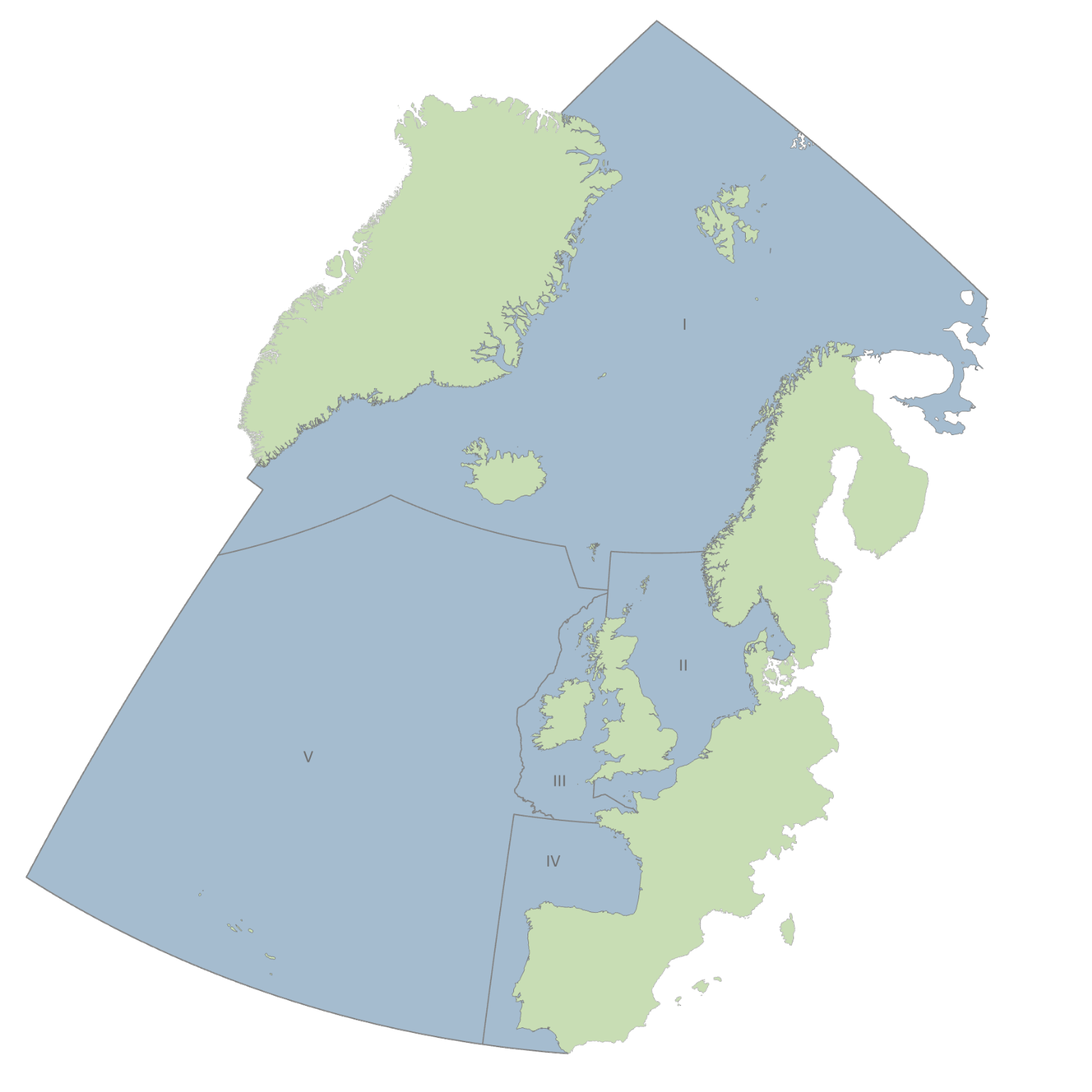
OSPAR Region: All Regions
Source of knowledge gap: QSR2023 - Non-Indigenous Species Thematic Assessment
Target all vectors of introduction and spread
ID Number: TBC
Knowledge gap description: Some vectors of introduction and spread could also be better targeted. For instance, while (commercial) shipping has been well targeted, management of leisure boating is still in the early stages.
Knowledge Gap Category:
1. indicator development
Assessment Category:
Thematic assessment
Relevant for MSFD Art 8:
N/A
Implementation Status
OSPAR Region: All Regions
Source of knowledge gap: QSR2023 - Non-Indigenous Species Thematic Assessment
Climate modelling to quantify risk of introduction and spread of non-indigenous species
ID Number: TBC
Knowledge gap description: Climate change-induced change in marine environmental conditions is anticipated to affect the introduction and spread of non-indigenous species (NIS), but more climate modelling is required to quantify this risk.
Knowledge Gap Category:
4. data coverage
Assessment Category:
Thematic assessment
Relevant for MSFD Art 8:
N/A
Implementation Status
OSPAR Region: All Regions
Source of knowledge gap: QSR2023 - Non-Indigenous Species Thematic Assessment
Use of therapeutic treatments in aquaculture
ID Number: TBC
Knowledge gap description: Significant knowledge gaps remain relating to the persistence of therapeutic treatments, the impact of long-term or multiple exposures during the life cycle of nontarget species, and the effects of exposure to multiple medicines on non-target species and the ecosystem.
Topics:
Knowledge Gap Category:
4. data coverage
Assessment Category:
Other assessment
Relevant for MSFD Art 8:
N/A
Implementation Status
OSPAR Region: All Regions
Source of knowledge gap: QSR2023 - Feeder Report 2021 - Aquaculture
Uncertainties on environmental impacts from EU fisheries
ID Number: TBC
Knowledge gap description: European Commission’s Joint Research Centre reported that there were uncertainties around the short- and long-term environmental impacts, as well as economic and social impacts, of the landing obligation (discard ban) introduced in EU member states.
Topics:
Knowledge Gap Category:
4. data coverage
Assessment Category:
Other assessment
Relevant for MSFD Art 8:
N/A
Implementation Status
OSPAR Region: All Regions
Source of knowledge gap: QSR2023 - Feeder Report 2021 - Fisheries
MSY influencing the ecosystems
ID Number: TBC
Knowledge gap description: OSPAR could consider how to improve its understanding of how fishing at Maximum Sustainable Yields levels influences other components of the ecosystem, and ecosystem health overall.
Topics:
Knowledge Gap Category:
5. cumulative effects & integration
Assessment Category:
Other assessment
Relevant for MSFD Art 8:
N/A
Implementation Status
OSPAR Region: All Regions
Source of knowledge gap: QSR2023 - Feeder Report 2021 - Fisheries
Lack of consistent fisheries approaches in the EU
ID Number: TBC
Knowledge gap description: Even at maximum sustainable yield (MSY) levels, fishing will have impacts on the ecosystem and its food webs. European Commission has noted that assessment of the state of food webs across European seas is affected by a lack of consistent approaches, high uncertainty, or lack of data.
Knowledge Gap Category:
4. data coverage
Assessment Category:
Other assessment
Relevant for MSFD Art 8:
D4C1, D4C2, D4C3, D4C4
Implementation Status
OSPAR Region: All Regions
Source of knowledge gap: QSR2023 - Feeder Report 2021 - Fisheries
Better understanding of the potential for and consequences of harvesting at lower trophic levels
ID Number: TBC
Knowledge gap description: Norway’s bioeconomy strategy noted that a better understanding of the potential for and consequences of harvesting at lower trophic levels was still needed
Topics:
Knowledge Gap Category:
4. data coverage
Assessment Category:
Other assessment
Relevant for MSFD Art 8:
D4C1, D4C2, D4C3, D4C4
Implementation Status
OSPAR Region: All Regions
Source of knowledge gap: QSR2023 - Feeder Report 2021 - Fisheries
Better understanding of the links between user groups and marine protected areas (MPAs)
ID Number: TBC
Knowledge gap description: Better understanding how user groups and marine protected areas (MPAs) are interrelated is needed to improve opportunities for recreational and tourism provided by MPAs.
Knowledge Gap Category:
4. data coverage
Assessment Category:
Other assessment
Relevant for MSFD Art 8:
N/A
Implementation Status
OSPAR Region: All Regions
Source of knowledge gap: QSR2023 - Feeder Report 2021 - Recreation and Tourism in the North-East Atlantic
Impact of human induced pressures on Balearic shearwater
ID Number: TBC
Knowledge gap description: Need to better understand and address the issue of by-catch. while the occurrence and impact of plastics on the species, as well as the influence of climate change, should also be addressed.
Knowledge Gap Category:
5. cumulative effects & integration
Assessment Category:
Status assessment
Relevant for MSFD Art 8:
D1C1, D1C2, D10C4
Implementation Status
OSPAR Region: All Regions
Source of knowledge gap: QSR2023 - Status Assessment 2022 - Balearic shearwater
Improved evaluation of discard reduction measures
ID Number: TBC
Knowledge gap description: The reduction of discards associated to the Common Fisheries Policy's (CFP) landing obligation should be properly evaluated.
Topics:
Knowledge Gap Category:
5. cumulative effects & integration
Assessment Category:
Status assessment
Relevant for MSFD Art 8:
D1C2
Implementation Status
OSPAR Region: All Regions
Source of knowledge gap: QSR2023 - Status Assessment 2022 - Balearic shearwater
Impact of wind farms on Balearic shearwater
ID Number: TBC
Knowledge gap description: Regarding new/increasing potential threats, windfarm development should receive particular attention
Knowledge Gap Category:
5. cumulative effects & integration
Assessment Category:
Status assessment
Relevant for MSFD Art 8:
D1C2
Implementation Status
OSPAR Region: All Regions
Source of knowledge gap: QSR2023 - Status Assessment 2022 - Balearic shearwater
Impact of plastic litter on Balearic shearwater
ID Number: TBC
Knowledge gap description: Information on impact of plastics
Topics:
Knowledge Gap Category:
5. cumulative effects & integration
Assessment Category:
Status assessment
Relevant for MSFD Art 8:
D10C4
Implementation Status
OSPAR Region: All Regions
Source of knowledge gap: QSR2023 - Status Assessment 2022 - Balearic shearwater
Impact of combined stressors on lesser black-backed gull
ID Number: TBC
Knowledge gap description: The assessment of threats suffers from a lack of understanding of the joint impact of the stressors potentially responsible for the continuation of the population decline
Topics:
Knowledge Gap Category:
5. cumulative effects & integration
Assessment Category:
Status assessment
Relevant for MSFD Art 8:
D1C2
Implementation Status
OSPAR Region: All Regions
Source of knowledge gap: QSR2023 - Status Assessment 2020 - Lesser black-backed gull
Collaboration between science and policy to improve bentic habitats assessment
ID Number: TBC
Knowledge gap description: More working and scientific policy interactions are still needed, at both regional-sea and European levels. The coordination and additional resources shared through common projects are key to enabling this work to proceed under commonly agreed and defined timelines and priorities.
Topics:
Knowledge Gap Category:
5. cumulative effects & integration
Assessment Category:
Thematic assessment
Relevant for MSFD Art 8:
D6C3, D6C4, D6C5
Implementation Status
OSPAR Region: All Regions
Source of knowledge gap: QSR2023 - Benthic Habitats Thematic Assessment
Further development of integrated assessment of benthic habitats
ID Number: TBC
Knowledge gap description: Greatly improved monitoring and progress on the scientific policy process itself are needed to enable sufficient technical, methodological and management progress towards a more integrated assessment, as well as provide information and evidence to support evaluation of the efficiency of management measures.
Topics:
Knowledge Gap Category:
5. cumulative effects & integration
Assessment Category:
Thematic assessment
Relevant for MSFD Art 8:
D6C3, D6C4, D6C5
Implementation Status
OSPAR Region: All Regions
Source of knowledge gap: QSR2023 - Benthic Habitats Thematic Assessment
(Future) impacts of climate change on benthic habitats
ID Number: TBC
Knowledge gap description: Climate Change: There are some uncertainties in the climate change predictions, which will require additional research in order to increase accuracy on the future impacts of benthic habitats, particularly along the coastline.
Knowledge Gap Category:
4. data coverage
Assessment Category:
Thematic assessment
Relevant for MSFD Art 8:
N/A
Implementation Status
OSPAR Region: All Regions
Source of knowledge gap: QSR2023 - Benthic Habitats Thematic Assessment
Impacts of climate change and ocean acidification on benthic habitats
ID Number: TBC
Knowledge gap description: Climate Change: There is not always a wide range of datasets available to systematically measure the effects of climate change and ocean acidification on benthic habitats and species, due to the paucity of the monitoring programme.
Knowledge Gap Category:
4. data coverage
Assessment Category:
Thematic assessment
Relevant for MSFD Art 8:
D6C3, D6C4, D6C5
Implementation Status
OSPAR Region: All Regions
Source of knowledge gap: QSR2023 - Benthic Habitats Thematic Assessment
Improve data availability on special benthic habitats
ID Number: TBC
Knowledge gap description: Climate Change: For example, carbonate mounds, Haploops habitat and Cymodocea meadows were excluded due to the lack of information available within the Marine Evidence based Sensitivity Assessment (MarESA) sources.
Knowledge Gap Category:
4. data coverage
Assessment Category:
Thematic assessment
Relevant for MSFD Art 8:
D6C3, D6C4, D6C5
Implementation Status
OSPAR Region: All Regions
Source of knowledge gap: QSR2023 - Benthic Habitats Thematic Assessment
Advance scientific knowledge on deep-sea sponge aggregations
ID Number: TBC
Knowledge gap description: Climate Change: The predictions of future trends (2020-2030) for the condition of deep-sea sponge aggregations are challenging. Future environmental conditions in the OSPAR Maritime Area may contribute to deterioration in the condition of deep-sea sponge aggregations. However, further research is needed to advance scientific knowledge on this front.
Knowledge Gap Category:
4. data coverage
Assessment Category:
Thematic assessment
Relevant for MSFD Art 8:
D6C3, D6C4, D6C5
Implementation Status
OSPAR Region: All Regions
Source of knowledge gap: QSR2023 - Benthic Habitats Thematic Assessment
Climate change and ocean acidification impacts on carbonate mounds
ID Number: TBC
Knowledge gap description: Climate Change: Climate change and ocean acidification impacts on carbonate mounds remain unknown.
Knowledge Gap Category:
4. data coverage
Assessment Category:
Thematic assessment
Relevant for MSFD Art 8:
D6C3, D6C4, D6C5
Implementation Status
OSPAR Region: All Regions
Source of knowledge gap: QSR2023 - Benthic Habitats Thematic Assessment
Ocean acidification impacts on coral gardens
ID Number: TBC
Knowledge gap description: Climate Change: The current and immediate future impacts on coral gardens from ocean acidification are difficult to quantify. Predictions tend not to take into account the potential increased vulnerability of early life stages to ocean acidification.
Knowledge Gap Category:
4. data coverage
Assessment Category:
Thematic assessment
Relevant for MSFD Art 8:
D6C3, D6C4, D6C5
Implementation Status
OSPAR Region: All Regions
Source of knowledge gap: QSR2023 - Benthic Habitats Thematic Assessment
Climate change and ocean acidification impacts on hydrothermal vents communities
ID Number: TBC
Knowledge gap description: Climate Change: Although adult vent organisms are adapted to oscillations and variable low pH, high temperature and low oxygen in vent fluids, it is not known whether species are adapted to permanent change in environmental variables.
Knowledge Gap Category:
4. data coverage
Assessment Category:
Thematic assessment
Relevant for MSFD Art 8:
D6C3, D6C4, D6C5
Implementation Status
OSPAR Region: All Regions
Source of knowledge gap: QSR2023 - Benthic Habitats Thematic Assessment
Effectiveness of measures to improve benthic habitats
ID Number: TBC
Knowledge gap description: It is difficult to measure the effectiveness of measures to improve the status of benthic habitats, due to the multiple activities and pressures involved, and because the effects of measures on the recovery of habitats
may take a long time to become evident.
Knowledge Gap Category:
6. effectiveness of measures
Assessment Category:
Thematic assessment
Relevant for MSFD Art 8:
D6C3, D6C4, D6C5
Implementation Status
OSPAR Region: All Regions
Source of knowledge gap: QSR2023 - Benthic Habitats Thematic Assessment
Understanding pressure/sensitivity relations affecting maerl beds
ID Number: TBC
Knowledge gap description: Improved knowledge of human activities and pressure/sensitivity studies will increase understanding of the status of maerl beds.
Knowledge Gap Category:
4. data coverage
Assessment Category:
Status assessment
Relevant for MSFD Art 8:
D6C3, D6C4, D6C5
Implementation Status
OSPAR Region: All Regions
Source of knowledge gap: QSR2023 - Status Assessment 2019 - Maerl beds