
OSPAR Science Agenda Knowledge Gap Portal
Welcome to the OSPAR Science Agenda knowledge gap portal. The page showcases important scientific questions and evidence needs identified by OSPAR to help protect and sustainably manage the North-East Atlantic. Use the filters and search options below to explore knowledge gaps by topic, category, region, and status, or browse visually to discover areas where new research, data, or collaborations are needed. The aim is to make it easy for anyone - scientists, funders, and policy makers to understand the current priorities, access key details, and get involved in helping to close these important gaps for a healthier ocean future.
Showing 51 - 75 of 168 items
Use of relevant OSPAR studies on by-catch
ID Number: BB33.03
Knowledge gap description: In working with relevant authorities and stakeholders to reduce or eliminate by-catch, OSPAR should consider relevant by-catch studies conducted in the framework of OSPAR, the European Commission and ICES and their conclusions to come.
Knowledge Gap Category:
4. data coverage
Assessment Category:
Thematic assessment
Relevant for MSFD Art 8:
D1C1
Implementation Status
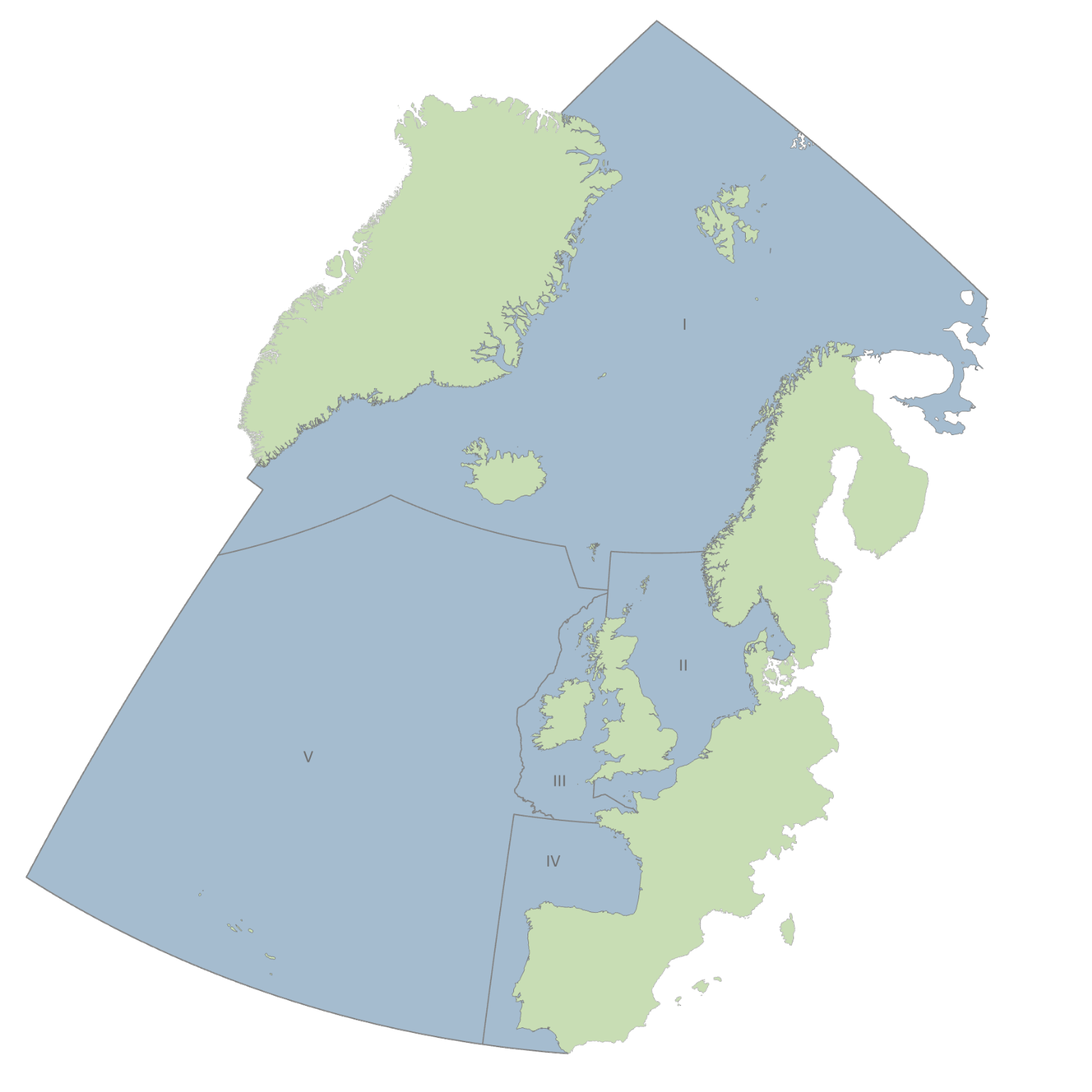
OSPAR Region: All Regions
Source of knowledge gap: QSR2023 - Fish Thematic Assessment
Impact of aquatic noise and electromagnetic fields on diadromous fish
ID Number: TBC
Knowledge gap description: Lack of knowledge on impact of aquatic noise, electromagnetic fields on diadromous fish behaviour
Knowledge Gap Category:
4. data coverage
Assessment Category:
Status assessment
Relevant for MSFD Art 8:
D11C1, D11C2
Implementation Status
OSPAR Region: All Regions
Source of knowledge gap: QSR2023 - Status Assessment 2022 - Allis shad
Porbeagle: Discard survival
ID Number: TBC
Knowledge gap description: Research is needed on discard survival of porbeagles
Knowledge Gap Category:
4. data coverage
Assessment Category:
Status assessment
Relevant for MSFD Art 8:
D1C3
Implementation Status
OSPAR Region: All Regions
Source of knowledge gap: QSR2023 - Status Assessment 2021 - Porbeagle
Alternative methods to determine coherent threshold values for eutrophication parameters
ID Number: E01.07
Knowledge gap description: COMP4 uses common threshold values based on a harmonised modelling approach. However, adjustments were needed for some areas where model results for a reference situation were unrealistic, thereby undermining harmonisation. In addition, the current approach for nutrients and chlorophyll a threshold values (historic concentrations +50%) is not in accordance with our ecological knowledge. Furthermore the approach needs to better reflect the difference in responses of different parameters and spatial gradients in anthropogenic pressures between assessment areas. Therefore, this approach requires adjustment.
Knowledge Gap Category:
2. thresholds & references
Assessment Category:
Common indicator assessment
Relevant for MSFD Art 8:
D5C1
Implementation Status
OSPAR Region: All Regions
Source of knowledge gap: QSR2023 - Winter Nutrient Concentrations in the Greater North Sea, Celtic Seas and Bay of Biscay and Iberian Coast
Distinguish temperature and eutrophication impacts on benthic ecology
ID Number: TBC
Knowledge gap description: In coastal ocean regions, anthropogenic eutrophication via continental run-off and atmospheric nutrient deposition, and ocean warming, are very likely to be the main drivers of deoxygenation. Future work should aim to decouple, where possible, the impacts of eutrophication on benthic ecology.
Knowledge Gap Category:
1. indicator development
Assessment Category:
Thematic assessment
Relevant for MSFD Art 8:
N/A
Implementation Status
OSPAR Region: All Regions
Source of knowledge gap: QSR2023 - Eutrophication Thematic Assessment
Large scale cumulative effects from offshore renewable energy developments
ID Number: A3.02
Knowledge gap description: There is a need for evidence on the potential impacts of large scale offshore renewable energy developments, and their cumulative effects on the marine environment.
Knowledge Gap Category:
4. data coverage, 5. cumulative effects & integration, 7. emerging issues of human activities
Assessment Category:
Thematic assessment
Relevant for MSFD Art 8:
N/A
Implementation Status
OSPAR Region: All Regions
Source of knowledge gap: QSR2023 - Climate Change Thematic Assessment
Cumulative effects from offshore renewable energy developments
ID Number: A3.02a
Knowledge gap description: Knowledge gaps around cumulative effects of offshore renewable energy, especially at large scale.
Knowledge Gap Category:
7. emerging issues of human activities
Assessment Category:
Thematic assessment
Relevant for MSFD Art 8:
no MSFD Descriptor/Criterion
Implementation Status
OSPAR Region: All Regions
Source of knowledge gap: QSR2023 - Climate Change Thematic Assessment
Links between changes in the physical and chemical ocean climate
ID Number: A3.03
Knowledge gap description: Improved understanding of the fundamental links between changes in the physical and chemical ocean climate, the marine ecosystem, and human activities in the marine environment. Causal links between these changes and other OSPAR receptors (species, habitats, hazardous substances, marine litter, eutrophication, radioactive substances) are unknown, including the complex interactions between these.
Topics:
Knowledge Gap Category:
7. emerging issues of human activities
Assessment Category:
Thematic assessment
Relevant for MSFD Art 8:
N/A
Implementation Status
OSPAR Region: All Regions
Source of knowledge gap: QSR2023 - Climate Change Thematic Assessment
Target all vectors of introduction and spread
ID Number: TBC
Knowledge gap description: Some vectors of introduction and spread could also be better targeted. For instance, while (commercial) shipping has been well targeted, management of leisure boating is still in the early stages.
Knowledge Gap Category:
1. indicator development
Assessment Category:
Thematic assessment
Relevant for MSFD Art 8:
N/A
Implementation Status
OSPAR Region: All Regions
Source of knowledge gap: QSR2023 - Non-Indigenous Species Thematic Assessment
Identify sources of marine litter
ID Number: BE01.01
Knowledge gap description: Nearly 13% of beach litter observed in the OSPAR Maritime Area are non-identifiable fragments. This means they cannot be linked to specific sources or activities, which prevents implementing dedicated measures. More research is needed to improve the knowledge of the composition and sources of fragments.
Knowledge Gap Category:
4. data coverage
Assessment Category:
Common indicator assessment
Relevant for MSFD Art 8:
D10C1
Implementation Status
OSPAR Region: All Regions
Source of knowledge gap: QSR2023 - Abundance, Composition and Trends of Beach Litter
Environmental conditions on marine litter survey sites
ID Number: BE01.05
Knowledge gap description: Variable environmental conditions and human activities at survey different sites can influence the amount of litter deposited on the beach. Such differences were succinctly considered in aggregation method but need to be considered further in future assessments. More comprehensive information on environmental conditions and human activities need to be made available for all the survey sites in a useable form.
Knowledge Gap Category:
5. cumulative effects & integration
Assessment Category:
Common indicator assessment
Relevant for MSFD Art 8:
D10C1
Implementation Status
OSPAR Region: All Regions
Source of knowledge gap: QSR2023 - Abundance, Composition and Trends of Beach Litter
Identify transboundary sources of marine litter
ID Number: BE01.10
Knowledge gap description: There is a lack of information on sources of beach litter found in the OSPAR Maritime Area. In addition, transboundary pollution is known to occur in the OSPAR Maritime Area, however this phenomenon is not well quantified. More studies should be performed to identify litter sources and assess transboundary pollution.
Knowledge Gap Category:
4. data coverage
Assessment Category:
Common indicator assessment
Relevant for MSFD Art 8:
D10C1
Implementation Status
OSPAR Region: All Regions
Source of knowledge gap: QSR2023 - Abundance, Composition and Trends of Beach Litter
More studies on socioeconomic impacts from beach litter
ID Number: BE01.11
Knowledge gap description: There is a lack of information regarding beach litter harm, socio-economic impacts and shoreline ecosystems sensitivity. More studies are needed to address these topics.
Knowledge Gap Category:
4. data coverage
Assessment Category:
Common indicator assessment
Relevant for MSFD Art 8:
D10C1
Implementation Status
OSPAR Region: All Regions
Source of knowledge gap: QSR2023 - Abundance, Composition and Trends of Beach Litter
Meteo-oceanic conditions influencing on beach litter data
ID Number: BE01.12
Knowledge gap description: The dynamic of beach litter stranding is still not well understood. The effect of meteo-oceanic conditions should be studied to assess their influence on beach litter data.
Knowledge Gap Category:
4. data coverage
Assessment Category:
Common indicator assessment
Relevant for MSFD Art 8:
D10C1
Implementation Status
OSPAR Region: All Regions
Source of knowledge gap: QSR2023 - Abundance, Composition and Trends of Beach Litter
Monitoring marine litter in line with MSFD TG
ID Number: BE01.13
Knowledge gap description: OSPAR beaches are affected by the presence of numerous mesoplastic fragments and pellets which are currently not monitored. This should be addressed in line with recommendations of the MSFD TG on Marine litter.
Knowledge Gap Category:
4. data coverage
Assessment Category:
Common indicator assessment
Relevant for MSFD Art 8:
D10C1
Implementation Status
OSPAR Region: All Regions
Source of knowledge gap: QSR2023 - Abundance, Composition and Trends of Beach Litter
Amounts of litter on the seafloor
ID Number: BE02.01
Knowledge gap description: There is a lack of understanding about the quantity of litter on the seafloor.Development (and harmonization) of new optical methods to monitor seafloor litter such as the use of high-resolution cameras is needed to better understand the true amounts of litter on the seafloor.
Knowledge Gap Category:
4. data coverage
Assessment Category:
Common indicator assessment
Relevant for MSFD Art 8:
D10C1
Implementation Status
OSPAR Region: All Regions
Source of knowledge gap: QSR2023 - Composition and Spatial Distribution of Litter on the Seafloor
Environmental and sosio-economic impacts of seafloor litter
ID Number: BE02.02
Knowledge gap description: There is a lack of information regarding the environmental and socio-economic impacts of seafloor litter.
Knowledge Gap Category:
5. cumulative effects & integration
Assessment Category:
Common indicator assessment
Relevant for MSFD Art 8:
D10C1
Implementation Status
OSPAR Region: All Regions
Source of knowledge gap: QSR2023 - Composition and Spatial Distribution of Litter on the Seafloor
Identifying seafloor litter hotspots and sinks
ID Number: BE02.03
Knowledge gap description: There needs to be further understanding of the sources, transport, fate and distribution of seafloor litter. Understanding of the hydrodynamics, geomorphology and human factors that influence the geographical distribution of litter on the seafloor is needed, especially with focus on understanding transboundary movements, degradation and sinking of items, how they move around the seafloor and where the hotspots and ultimate sinks are.
Knowledge Gap Category:
5. cumulative effects & integration
Assessment Category:
Common indicator assessment
Relevant for MSFD Art 8:
D10C1
Implementation Status
OSPAR Region: All Regions
Source of knowledge gap: QSR2023 - Composition and Spatial Distribution of Litter on the Seafloor
Seafloor litter in trawls for fish stock surveys
ID Number: BE02.04
Knowledge gap description: There are also some gaps for the current indicator which uses information from trawls for fish stock surveys. There is a need to better understand the effect of sampling design (fixed and random stratified sampling stations), the difference between gear types, their impact on the catchability, how much litter from the seafloor is collected during surveys, if there are differences with counting methods between countries, and finally the impact of sediment type, morphology and amount of catch on catchability.
Knowledge Gap Category:
5. cumulative effects & integration
Assessment Category:
Common indicator assessment
Relevant for MSFD Art 8:
D10C1
Implementation Status
OSPAR Region: All Regions
Source of knowledge gap: QSR2023 - Composition and Spatial Distribution of Litter on the Seafloor
Examination of marine litter data between regional sea organisations
ID Number: BE02.05
Knowledge gap description: Improve understanding of how to compare seafloor litter assessments by investigating how regional sea organisations outside of OSPAR do so. This would require a further examination of data and methodology discussions between regional sea organisations.
Knowledge Gap Category:
5. cumulative effects & integration
Assessment Category:
Common indicator assessment
Relevant for MSFD Art 8:
D10C1
Implementation Status
OSPAR Region: All Regions
Source of knowledge gap: QSR2023 - Composition and Spatial Distribution of Litter on the Seafloor
Detecting trends for litter counts og litter weights
ID Number: BE02.06
Knowledge gap description: Litter Counts/Weights: As data for more years become available, future assessments should aim to detect trends for litter counts. A power analysis would be beneficial to indicate how big a trend can be detected. It would be beneficial if differences between how contracting parties count litter items and whether they do count could be sorted out. This would allow count data to be used for the three OSPAR regions rather than just a UK case study. To build onto this, future assessments should also start to look at litter weights; however, this will require improved data from surveys.
Knowledge Gap Category:
4. data coverage
Assessment Category:
Common indicator assessment
Relevant for MSFD Art 8:
D10C1
Implementation Status
OSPAR Region: All Regions
Source of knowledge gap: QSR2023 - Composition and Spatial Distribution of Litter on the Seafloor
Litter densities
ID Number: BE02.07
Knowledge gap description: How do sources relate to litter densities?
Knowledge Gap Category:
4. data coverage
Assessment Category:
Common indicator assessment
Relevant for MSFD Art 8:
D10C1
Implementation Status
OSPAR Region: All Regions
Source of knowledge gap: QSR2023 - Composition and Spatial Distribution of Litter on the Seafloor
Strengthen the role of OSPAR Common indicator on Plastic in Fulmar stomachs
ID Number: BE03.01
Knowledge gap description: Dedicated experimental laboratory research into evidence of harm to fulmars from specified levels and types of plastics, as a specific example of harm, is urgently needed to strengthen the role of the OSPAR Common Indicator.
Knowledge Gap Category:
1. indicator development
Assessment Category:
Common indicator assessment
Relevant for MSFD Art 8:
D10C3
Implementation Status
OSPAR Region: All Regions
Source of knowledge gap: QSR2023 - Plastic Particles in Fulmar Stomachs in the North Sea
Samplig of marine litter ingested by sea turtles
ID Number: BE08.01
Knowledge gap description: A larger coverage of sampling to record all stranded animals in all parts of OSPAR Regions IV, V, and Macaronesia. More specifically, data on dead animals (stranded or by-caught) from the coasts from mainland Portugal and Spain will be required for a complete assessment.
Knowledge Gap Category:
4. data coverage
Assessment Category:
Common indicator assessment
Relevant for MSFD Art 8:
D10C3
Implementation Status
OSPAR Region: All Regions
Source of knowledge gap: QSR2023 - Marine Litter ingested by Sea Turtles
Improve coordination of data on marine litter ingested by sea turtles
ID Number: BE08.02
Knowledge gap description: While a long-term management of sampling and data collection is possible by relying on both existing infrastructures and skills, coordination and optimisation will have to be better formalised to enable the use of other data than those provided only by scientific projects.
Knowledge Gap Category:
4. data coverage
Assessment Category:
Common indicator assessment
Relevant for MSFD Art 8:
D10C3
Implementation Status
OSPAR Region: All Regions
Source of knowledge gap: QSR2023 - Marine Litter ingested by Sea Turtles